Tag: plants

How to Grow Lime Lava

Plant Overview

Botanical name: Scleranthus biflorus ‘Lime Lava’
Common name: Lime Cushion Plant
Plant type: Evergreen perennial ground cover

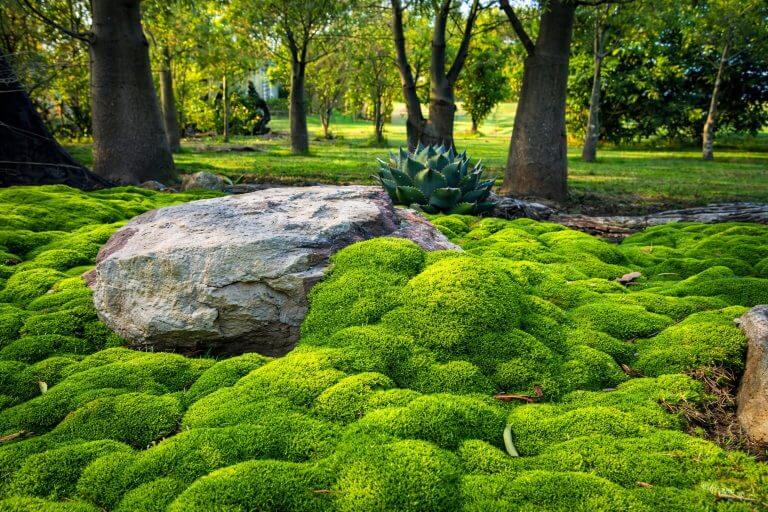
A large rock sits on a bed of bright green moss, surrounded by trees and contemporary stylish plants like agave in a sunlit garden.

LIME LAVA

A unique Australian plant with green foliage formed mounds that look like bright green lava! It is tolerant of heavy frost and will grow in coastal and alpine climates. Ideal for rockeries, logs or a centrepiece in a bowl.

Check Out the Lime Lava in Action Below

How to Grow Lime Lava

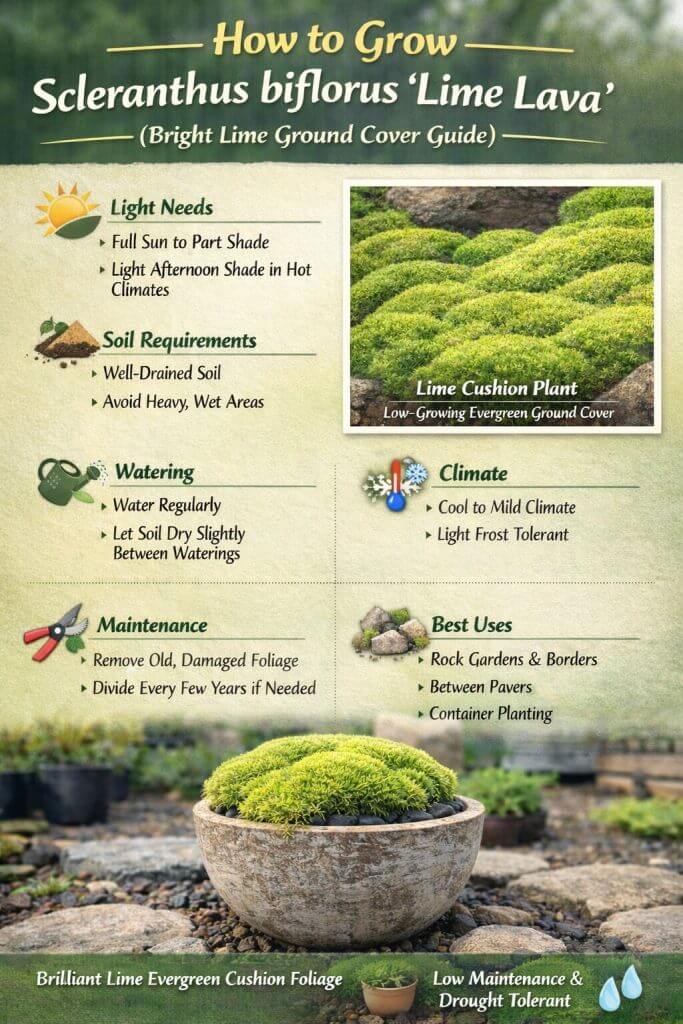
Guide for growing Contemporary Stylish Plants like Scleranthus biflorus ‘Lime Lava’ includes care tips, ideal soil and climate, watering needs, maintenance, and best landscape uses, with images of lime green cushion plants.

FREE DELIVERY on all orders over $399

Let us deliver the heavy lifting.

Free delivery takes the hassle out of your purchase, making it easier to get your plants home safely and conveniently. With delivery costs covered, you can focus on choosing the perfect plants without worrying about transport.

At Hello Hello Plants we operate our own delivery fleet, delivering plants across Melbourne
and regional Victoria 7 days a week.

Get your plants delivered to your door for FREE when you spend over $399.

A green Hello Hello Plants delivery van advertises a Holiday Plant Sale with free garden design and delivery for orders over £399 in Melbourne Metro and regional centres.

Whether you’re refreshing a rock garden, softening pathways, or adding a vibrant lime feature to pots, Scleranthus biflorus ‘Lime Lava’ is a standout choice for modern Australian landscapes. From bonus plants and free delivery offers to personalised gardening advice and exclusive in-store savings, there’s always something extra to enjoy when you shop with us. With limited stock and frequently changing promotions, we recommend visiting in store to see the quality for yourself — or take advantage of free delivery on orders over $399 while current specials are available.

See you soon!

A field of tall pink autumn flowering plants with green stems, overlaid with the text: "Create a Floral Paradise in Your Garden.

Create a Floral Paradise in Your Garden

Create a Floral Paradise in Your Garden With These Plants

We’ve heard from a little birdie that you’re in need of some more flowers in the garden and we just so happened to stumble upon a beautiful garden that is sure to inspire you. We even made a whole video about it!

You can watch that here, but read on to learn more about these flowers.

Grab a quick sneak peek, JUMP STRAIGHT TO the plants we’ll be discussing today:

1. Clematis ‘Madame Julia Correvon’
2. Salvia ‘Mexican Bush Sage’
3. Bartlettina ‘Purple Mist Flower’
4. ‘Princess Diana’ Peruvian Lily
5. Rose ‘Shady Lady
6. Plectranthus ‘Mona Lavender’
7. Euphorbia ‘Ascot Rainbow’
8. Tricyrtis ‘Blue Toad Lily’
9. Fuchsia Fuchsita® ‘Blush Violet’
10. Persicaria Fascination Red Bistort
+ 8 More

Maybe you’re creating a garden from scratch and feeling overwhelmed by all the plant choices you need to make. Maybe you already have a garden but it’s in need of some pops of colour. Maybe you just moved into a place that only has a balcony and you’re looking for some potted colour.

We got you. We’re going to be breaking down the 18 flowers from this wonderful garden, and telling you all about their individual strengths, applications and how to best take care of them.

Now a quick note before we get into it, not all of these will be blooming right now. If you are more interested in flowers you can have in autumn, then be sure to check out our article The 10 Best Plants For Autumn Flowering in Australia.

Clematis ‘Madame Julia Correvon’

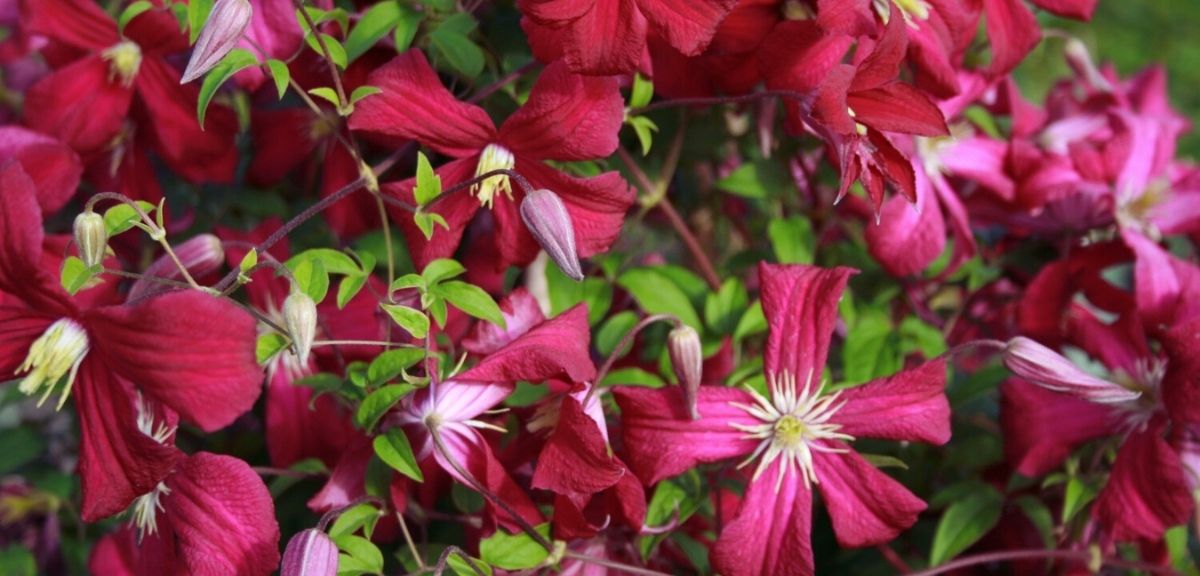
A cluster of bright pink clematis flowers, one of the standout autumn flowering plants, set against a backdrop of lush green leaves.

We’re starting strong with an award winning flower that has both incredible beauty and is easy to grow. You will see quickly why it earned the Garden Merit of the Royal Horticultural Society.

The first thing you’ll notice is the intensity of colour and uniquely shaped petals on Madame Julia Correvon. We love how the petals come out flat but with some time they start to curve and twist in unusually beautiful ways. It’s like each petal has a life of their own, giving the whole flower a dynamic movement to it.

Madame Julia Correvon doesn’t skimp on flowers, with masses of those beautiful star shaped flowers creating an incredible show. It also blooms for a very long time, from early summer to early autumn, meaning you get to enjoy those gorgeous flowers for ages.

They also make for excellent cut flowers so you can bring a slice of that beauty indoors too.

This is a plant you choose when you want a flowering climber as they look best when trained to climb up a fence, trellis, wall or any surface. The vines are nice and strong, making it easy to grow up your preferred garden structure.

This particular variety of Clematis is more heat tolerant than others so can take more sun. They intermingle well with many plants, climbing up them in a wonderfully symbiotic way. You can even grow them along short hedges!

Please note that this plant is toxic to dogs, cats and horses so if you have one of these furry friends consider another plant on this list.

In terms of how to best take care of this wonderful plant, you want to make sure to do the following things:

  • Keep it in moist, well-drained soil
  • Keep it’s ‘head in the sun and feet in the shade’ meaning the roots should be in a cool and shaded area and the top part of the plant with the flowers in the sun.
  • Prune it in late winter or early spring making sure to cut back hard to a pair of strong buds.
  • Use a Rose Fertilizer every three months or so to make them absolutely thrive.

We unfortunately don’t stock this exact variety just yet, but are working hard to get it in.


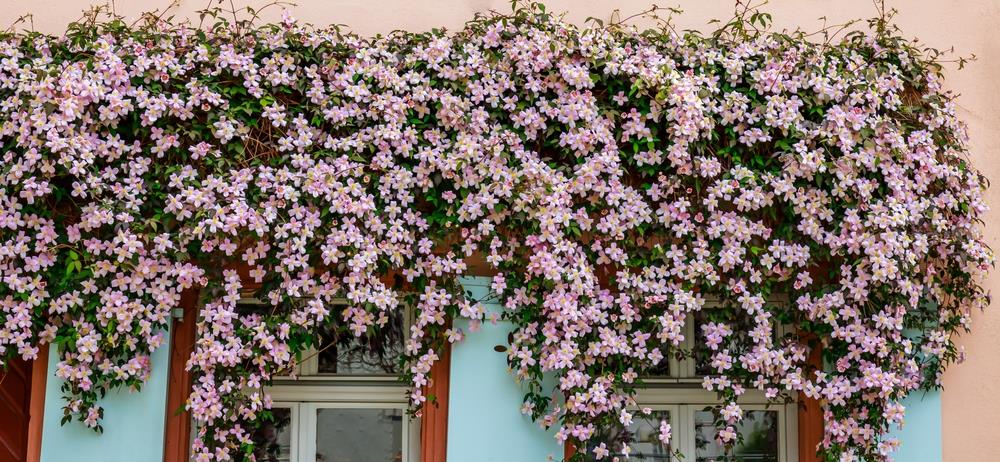
A wall covered with dense, autumn flowering plants features numerous small pink and white blossoms above two windows with blue trim.

In the meantime we can offer you another type of Clematis that is just as stunning. In fact, Clematis are just an incredible flower family that have a rich diversity of colours and tolerances.

The Clematis we recommend is Clematis montana ‘Rubens’ a light pink flower that is deliciously fragrant and is both drought and frost hardy. Learn more about it here.

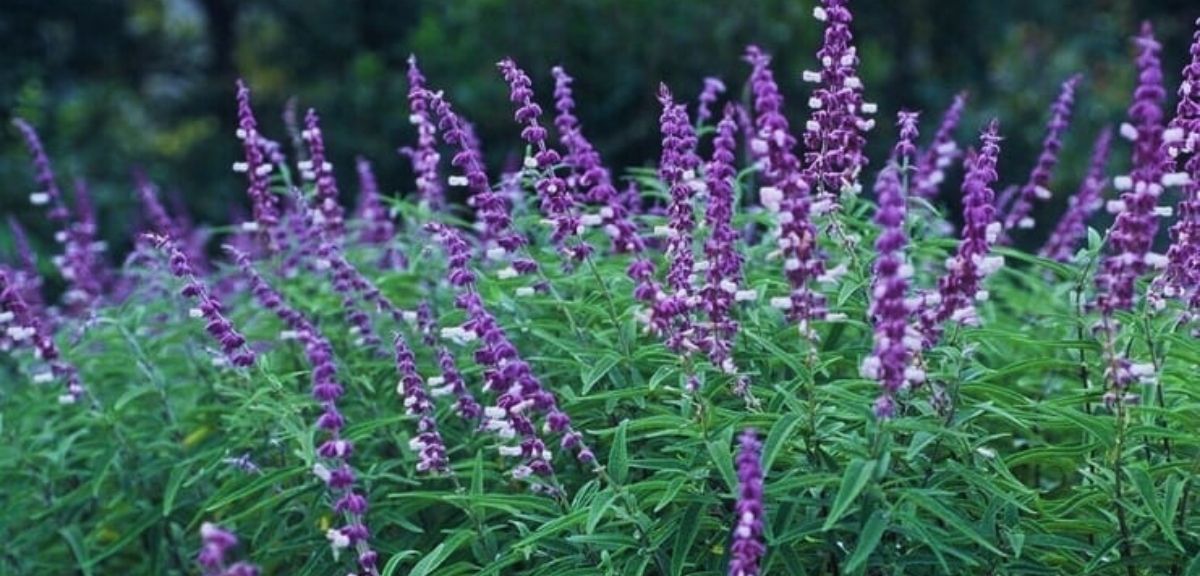
Salvia ‘Mexican Bush Sage’


A cluster of tall, purple autumn flowering plants with green, narrow leaves grows densely outdoors against a blurred background.

For our next option we’re going with a classic, the Mexican Bush Sage, which has been a garden favourite for many years. This is the plant you choose when you have a sunny spot and want something that’s hardy and long flowering.

It’s also a great choice for those needing a good medium sized hedge that can be planted at the front as a feature or used as a layering plant towards the back of a gardening bed.

Mexican Bush Sage is an evergreen shrub that bears tall erect flowers of either purple or white. The flowering period stretches from late summer/early spring to late autumn, and in the right climate it can actually flower all year round.

It grows to a height of 0.8 – 1.2metres tall and wide with grey-green foliage that contrasts nicely with other greenery in the garden. The flowers gracefully arch and bend in interesting ways above the foliage, creating a dynamic and interesting display.

Now although this is a hardy plant that can handle dry conditions, what you don’t want to do is put it in a shady area. A little bit of shade is fine, but extended periods of shade will leave the flowers scraggly and desperately trying to stretch towards the sun.

Mexican Sage Salvia prefers a deep watering once a week when hot but be mindful that hot and moist/wet conditions are not suitable. If you live in a tropical area, it’s best to choose another plant. It works in most soil types.

Although mild frosts can be tolerated by established plants, it’s best to protect young plants for the first few years. If you live in a particularly cold area, then it’s a good idea to plant it in a pot and you can even bring that inside if the weather gets particularly bad.

Pruning isn’t necessary but if you find the flowers are starting to sag and break off then a light prune may be required. Also general pruning can help promote bushiness if you want a fuller looking shrub.

Unlike other Sages, Mexican Bush is actually very good as a cut flower because of the way the fuzzy purple calyces stay on the plant even after the petals have fallen.

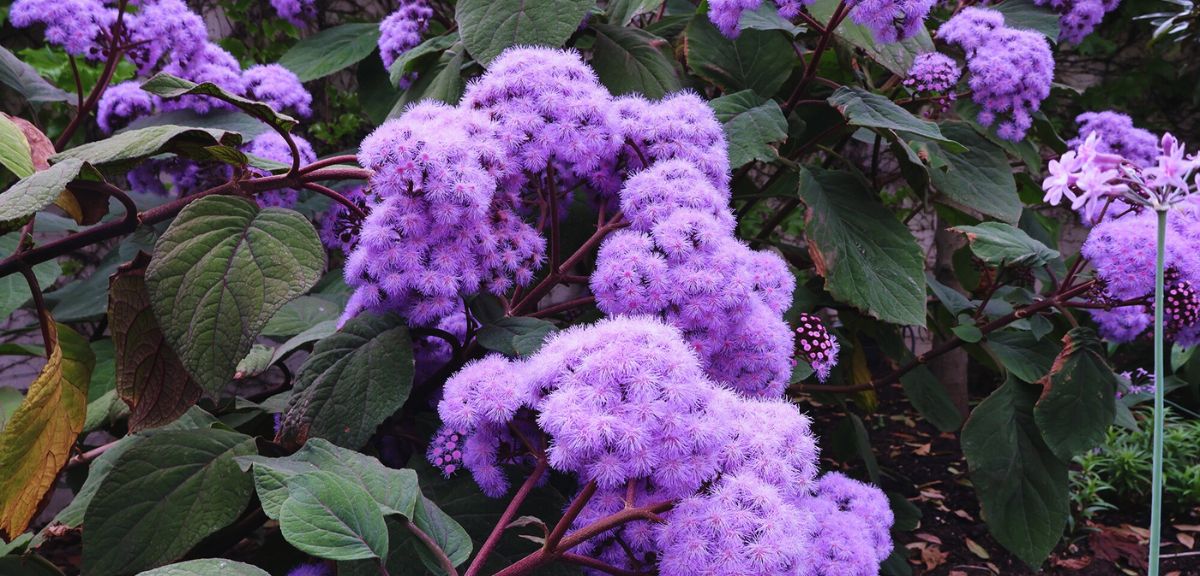
Bartlettina ‘Purple Mist Flower’


Clusters of vibrant purple flowers with fuzzy petals, typical of autumn flowering plants, grow among large green leaves in a garden setting.

When you’re looking for something whimsical and fragrant, you can’t go past the Purple Mist Flower. The aroma is described as an intoxicating mix of lilac and honey that attracts bees and butterflies.

The large, veined leaves make for a beautiful display that gets elevated in spring when large clusters of flowers emerge. The flowers have a very distinctive fluffy look that is both playful and striking – they look quite like fluffy pom-poms!

If you are after a large shrub/bush and have dappled shaded area than this is the perfect plant for you. Purple Mist Flower reaches a size of 3 metres tall and 2.5 metres wide.

Purple Mist Flower can be used in a number of different ways, either as a focal feature in the middle of a garden bed, a layered piece underneath trees or mixed in with other plants to add vibrancy.

In terms of care you want to plant it in a spot that doesn’t receive hot afternoon sun, Purple Mist Flower instead thrives in light, dappled shade. The ideal soil is moist yet well-drained, a good tip to retain moisture is by applying a good layer of mulch.

If you want compact growth, then it’s best to prune it by about a third after flowering. If you live in a frost prone area, then it’s best to choose another plant.

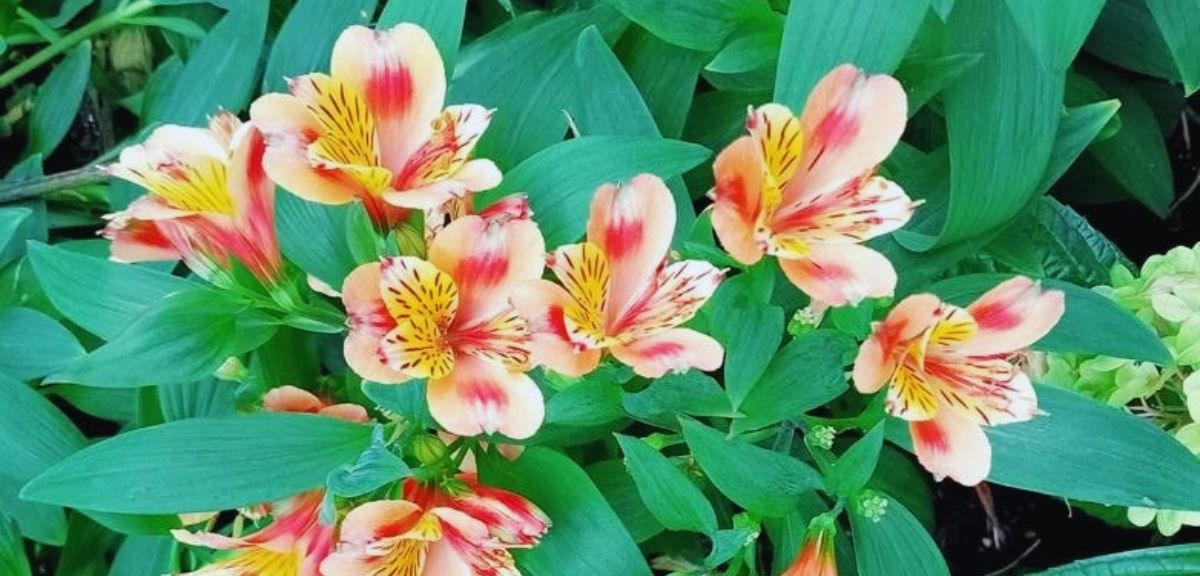
Alstroemeria ‘Princess Diana’ Peruvian Lily


Cluster of peach and pink Alstroemeria flowers with yellow markings, surrounded by green leaves—an elegant choice for autumn flowering plants.

For a truly striking multi-coloured display consider the Princess Diana Peruvian Lily. They have the most delightful combination of orange, red, yellow and cream with brown markings that instantly draws the eye.

Princess Diana Peruvian Lily is an excellent choice for those needing a border plant that is long flowering and low maintenance. They produce flowers for almost 9 months! From mid spring to late autumn you can enjoy those stunning flowers. What’s amazing as well is how great they are as cut flowers – they last for over two weeks in a vase!

If you have a smaller sized garden, these are the perfect flowers for you as they only grow 20-30cm tall and 24-60cm wide. They also do very well in containers so you can have them out on your balcony or patio.

They are a reliable easy to grow plant that is drought tolerant, frost tolerant and generally disease free. Butterflies and bees love them, but they may get damaged by slugs.

To best care for your Princess Diana Peruvian Lily plant it in a full sun or light shade area with fertile, moist, well-drained soil. Make sure to avoid dry soils and choose a spot that is sheltered from the wind.

If you want to promote new blooms, then pull the stems from the base instead of cutting them. Just be careful with the flowers as they can cause skin irritants.

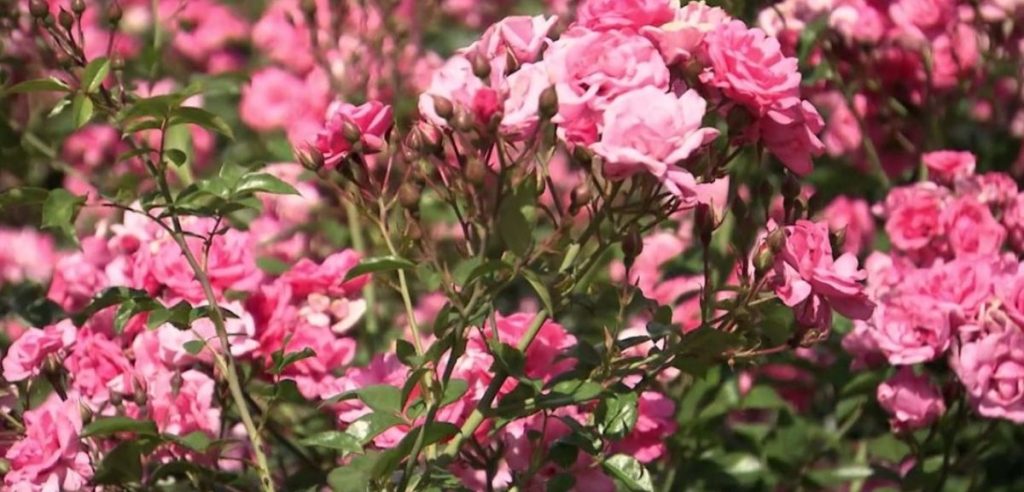
Rose ‘Shady Lady’

A cluster of blooming pink roses, celebrated among autumn flowering plants, is shown with green leaves in bright sunlight.

If you have a shady spot and you’re searching for something vibrantly coloured to brighten it up, here’s ‘Shady Lady’ Rose. It has gorgeous semi-double blooms of hot pink surrounded by glossy green foliage.

As you can see from this list there are quite a few flowers that can’t handle any shade, or only a little bit of shade. What makes Shady Lady so great is the fact that it can tolerate considerable shade.

Shady Lady flowers from early spring to early summer and has a mild fragrance. You can choose between the garden bed or a large pot, they look fantastic planted in a massed effect or a single specimen.

To take care of Shady Lady be sure to water it well in the hottest months of the year but avoid the foliage. The reason being that roses are prone to moisture loving fungus so don’t water from above.

Prune hard each winter to make way for new growth, cutting above an outward-pointing bud and cutting the stem on an angle.

Now we are currently working on trying to add this wonderful flower to our range but are unable to get it for the moment. What we can offer is the fantastic New Dawn, a blush pink semi-double rose that also tolerates shade well. Find out more about it here.

Plectranthus ‘Mona Lavender’


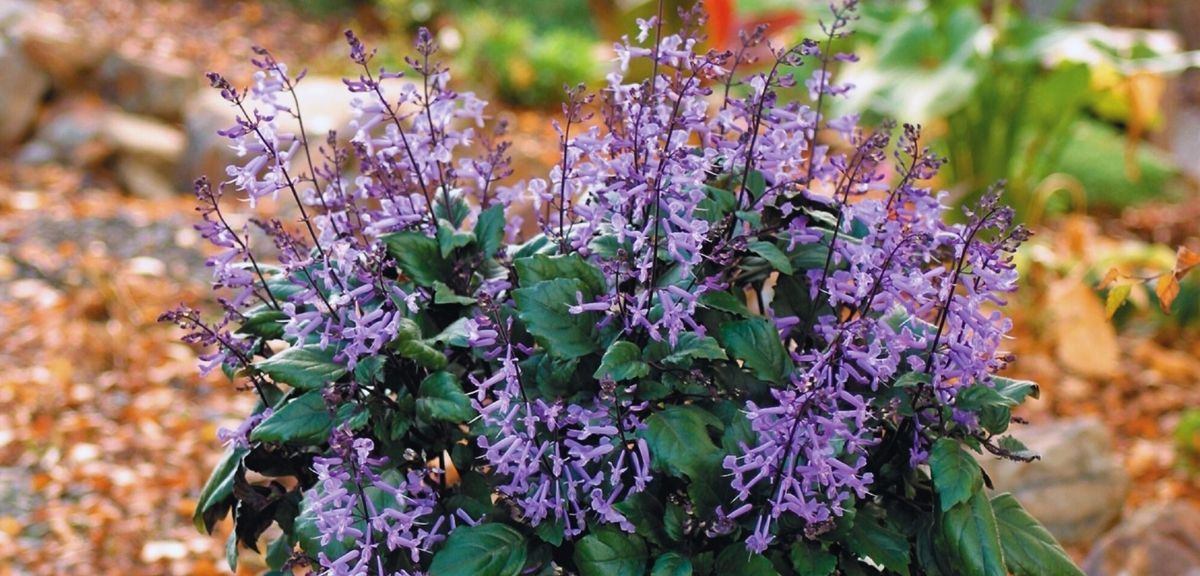
A bushy plant with clusters of small, tubular purple flowers and dark green leaves, this is a striking choice among autumn flowering plants for vibrant garden displays.

Mona Lavender is the plant to choose when you’re looking for a fast growing neat shrub that can be planted in a full sun to part shade location. Also funnily enough, Mona Lavender has also received the Award of Garden Merit from the Royal Horticulture Society in the UK!

Those gorgeous spikes of bright purple flowers emerge in late summer and bloom through autumn. The dark green leaves perfectly compliment these beautiful flowers.

Mona Lavender can of course be planted in the garden but also does great in a container on sheltered patios. It’s a great solution for low light spaces in the garden such as under decks or trees. They also make for a great border plant!

To best take care of your Mona Lavender plant it in moist but well-draining soil and fertilise it will a slow release fertiliser during early spring. If you want a neat shape and dense foliage then give it a light pruning after flowering. Mona Lavender doesn’t tolerate frosts so be sure to give it protection if your area is susceptible to frosts.

Euphorbia ‘Ascot Rainbow’


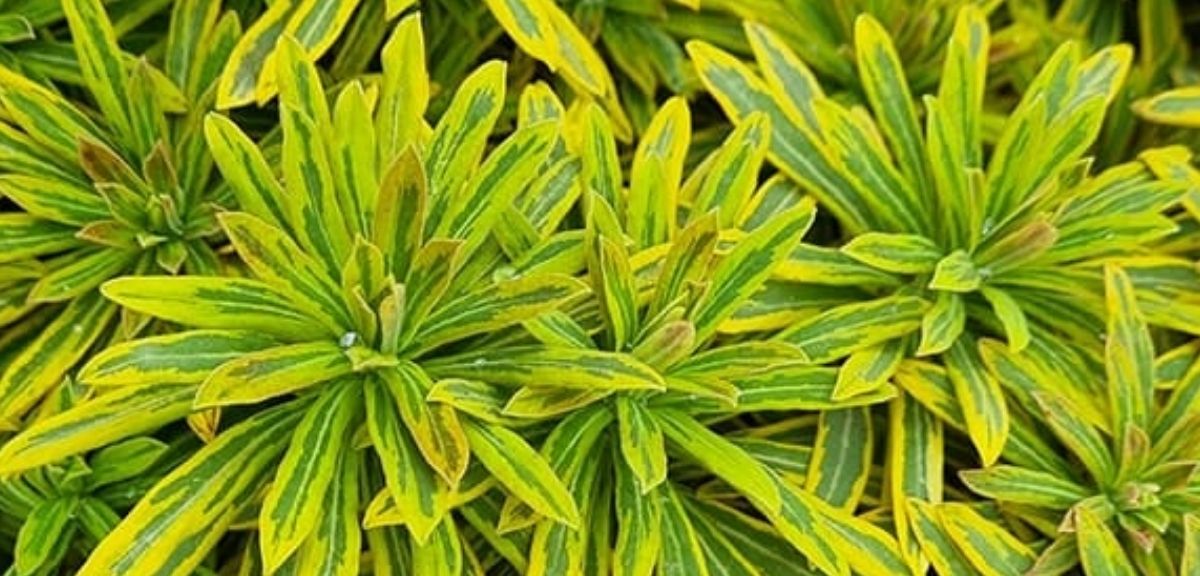
Cluster of green and yellow variegated leaves with pointed tips, forming dense foliage—an eye-catching addition among autumn flowering plants.

Here’s a truly unusual, yet striking, choice. It’s also the plant to go for when you need something that is tough as nails. The flowers are vastly different to any on this list, or most flowers in general. Ascot Rainbow also provides you with year round colour through its variegated foliage.

Those strange flowers are small and tubular with a red eye and grow in colourful bracts above the foliage. They appear from late winter through spring.

Ascot Rainbow is very hardy with an extreme tolerance for hot and dry conditions, as well as a tolerance to frost and coastal conditions. It’s compact habit makes it perfect for any sized garden, or even in a pot on the balcony or patio.

Plant it in almost any type of soil with good drainage as Euphorbias don’t like wet feet. To make Ascot Rainbow thrive give it a slow release fertiliser in spring. You don’t need to prune it but if you would like a bushier habit then you can cut back spent flower stems to their base. If you do cut it, avoid skin contact with the milky sap as it can be irritating to some people.

Tricyrtis ‘Blue Toad Lily’


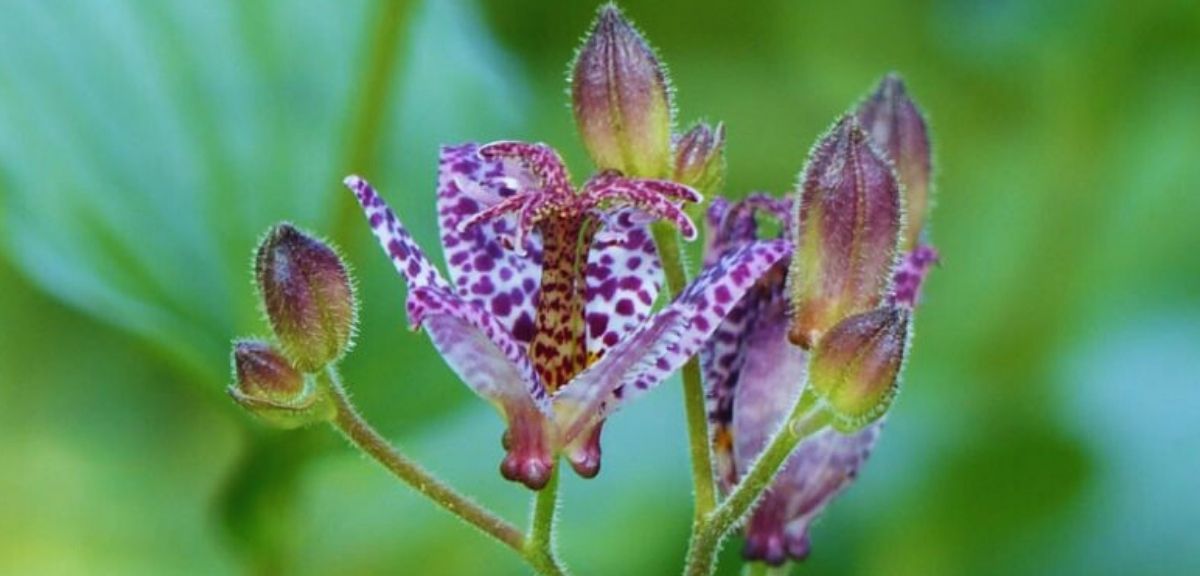
Close-up of a toad lily flower, one of the unique autumn flowering plants, with purple spots and hairy buds, set against a blurred green background.

Here’s a beautiful rarity to add an exotic touch to your garden – the Blue Toad Lily. With orchid-like blooms that are speckled with soft blue and purple dots, Blue Toad Lily is truly a beautiful addition to any garden. We particularly love them in woodland gardens.

Those exquisite flowers appear from late summer into fall, adding colour at a time where most of your perennials are ending. Blue Toad Lily likes partial to full shade areas – even flowering in deep shade.

It reaches a height of about 45-60cm and don’t require much maintenance beyond regular watering to keep the soil moist.

Fuchsia Fuchsita® ‘Blush Violet’


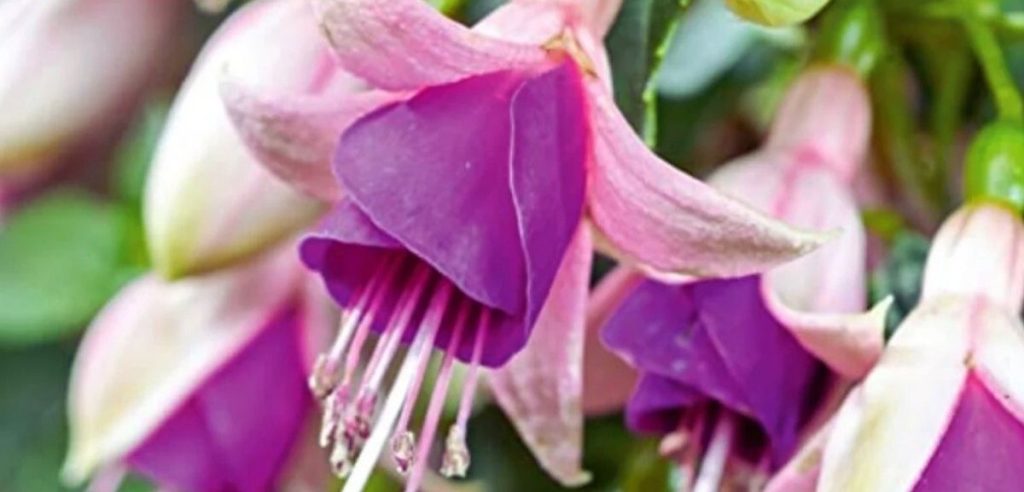
Close-up of fuchsia flowers, popular autumn flowering plants, with pink and purple petals and visible stamens, surrounded by green leaves.

For another intricately and multi-coloured flower consider the Blush Violet Fuchsia. The mix of coral pink and mauve make for a glamourous and striking show. You want to keep it out of the hot sun as it doesn’t do well in Aussie summers. Instead plant it in a half shade half sun area.

Blush Violet Fuchsia attracts butterflies and bees and flowers from early summer to autumn. It’s great for pots and baskets and grows to a max size of about 40cm in height and width. Keep the soil nice and moist, but don’t overwater it.

Persicaria Fascination Red Bistort

Dense cluster of bright pink, spiky flowers with green stems and leaves growing outdoors in a natural setting, perfect for adding color among autumn flowering plants.

Fascination Red Bistort is a real tough plant that can grow in almost any location. It isn’t bothered by sun or shade, soil type, or exposed places. You just need to get it established and then you can pretty much just leave it be.

But for such little effort you get a gorgeous show of vibrant pink flowers surrounded by slender arrowhead leaves. Fascination Red Bistort starts flowering in summer through to the first frosts.

Plant it in sun or part shade and although it can grow in most soils, it will thrive the most in loamy rich moist soils. Fascination Red Bistort grows to a size of about 1.2 metres in height and 0.7 – 1 metre in width. Be sure to trim it for fresh new regrowth and an extended flowering season.

Unfortunately we currently don’t hold stock of this plant, which will hopefully change soon. In the meantime we recommend the wonderful Agastache ‘Orange’ – a perennial plant that is similar in appearance to Fascination Red Bistort. Learn more about it here.

The Eight Other Plants

Here are eight more plants we recommend listed below. We hope we’ve inspired you for all the wonderful flowering plants you can have in your garden!

Be sure to follow our socials and check out our other blog posts for more inspiration!

Feeling inspired to create your own garden, but want some expert advice? Try our one-on-one garden design service with Chris. Together you’ll come up with a selection of plants along with a layout plan that gives you the look you want, as well as being suitable for your local soil and conditions.

get your own tailored modern garden design:


FIND OUT HOW

Articles you may also like

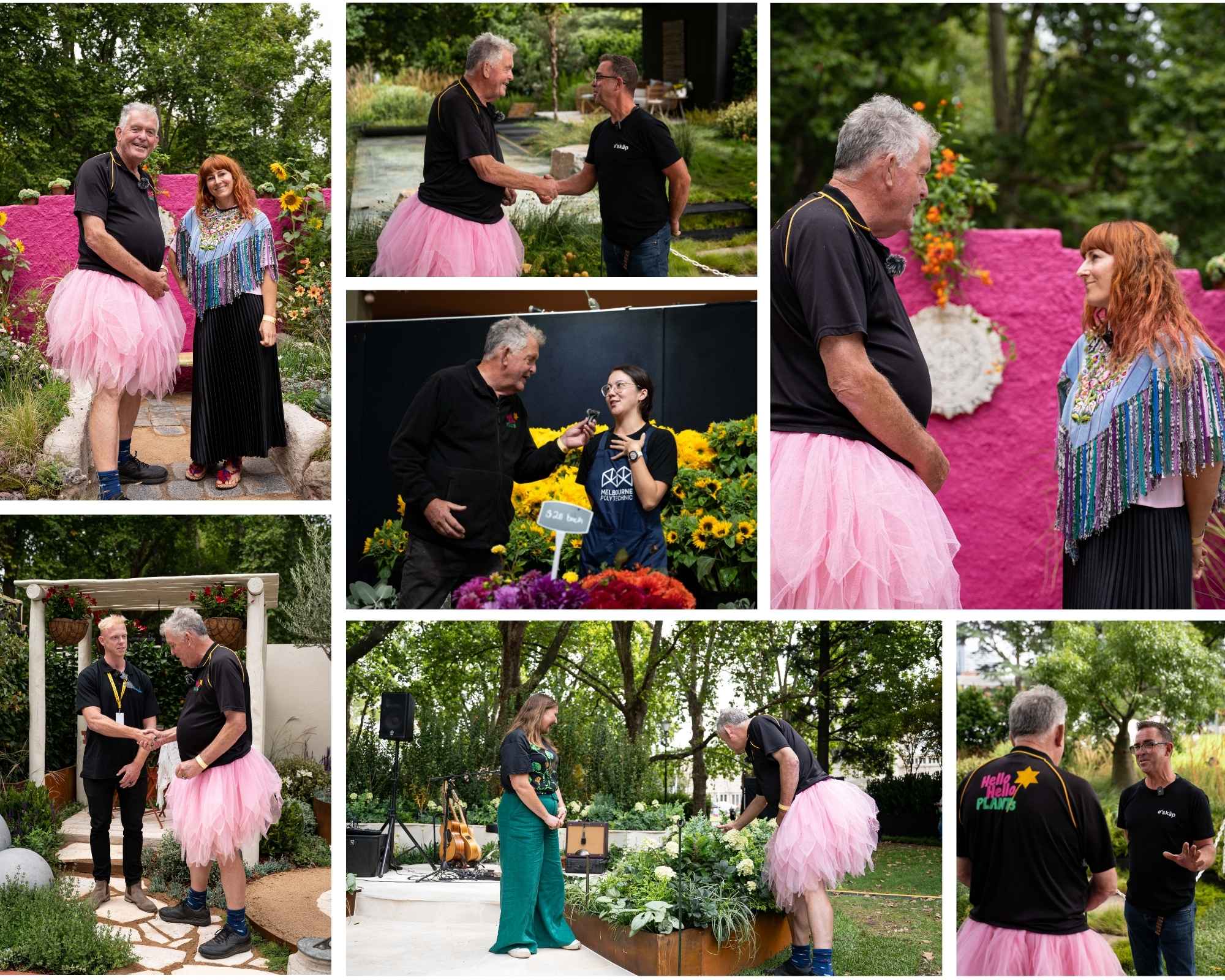
Two people stand in a colorful garden, showcasing the many benefits of gardening. The person on the left wears a pink tutu, while their companion sports a colorful top amidst vibrant foliage and blooming flowers.

The Melbourne International Flower and Garden Show

In all his pink tutu glory, Chris took to the streets of Carlton Gardens where the Melbourne International Flower and Garden Show was taking place.

An older man enjoys the many benefits of gardening as he sits on a white ledge, wearing a black shirt and pink tutu. Behind him, trees sway gently near a charming white gazebo, offering a peaceful retreat in nature's embrace.

We interviewed the Garden Designers, took photos with many people, made educational videos about some of the plants, and so much more! Follow us on our socials and stay tuned for all the incredible content we’ll have coming out in the next few weeks.

People in colorful outfits, including pink tutus, interact outdoors, embracing the many benefits of gardening. They shake hands, pose, and talk near plants and a bright wall.

We wanted to take some time to express our love and appreciation for Melbourne’s horticulture industry and all the hard working people within it. We were truly so impressed by the breadth of talent and horticulture knowledge at the show (although not surprised at all).

We’ve always said that Victoria has the best horticulture industry in Australia, and its become even more apparent with the innovative garden displays at the show.

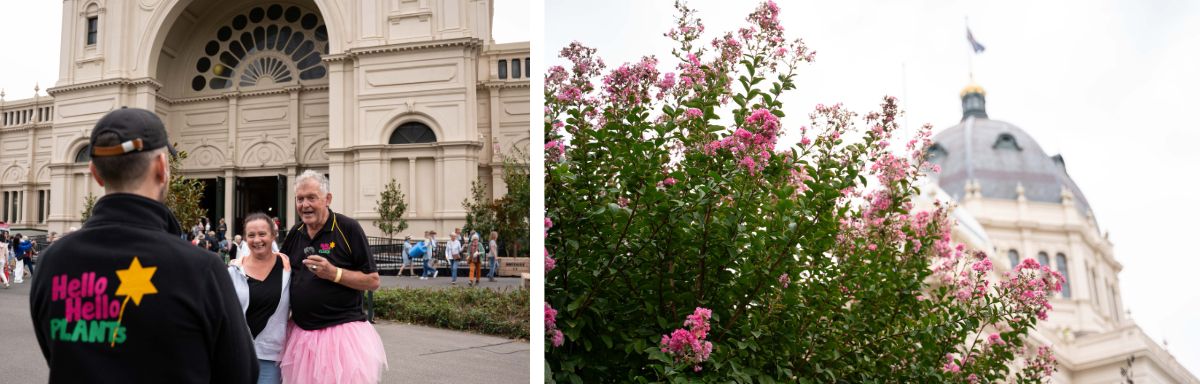
People stand near an ornate building, one wearing a tutu, surrounded by the many benefits of gardening as pink flowers bloom in the foreground.

Did you know the International Melbourne Flower and Garden Show is the Southern Hemisphere’s largest floral and garden event? We went on one of the supposed ‘quietest’ days of the week, but the place was still teeming with people.

If you weren’t able to make it to the show, let us guide you through some of our favourite displays.

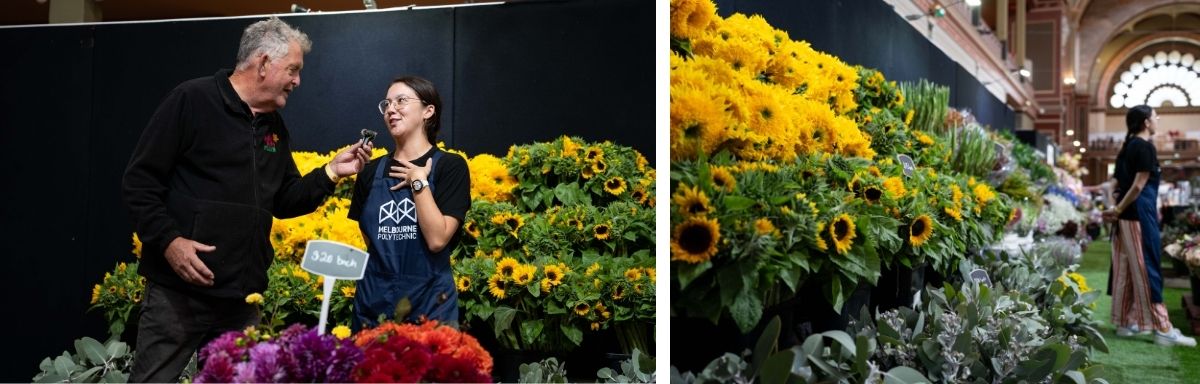
Two people engage in conversation near a vibrant display of sunflowers and other flowers, highlighting the many benefits of gardening. A sign reads "50% Sale," while another person strolls in the background past more floral arrangements.

We started off inside with the great variety of flower bouquets for sale and chatted to Eliza about how well thought out the displays were. It’s such a great idea to have something you can take back to remember the show by, or a delightful gift you can give to a loved one.

We admired the wonderful displays inside, in particular the Growth sculpture created by Sarah Coffey using completely repurposed items from last year’s show caught our attention. It’s so important that we are taking care of our planet and being thoughtful with our purchases.

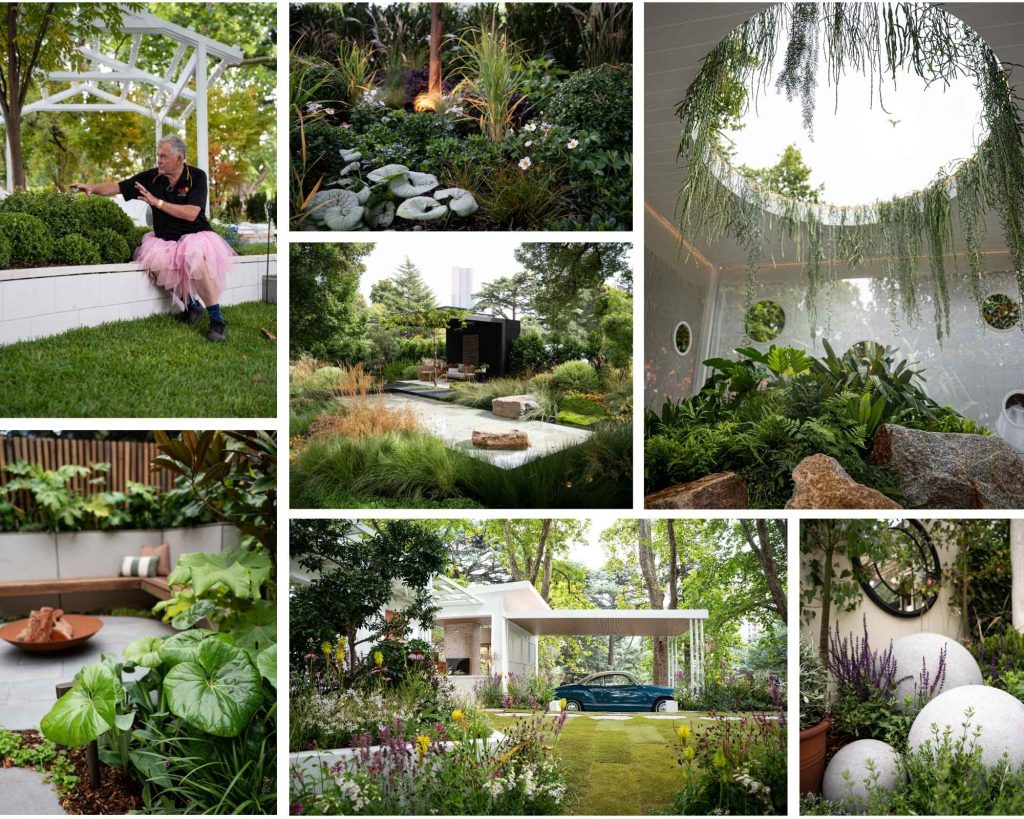
A collage of lush garden scenes reveals the many benefits of gardening with vibrant greenery, flowers, and a serene pond. A man in a tutu adds whimsy amidst modern architecture, complemented by a room with hanging plants and a carport tucked among trees.

After that we moved outdoors where we fell in love with every garden display, and the themes they were conveying.

Nostalgia called back to a time of colourful cottage gardens brimming with flowers, bees and butterflies. Designed by Paul Pritchard we were reminded of the joy that can be found in taking the time to really care for your garden, and that there’s no such thing as too much colour.

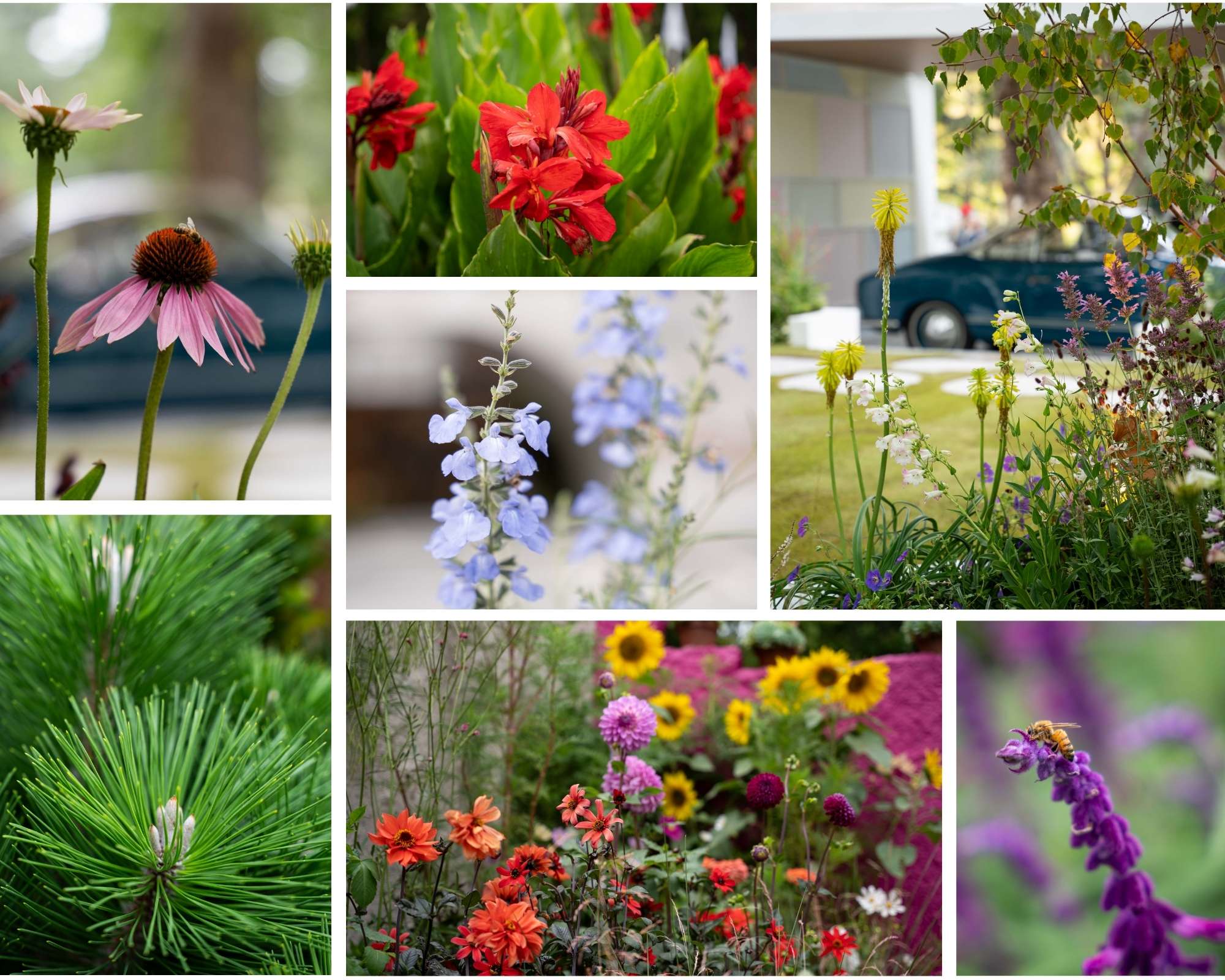
Collage of various flowers and plants, including pink and red blossoms, blue and purple blooms, greenery showcasing the many benefits of gardening, with a distant blue car in the background.

Doable, designed by Jason Hodges, examined our need for instant gardens and encouraged the cheaper route of buying small plants that grow and evolve with your family. A truly beautiful sentiment that more people need to hear.

The green and white garden, Spires and Sounds, circled one of the musicians stages, creating a multi-sensory experience of beautiful visuals and beautiful sounds. It actually made us discover a plant we had never seen before! Designed by Ellen Freeman we loved the way different textures and shades of green were used to create interest and beauty.

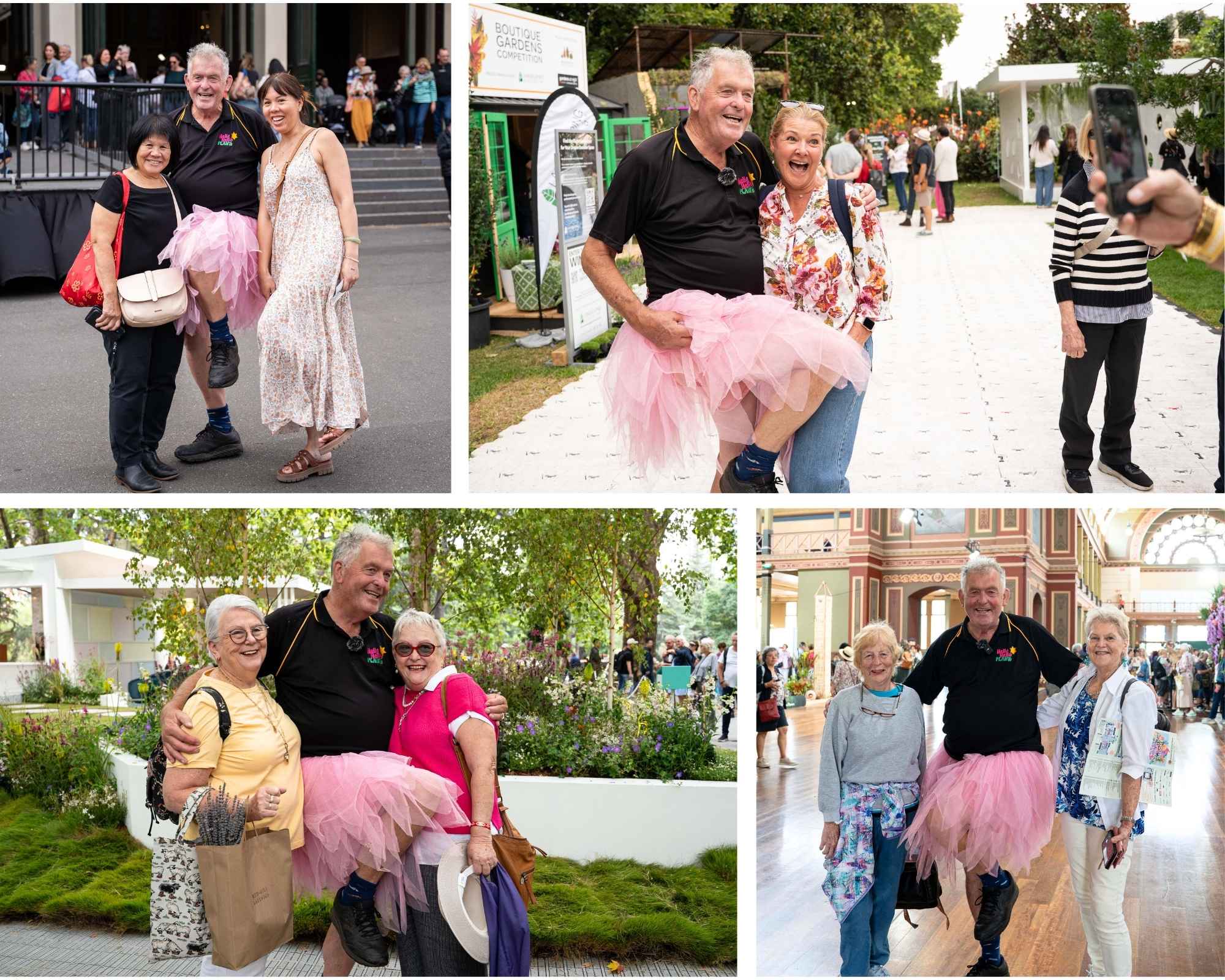
Amidst the lively outdoor event, a man in a pink tutu grins as he poses with various women. He lifts his tutu playfully, surrounded by attendees enjoying the day much like they would enjoy the many benefits of gardening—full of joy and community spirit.

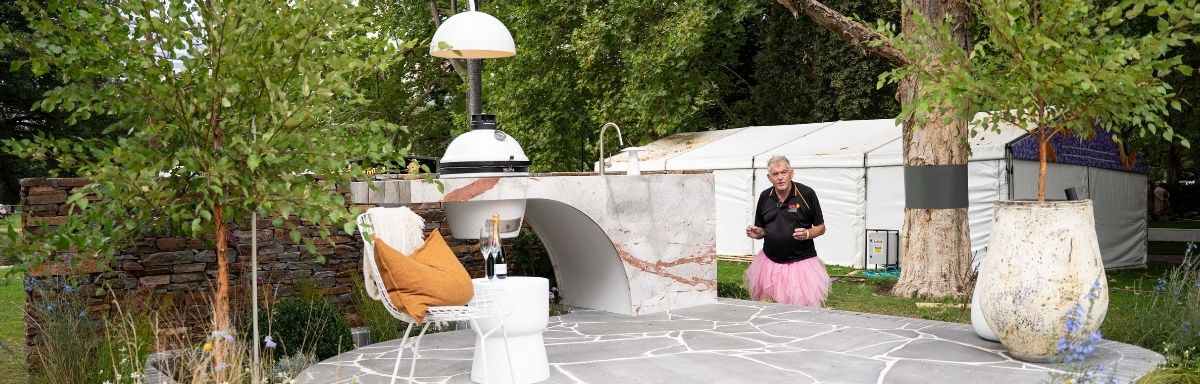
Timeless Outdoors oozed elegance and class, but the plants themselves are actually not that expensive at all! Now we won’t speak for the paving and appliances, but the actual garden itself could be recreated for quite cheap! Designed by Aaron Leslie & Kelsey Johns, we definitely found ourself imagining a summer’s night spent sipping some wine here.

An outdoor stone patio features a pizza oven, table, and chair. A person stands nearby in casual attire with a pink tutu. Amidst the trees and a large tent, this setting perfectly complements the many benefits of gardening that surround it.

An older man in a black shirt and pink tutu joyfully tends to a raised garden bed in a lush outdoor setting, embracing the many benefits of gardening.The Straightcurve Breaking Free display designed by Bayley LuuTomes Design and Bespoke Landscapes made us even more excited for autumn then we already were (which we didn’t think was possible). Already some of the trees were transforming into their fiery autumn hues, creating quite a spectacle that is only going to keep getting better as the weeks go on.

Then we stumbled upon a line of mini-garden stalls that drove home how space doesn’t stop you from having a beautiful garden.

We started with Jake McCorkell’s low maintenance garden, titled Evergreen Escape, that was filled with lush greenery of all shapes and sizes. A really great takeaway from this was layering. One reason why this garden was so beautiful and could fit so many plants was the way they used vertical space. Starting at the bottom with Native Violet, then Tractor Seat, then Bamboo and Magnolias to top it off, there was even a planter box on top of the seats to fit more greenery in the small space.

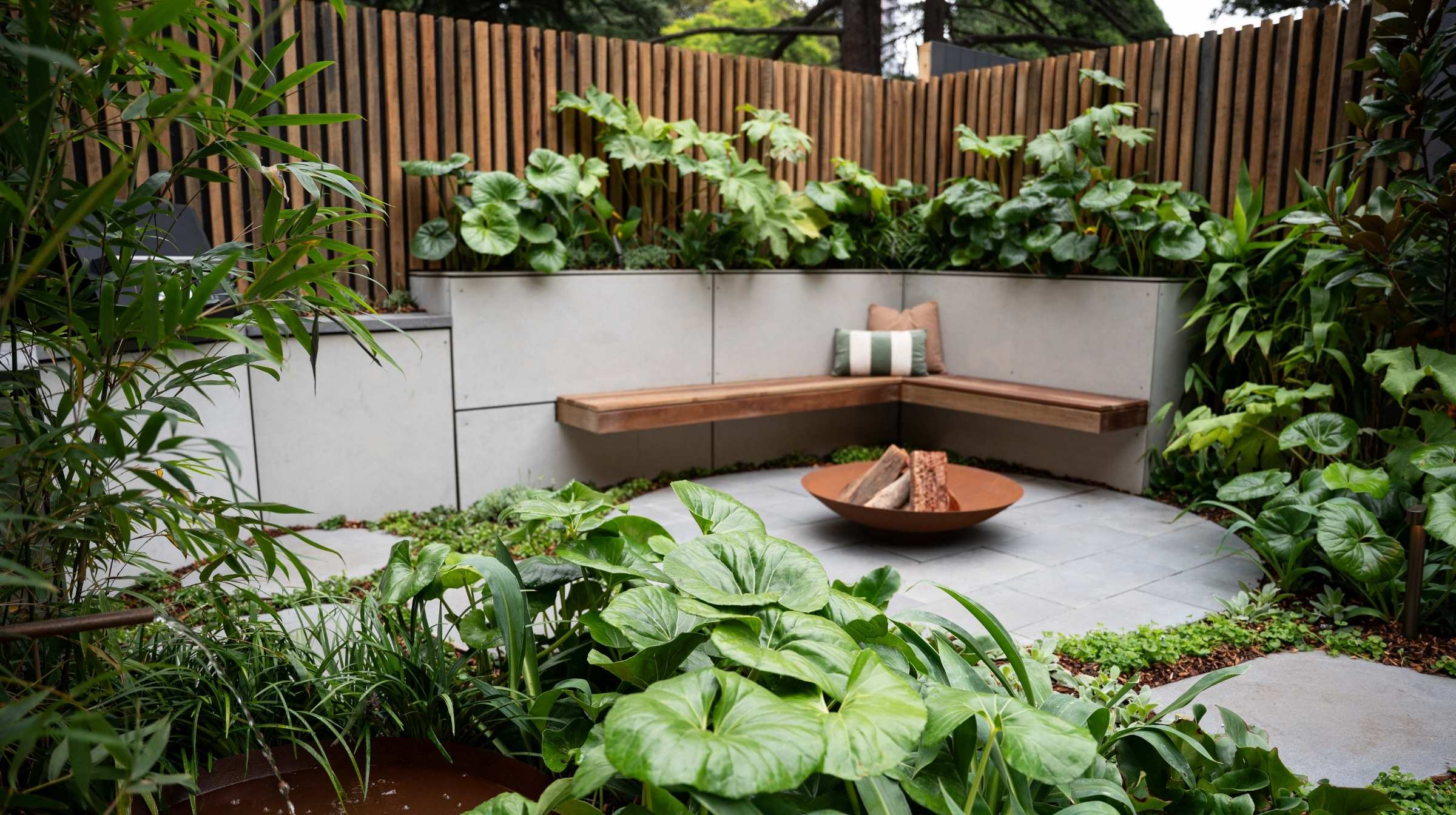
An outdoor garden corner with a wooden bench, enveloped by lush greenery, highlights the many benefits of gardening. A central fire pit warms the circular stone patio, while a vertical wood slat fence completes the backdrop.

Next, we spoke to Adam Clements with his gorgeous Mediterranean inspired garden (he told us he carefully selected the word inspired so that he could also fit in some natives without getting in trouble). Appropriately titled Mediterranean Musings, this is a garden that makes us feel like we’re on an exotic getaway. We really like how this garden showed that you can create a luxurious escape in your own garden.

An elderly man in a pink tutu stands by a flowering bush, showcasing the many benefits of gardening, with a historic building gracefully framing the scene.An explosion of colour greeted us in the next stall with the Mi Casa Es Tu Casa garden designed by Mia Zielinski. It was created out of her travels in Mexico and love for their culture. There was so much to admire in that small space but it didn’t feel cluttered at all, which goes to show how you can still have a colourful garden even if you are very limited by space.

Our final stop was appropriately the show’s winning garden designed by Rob from Distinctive Gardens, and wow, what a well deserved win it was.

We adored every detail that came together to create a lush, luxurious garden that made you feel like you were on a high class getaway. We really think more people need to put the effort into making their gardens serene sanctuaries that they can use to relax and rejuvenate in.

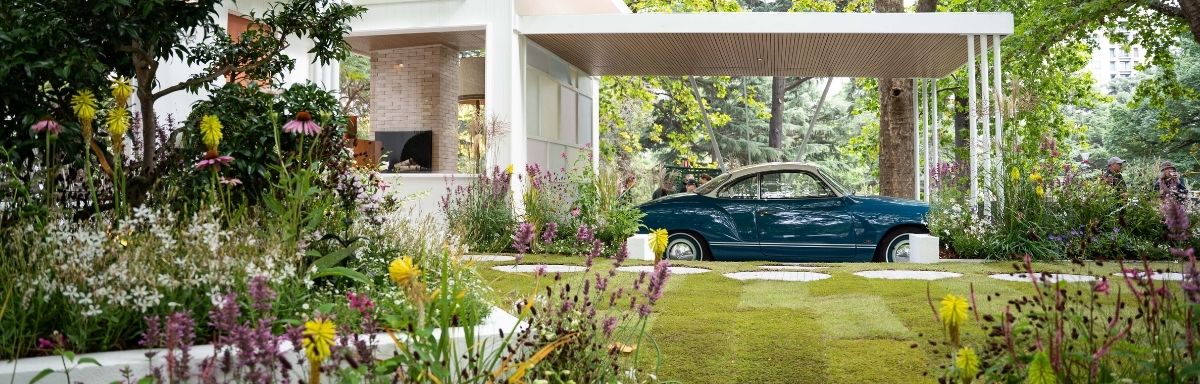
A blue vintage car is parked under a modern white canopy, surrounded by a lush garden that highlights the many benefits of gardening with its colorful flowers and vibrant greenery.

We hope you enjoyed this mini tour through the Melbourne International Flower and Garden Show, whether it was a recap on your own experiences or a peek at something you would otherwise not have had the chance to see. Be sure to follow us on our socials to see all the wonderful videos that come out from this day.

If you see any of these gardens and you’re like WOW I NEED THAT RIGHT NOW, we don’t blame you. It can be difficult knowing where to get started or how to replicate it, which is why we offer a Free Garden Design service. Book yours here.

Feeling inspired to create your own garden, but want some expert advice? Try our one-on-one garden design service with Chris. Together you’ll come up with a selection of plants along with a layout plan that gives you the look you want, as well as being suitable for your local soil and conditions.

get your own tailored modern garden design:


FIND OUT HOW

Articles you may also like

A woman in a black dress strolls through a field of colorful roses, their enchanting scent perfuming the air, with a grassy hill providing the perfect backdrop.

What Do Roses Actually Smell Like?

It’s come to our attention that most labels of roses are blatantly lying. They claim ‘very fragrant’ but when you actually get a whiff of that rose… nothing.

It is so disappointing to pay for something and put in the effort of planting it, only for it to not live up to its label.

Jump straight to our top Fragrant Roses:

Best Fragrant Red Roses
Best Fragrant White/Cream Roses
Best Fragrant Gold Roses
Best Fragrant Climber Rose
Best Fragrant Colourful Roses
Most Powerful Fragrant Roses
Our Favourite Fragrant Rose
Weakest Fragrant Roses

Two people stand in a field of roses, their senses enveloped by the enchanting rose smell, with vibrant red flowers in the foreground and trees gently framing the background.

Which is why we’re going to give you the lowdown on what roses actually do have incredible fragrance PLUS we describe exactly how they smell, because of course everyone has different tastes.

We’re going to give you a list of the best fragrant roses in different categories, the roses with the most powerful fragrance, which rose has our favourite fragrance (hint it’s actually not the most powerful) and point out which roses are quite weak in scent. For some people it’s actually not about the fragrance, but more the look and beauty, which is why we’re including those varieties as well.

We knew our noses alone wouldn’t suffice, so we brought in an expert.

In a garden setting, with fields and trees stretching into the background, a person with long dark hair savors the rose smell of pink blooms.

Sonya, a certified natural skincare formulator, came with us to a rose farm in Gembrook. She is the founder of Miod Skincare that specialises in botanical, naturopath-approved skincare and body products.
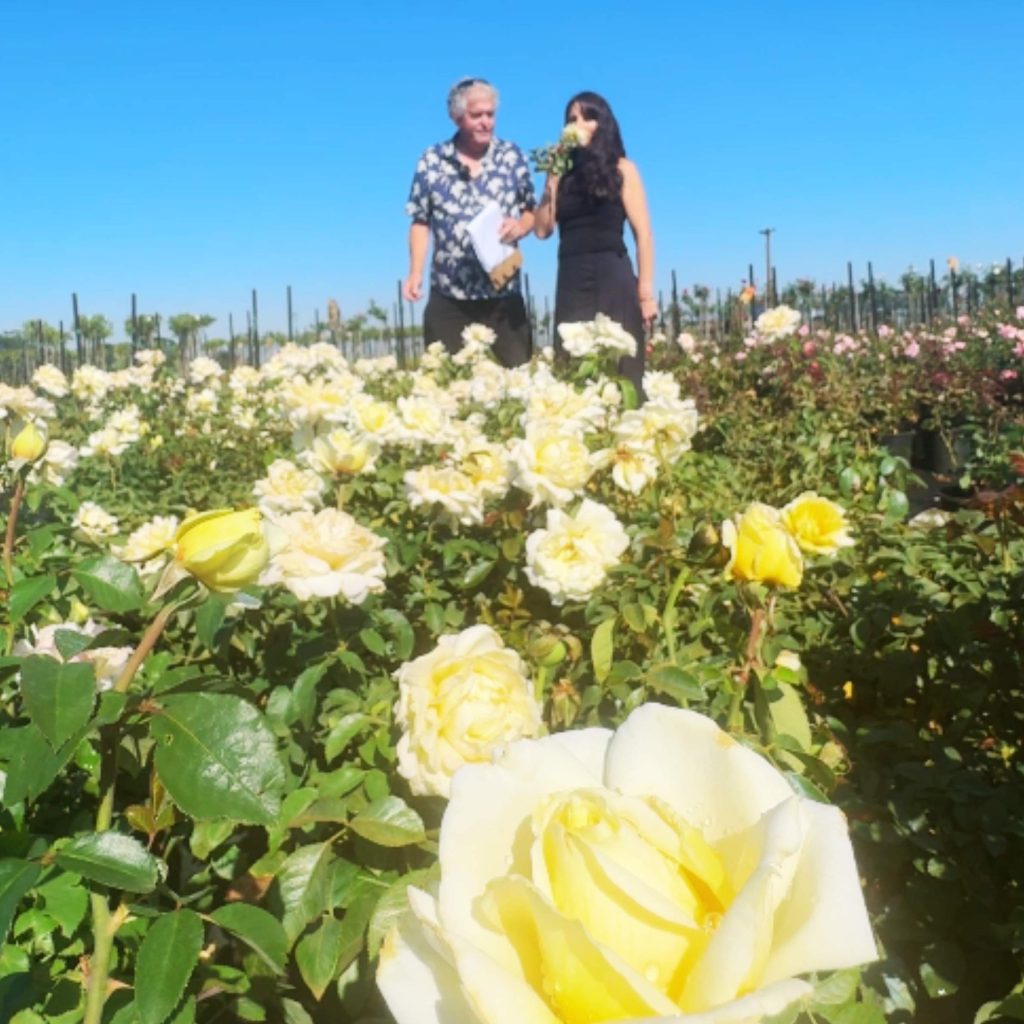
Two people stand in a field of blooming yellow and white roses under a clear blue sky, the air filled with a sweet rose smell. One holds a bouquet.

They stock everything from facial cleansers to body oils to perfumes – all with the intention of creating a luxurious sensory experience. Which, of course, includes the scents. So Sonya knows her stuff. She used a rating scale out of ten to measure the strength of the fragrance for each rose.

Let’s jump right into these delicious roses.

Best Fragrant Red Roses
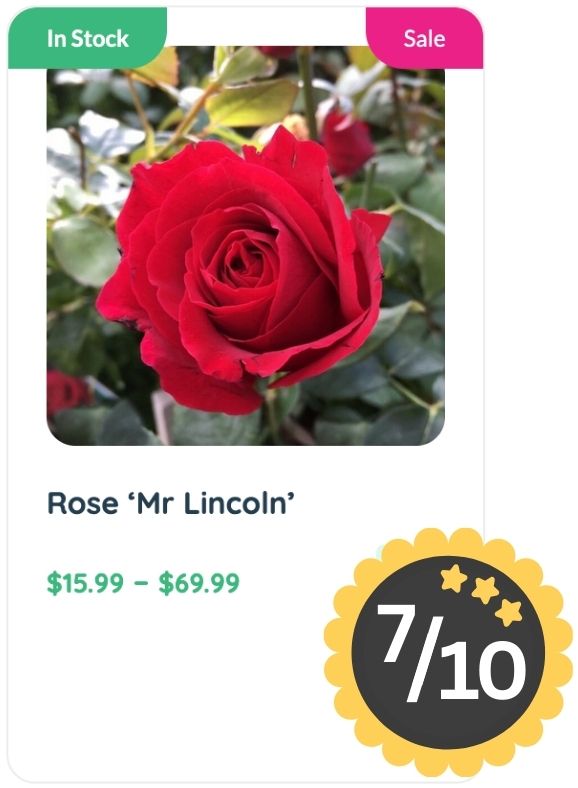

A close-up of a red ‘Mr Lincoln’ rose with green leaves in the background. Known for its classic rose smell, this plant is in stock, on sale, priced $15.99–$69.99, and rated 7 out of 10.

Mr Lincoln

Mr Lincoln is a rose both rich in colour and scent – coming in around at a 7/10. Being such a classic it is beloved by many. The scent is a rich floral with earthly tones.

This rose is quite romantic with its deep red hue and velvety petals. It’s no wonder Mr Lincoln is one of our top selling roses.

Mr Lincoln is great for mass planting, as a cut flower in bouquets and of course would look fantastic in rose and cottage gardens.

They love full sun and well-drained soil.
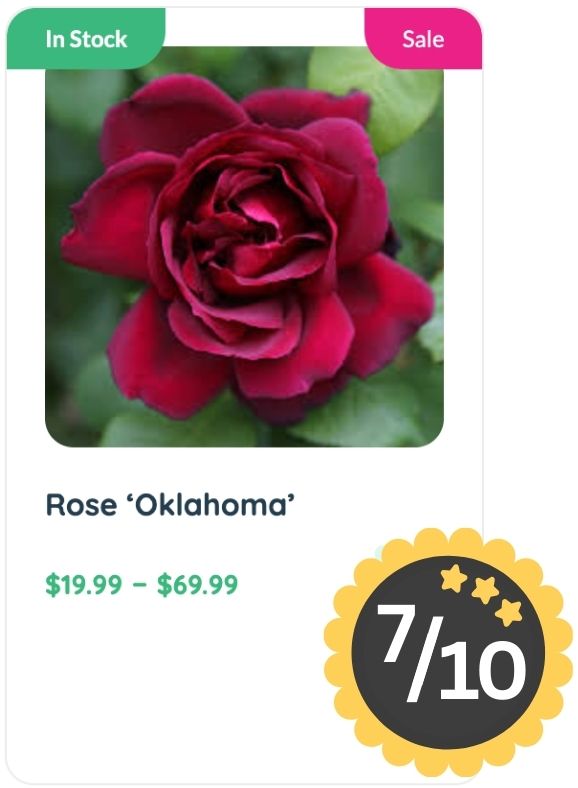

A close-up of a dark red rose labeled "Rose ‘Oklahoma’," renowned for its rich Rose Smell, with prices from $19.99 to $69.99, marked as in stock and on sale, and rated 7 out of 10.

Oklahoma

So many people ask for red roses with beautiful fragrances so here’s another one just for you. We rate Oklahoma also at a 7/10 and Sonya describes it as having a well-rounded floral scent with earthy undertones.

It’s a beautiful rose that is a different shade of red than Mr Lincoln with dark green matte foliage.

Best Fragrant White/Cream Roses


A white Margaret Merril rose in bloom is shown with "In Stock," "Sale," a price range of $15.99–$62.99, a 6/10 rating badge, and a hint of the classic Rose Smell.

Margaret Merril

Margaret Merril gets a good 6/10 with a sweet floral scent that has touches of lime. But did you know this rose has one multiple awards?

Yep, its won the Rome Gold Medal, the Geneva Gold Medal and the Hague and Auckland Fragrance awards. Pretty crazy right?

The blooms themselves are stunning – tall and large with prominent red stamens. They are also dainty looking and semi-double, creating a truly beautiful show in your garden.
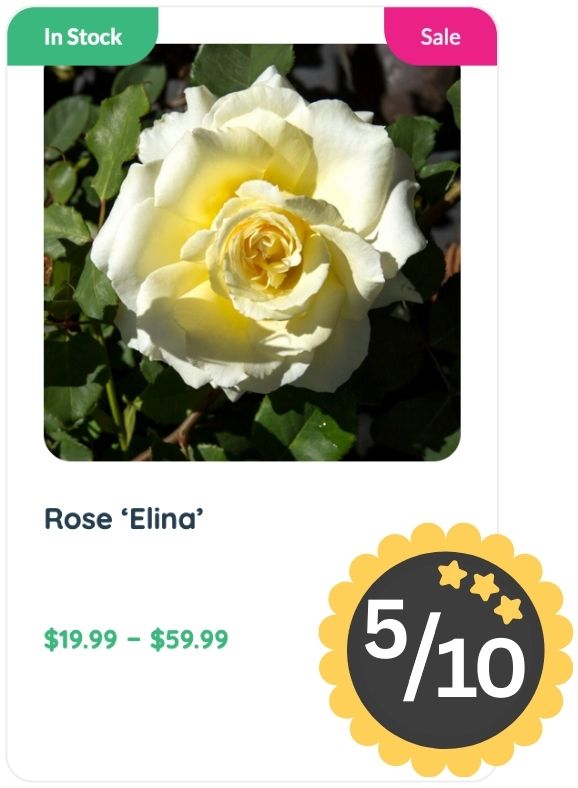

A cream and yellow rose labeled "Rose 'Elina’" is shown for sale, priced $19.99–$59.99, marked as both "In Stock" and "Sale," rated 5 out of 10, with a subtle Rose Smell.

Elina

Although Elina only gets a 5/10, its fragrance is so delicious we had to include it on this list. Sonya described the scent as a very pleasing sweetness with light floral tones.

Elina is also an award-winning rose that has many positive features such as its disease resistance, abundance of blooms, versatility in applications and toleration of many different weather conditions.

Elina’s hue is a dreamy blend of cream and soft yellow.
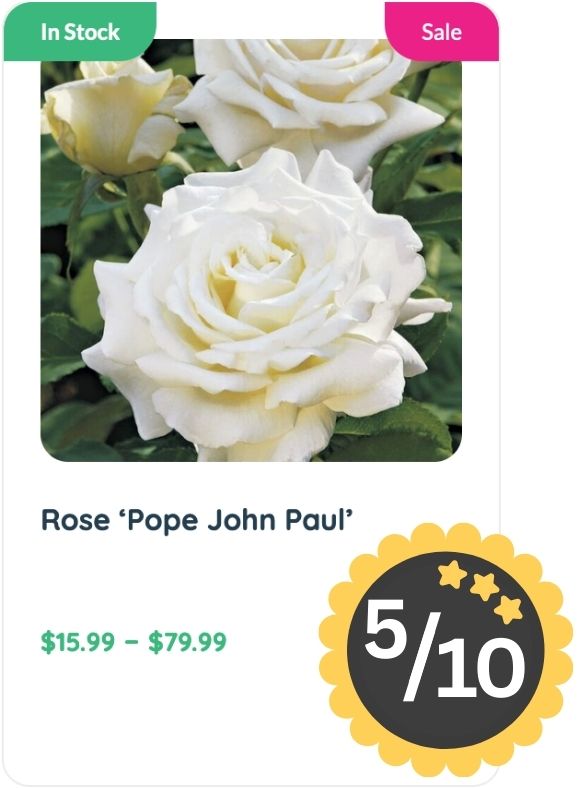

A white rose labeled “Pope John Paul” with a delicate rose smell, priced $15.99–$79.99, in stock and on sale, rated 5 out of 10 stars.

Pope John Paul

Another 5/10, Pope John Paul has a sweet lavender scent with mild notes of citrus. Also this rose is so elegant and beautiful that it’s grown in the Vatican’s private garden!

It has even won trophies and medals all around the world for its delicious fragrance, superior disease resistance and vigorous growth habit.

Pope John Paul is a pure white shade, making it perfect for classy style gardens such as a Green and White Garden or a Hamptons Garden.
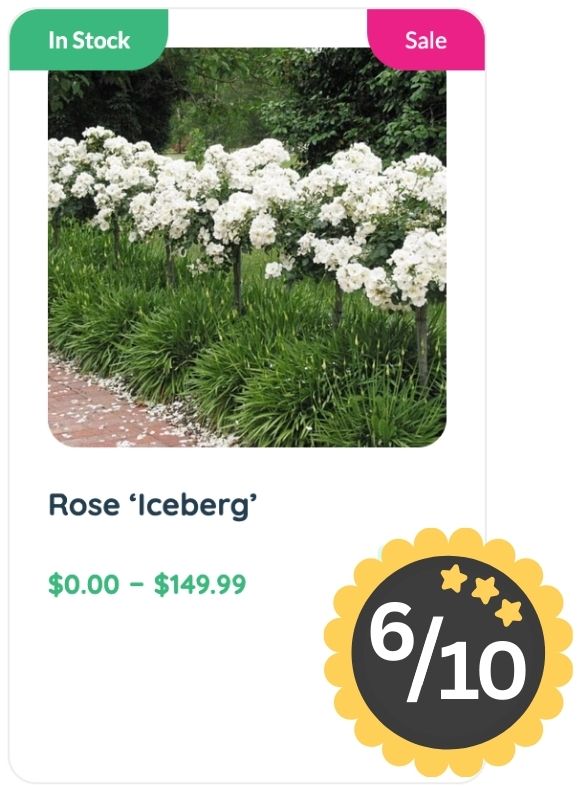

A row of white 'Iceberg' rose bushes, known for their subtle rose smell, lines a path; product listing indicates prices from $0.00 to $149.99, with a 6 out of 10 rating shown.

Iceberg

This classic Melbourne rose actually gets two ratings. Sonya pointed out that a singular rose by itself is only 4/10, but when smelt together in a clump it gets 6/10. Because Iceberg flowers en mass, its more appropriate to give it a 6/10 rating.

The scent is sweet with notes of Star Jasmine. The blooms are striking white and form in tightly packed clusters, hence boosting the strength of the fragrance.

They are a thornless, hardy rose that are disease resistant and tolerant of poor soils.

Best Fragrant Gold Roses
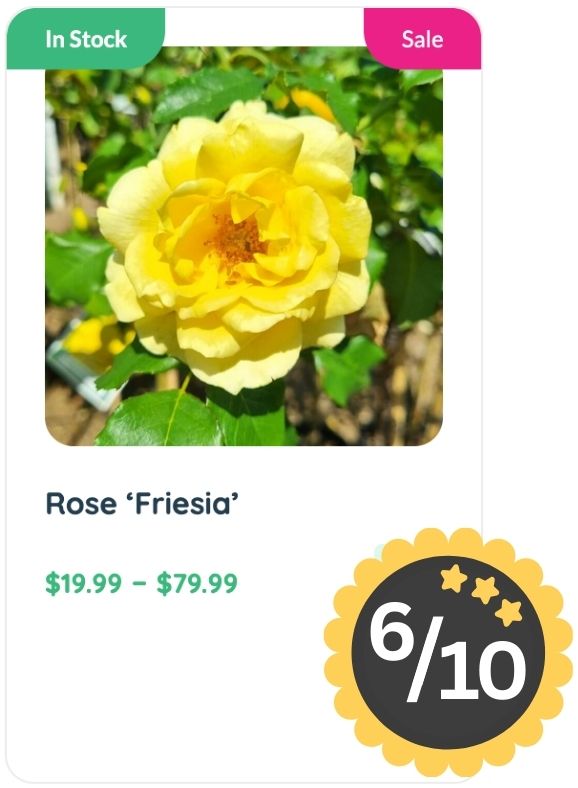

A yellow 'Friesia' rose in bloom known for its delightful rose smell is shown with a price range of $19.99 to $79.99, marked as in stock and on sale, featuring a 6 out of 10 rating badge.

Friesia

Friesia gets a good 6/10 rating and has a sweet touch of vanilla accompanied by subtle notes of citrus. A very delicious combination!

The roses are a strong golden-yellow hue that is instantly attention grabbing – they would be perfect for adding a pop of summery-colour to the garden. They are also double flowers, making them even more beautiful.

Friesia is an upright growing, compact bush, so its perfect for smaller sized garden.

Best Fragrant Climber Rose
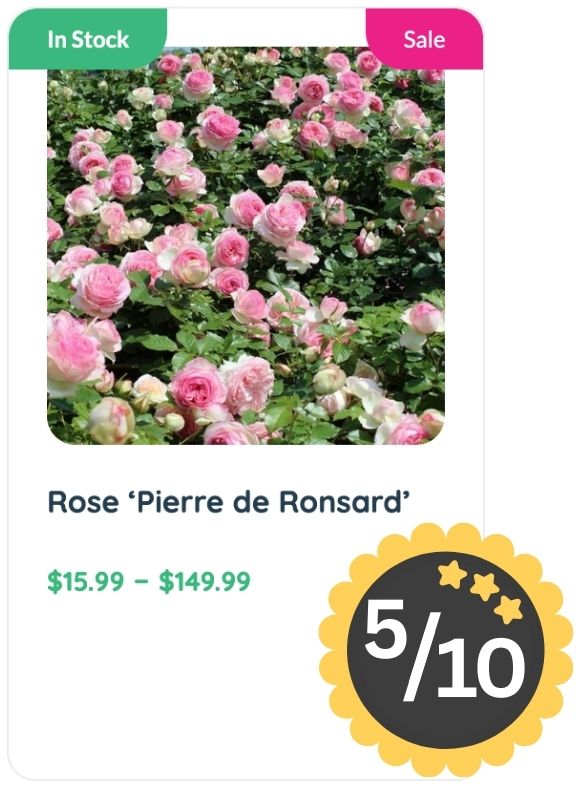

A garden bed of pink and white ‘Pierre de Ronsard’ roses is shown, known for their delightful rose smell. The plant is on sale, priced from $15.99 to $149.99, with a 5 out of 10 rating.

Pierre de Ronsard

Pierre de Ronsard had one of Sonya’s favourite scents because of its distinctiveness and complexities. She rated it at a 5/10 and described it as having a spicy sweet ginger fragrance with floral lemony tones. Utterly divine.

Being a climber means you can get more creative in how you plant Pierre de Ronsard – cover a fence along the driveway or jazz up a pergola.

The edges of the rose are a creamy white hue that smoothly transitions into a mix of deeper and delicate pinks. Pierre de Ronsard has a long flowering season, meaning you can enjoy that divine perfume for ages.

Best Fragrant Colourful Roses
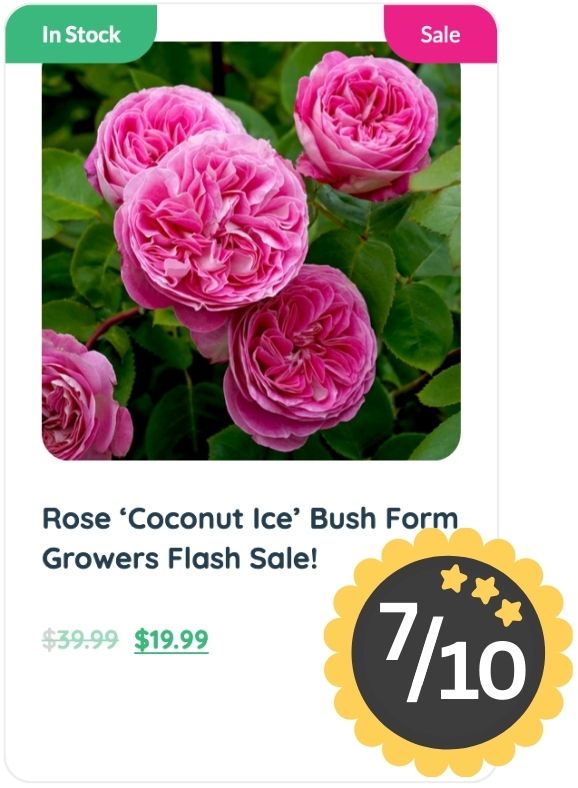

A cluster of pink 'Coconut Ice' roses with green leaves, exuding a lovely rose smell, labeled as in stock and on sale for $19.99, with a 7 out of 10 rating badge.

Coconut Ice

Coconut Ice came in strong with a 7/10 and was described as a powerful floral scent mixed with strong notes of citrus.

The flowers are truly stunning – the top side of the petal is a musky pink, with the bottom of the petal being a soft white. It truly looks like one of those coconut ice slices!

Coconut Ice is a neat bush that is very resistant to disease and is one of the more modern varieties of rose.
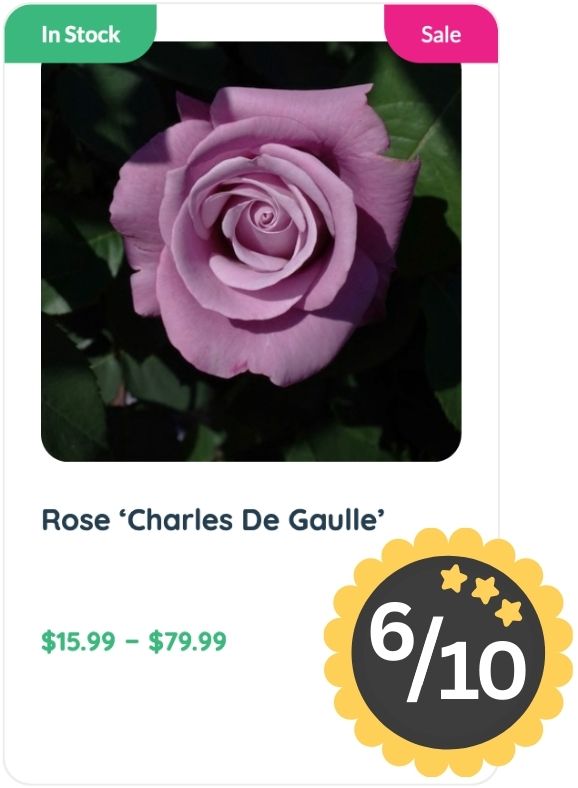

A lavender rose with a captivating rose smell, labeled 'Charles De Gaulle', for sale at $15.99–$79.99, with an in stock badge and a 6 out of 10 rating.

Charles de Gaulle

Charles de Gaulle received a solid 6/10 rating from Sonya, and she said it’s fragrance was earthy with light undertones of lemon and Geranium.

The colour is exquisite – a romantic shade of lilac purple that would look incredible in any garden and then popped in a vase on the kitchen counter.

Charles de Gaulle is perfect for mass planting in Rose and Cottage Gardens but would also quite suit the Hamptons Style Gardens.
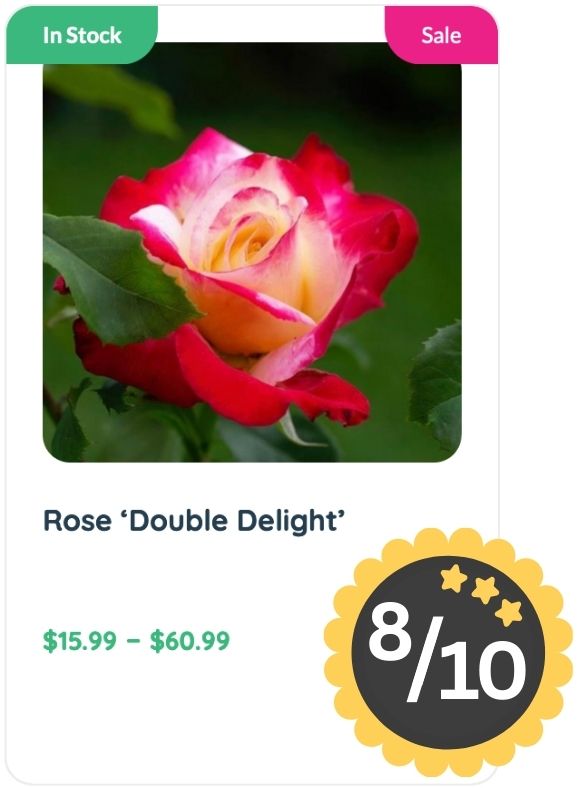

A Rose ‘Double Delight’ flower with red and yellow petals graces the product card, featuring its signature Rose Smell. On sale, in stock, and rated 8 out of 10, it's priced $15.99–$60.99.

Double Delight

Double Delight definitely earns its title with a rating of 8/10 and the perfume of a true classic rose with sweet citrus notes.

It’s also delightful in its dual hues of hot pink and creamy white, creating a striking look in the garden. Double Delight has large double blooms and even repeat flowers – so you’re getting PLENTY of fragrance with this rose.

They also don’t require much maintenance which is incredible to get such great beauty and strong perfume for little effort.
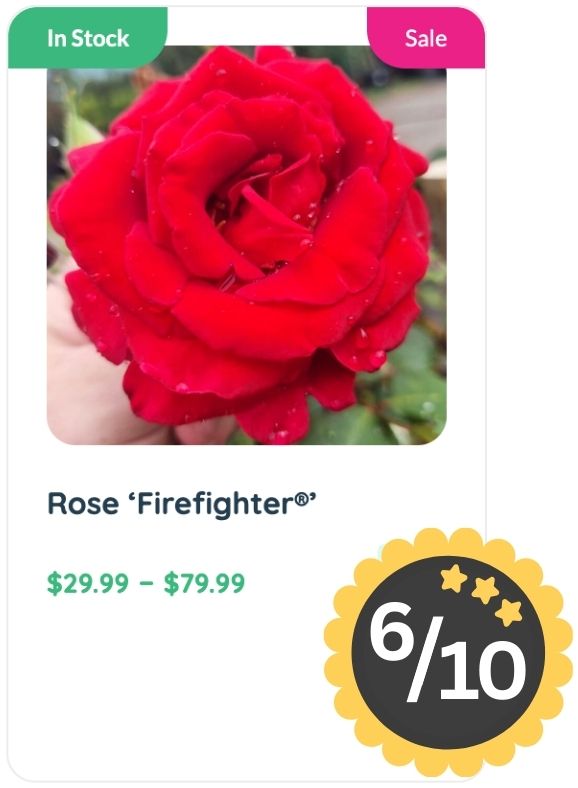

A hand holds a vibrant red rose labeled 'Firefighter,' known for its strong rose smell, with price range $29.99–$79.99 shown, in-stock and sale tags, and a 6 out of 10 rating badge.

Firefighter

Sonya defined Firefighter as having a true rose fragrance, coming in at a 6/10 with the addition of earthy tones and slight Geranium notes.

A rose called this can only be a bright fire engine red shade, and that it is. Firefighter was also named to commemorate all the brave Firefighters in the world.

Being almost thornless means it’s very easy to pick and use as a cut flower, plus Firefighter is very disease resistant.
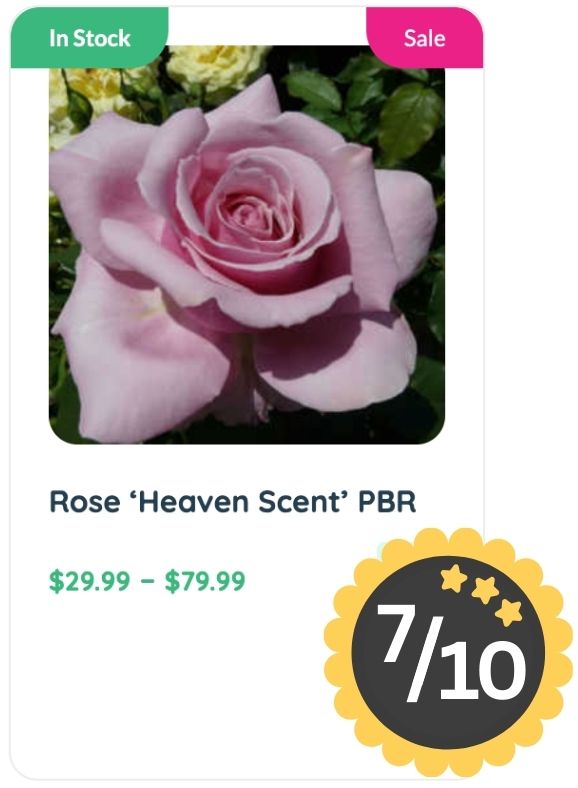

A close-up of a pink rose labeled 'Heaven Scent' PBR, renowned for its delightful rose smell, marked in stock and on sale, priced between $29.99 and $79.99, rated 7 out of 10.

Heaven Scent

Appropriately named, Heaven Scent rates a 7/10 and has a sweet floral scent with touches of vanilla and citrus.

The flowers have a gorgeous hue of lavender pink and ruffles at the end making for a very cute look. Heaven Scent repeat flowers continually throughout the seasons.
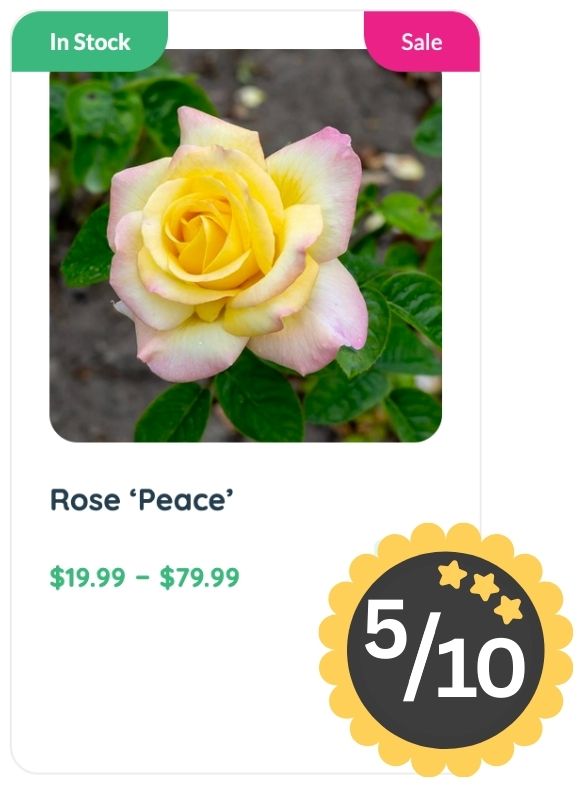

A yellow and pale pink rose labeled 'Peace' is shown for sale, priced from $19.99 to $79.99, featuring a subtle rose smell, a 5 out of 10 rating badge, and marked as in stock and on sale.

Peace

Peace is a solid 5/10 rating with a mild fragrance that is very sweet and floral.

The blooms are a gorgeous mix of yellow, cream and pink and will even change in colour, sometimes fading to a softer hue, and producing a mix of different colours throughout the season. How exciting!

Most Powerful Fragrant Roses
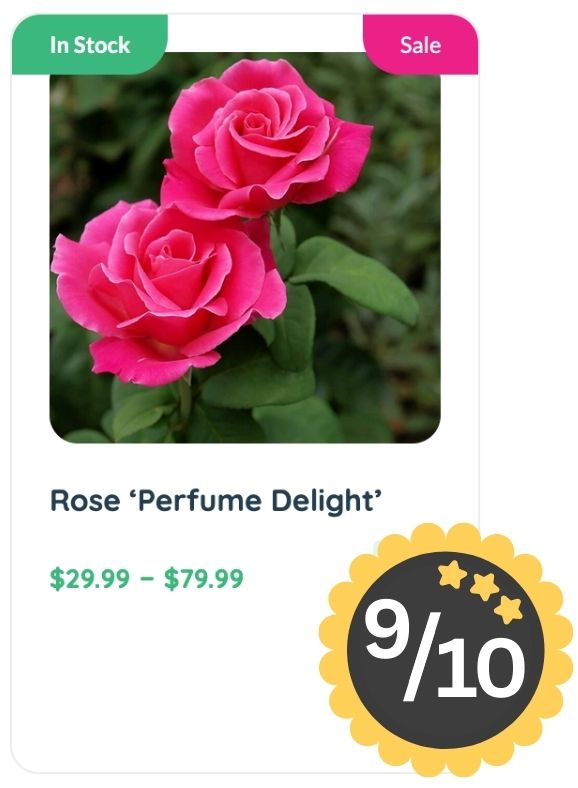

Two bright pink roses labeled "Rose ‘Perfume Delight’" boast a lovely rose smell, with prices from $29.99–$79.99, in-stock and on sale, plus an impressive 9 out of 10 rating badge.

Perfume Delight

Now there were actually no roses that received a 10/10 rating, but Perfume Delight came very close with a 9/10. Sonya states that the fragrance is very floral, very sweet and very powerful. So if you want a rose that is going to fill your entire garden with perfume, this is the one to pick.

Perfume Delight has large flowers of the most beautiful shade of deep pink and is a very vigorous grower. The flowers are on quite tall stems, so they are perfect for using as cut flowers.
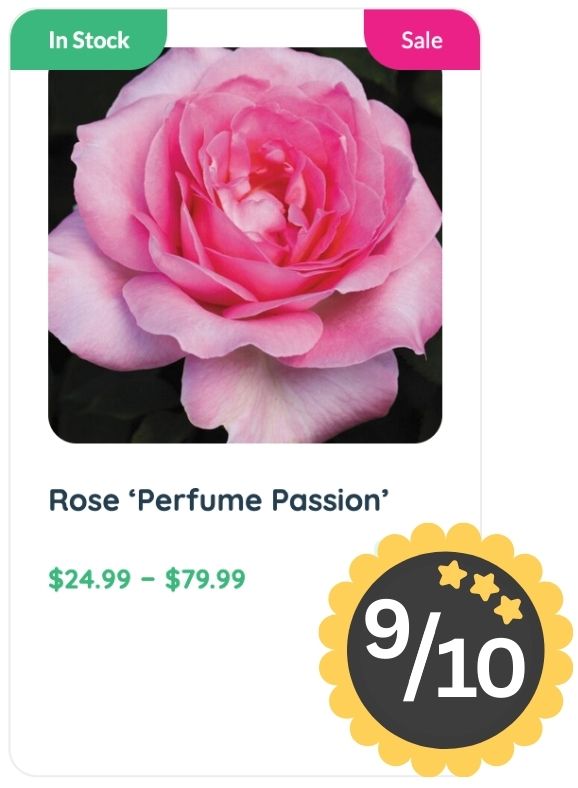

Close-up of a pink rose labeled "Rose ‘Perfume Passion’" for sale, priced from $24.99 to $79.99; a 9 out of 10 rating badge highlights its exquisite rose smell.

Perfume Passion

Another 9/10, Perfume Passion’s aroma was defined as a slight citrus with strong earthy undertones. The flowers are a beautiful pink shade and grow in abundance on tall, almost thornless, stems.

Which make it another perfect choice for cutting off and bringing inside – or even making a bouquet for a loved one. Perfume Passion is hardy and disease resistant, meaning you don’t need to fuss over it.

Our Favourite Fragrant Rose
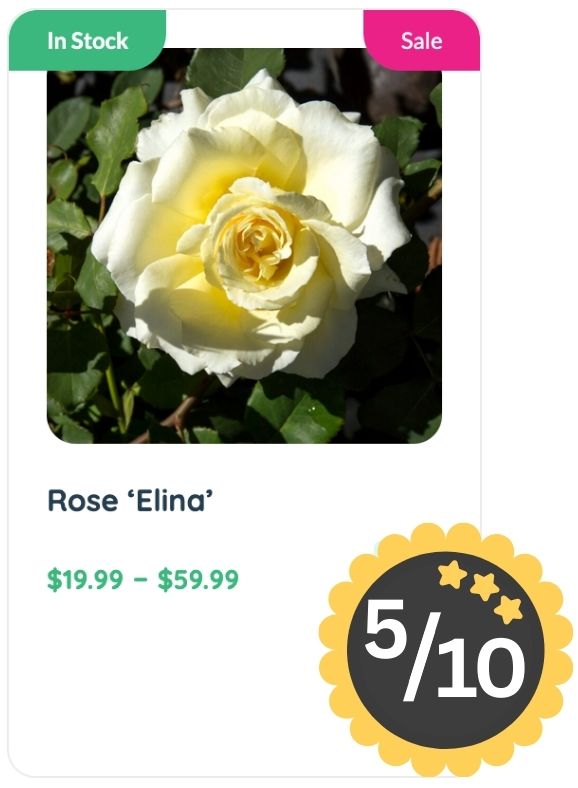

A yellow-centered white rose labeled "Rose ‘Elina’" is shown for sale, priced $19.99–$59.99, noted for its delicate Rose Smell, marked as in stock and on sale, with a 5 out of 10 rating badge.

Elina

Was this what you were expecting to be our favourite rose? Now you may think it’s insane to put a 5/10 for strength of fragrance as our favourite rose.

But something we discovered on our expedition is that strength of fragrance isn’t actually the most important thing when it comes to rating roses.

What we loved about Elina is the incredible muti-layered affair of its fragrance, and the sweetness that was so captivating to the sense.

We aren’t the only ones that adore Elina, in 2006 it was inducted into the Rose Hall of Fame by the World Federation of Rose Society. Talk about being an esteemed plant!

We also can’t get enough of those stunning blooms that are the perfect size in butter soft hues of yellow and cream.

Weakest Fragrant Roses


A peach-orange 'Just Joey' rose in bloom, known for its delightful rose smell, with in-stock and sale labels. Priced $15.99–$79.99, it has a rating badge showing 1 out of 10 stars.

Just Joey

1/10 is the tiny rating we’re giving Just Joey – you really had to take multiple whiffs and get up close to catch a hint of fragrance from it.

But where it lacks in scent it makes up for in beauty – the bright shade of apricot orange instantly draws the eye. The petals are also slight ruffled and fade to a lighter orange on the edges, creating more visual interest.

They are also one of the top picks for cut flowers because of how a single bloom grows on a long stem. Just Joey has a long blooming season and has great disease resistance.

So if fragrance isn’t all that important to you, this is an incredible rose to have in your garden.


Close-up of a red rose labeled "Loving Memory" for sale, noted for its delicate Rose Smell, with price range shown, "In Stock" and "Sale" tags, and a 3 out of 10 rating badge.

Loving Memory

Loving Memory rates a bit higher with a 3/10 and a sweet floral citrus aroma.

But again, Loving Memory has other good qualities like its rich shade of crimson, its disease resistance, and its long flowering season. The way the flowers form makes this another great rose for cutting and putting in a vase.
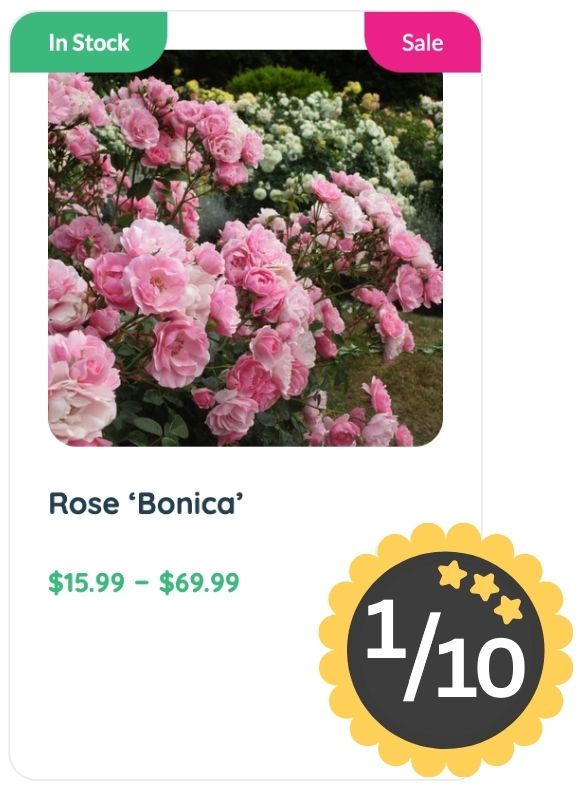

Pink Rose 'Bonica' bush in bloom, renowned for its classic rose smell, listed for sale with prices from $15.99 to $69.99. A badge shows a rating of 1 out of 10 stars.

Bonica

Dropping back down again, Bonica measures at only a 1/10 with very little smell.

Yet when you take a look at how pretty the blooms are, you can see why this rose is still quite loved. The blush pink flowers are very prolific, covering almost the entire plant.

Bonica is also a very hardy and reliable rose that forms a neat looking shrub. So Bonica isn’t a bad rose, just not the right choice if fragrance is your priority.
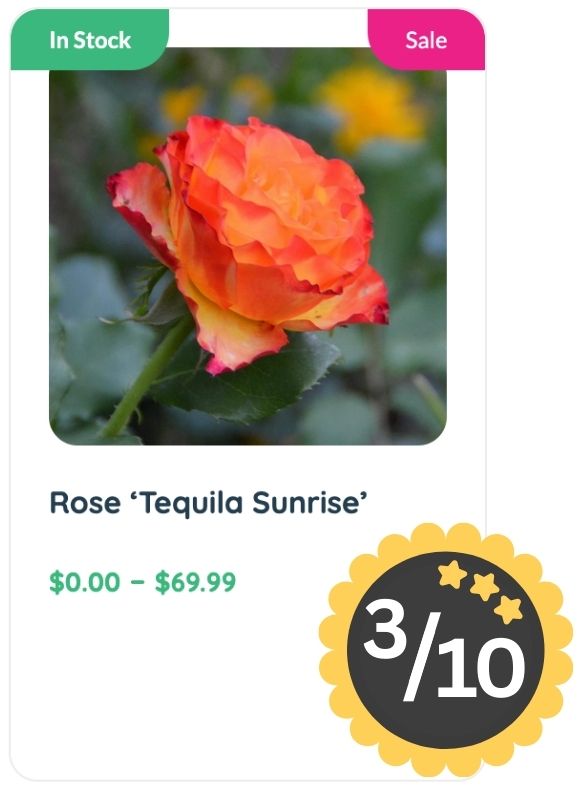

A vibrant orange and yellow rose labeled 'Tequila Sunrise' is shown for sale, priced from $0.00 to $69.99, with a 3 out of 10 rating badge and a light Rose Smell.

Tequila Sunrise

Same as Loving Memory, Tequila Sunrise comes in at a 3/10, with Sonya saying it had a light floral scent. However this flower really does look like a sunrise – with bold hues or orange, yellow and red.

If you want a pop of striking colour in the garden with little maintenance required, then this is the rose for you. It also is very healthy and has even won many awards including three gold medals!

Interesting Takeaways

Two people stand in a field surrounded by blooming flowers and lush greenery, with the sweet smell of roses wafting through the air. Trees frame the scene under a clear blue sky, completing this serene setting.As we smelt rose after rose after rose (you don’t want to know just how many roses we smelt in this 20 acre farm), something dawned on us.

Pretty much all of our favourite roses – the ones that made it onto this list – are the classic old roses. Almost none of the new breeds registered high enough on our scale or were interesting enough for us to bother writing about them.

If we were to take an educated guess, it seems that beauty has been prioritised more than scent, as it is very difficult to create a rose that is truly beautiful and has a rich powerful fragrance. But we thought it was something interesting to point out.

We hope this article has been insightful and helped you with your next rose purchase.

A shallow bowl containing green moss and smooth black stones set among stylish potted plants in a contemporary outdoor garden setting.

Contemporary Stylish Plants

If you’re looking for a garden that is classic, stylish yet up to date, here is some easy to grow plants that will fill your garden with fresh Modern Contemporary Style!

Jump straight to our Modern & Contemporary Plants:

Lime Lava
Silver Dichondra
Dichondra repens
Foxtail Ferns

LIME LAVA

A unique Australian plant with green foliage formed mounds that look like bright green lava! It is tolerant of heavy frost and will grow in coastal and alpine climates. Ideal for rockeries, logs or a centrepiece in a bowl.

SILVER DICHONDRA

Silver Falls is an unusual plant that has gorgeous, silvery foliage, year-round, and although it is a groundcover, (and can be used as such), many people have it cascading over retaining walls or spilling out from hanging baskets making quite a spectacular display.

Silver Falls is drought and frost hardy (once established), and is happiest in full sun through to part shade.

DICHONDRA REPENS

A lush ground cover, native to Australia and New Zealand.

• Grows between pavers or in hanging baskets
• Soft lawn alternative for low foot traffic
• Loves moist, lightly shaded areas or full sun with lots of water

FOXTAIL FERNS

The Foxtail Fern is a very attractive evergreen clumping plant with green needle-like leaves. It is a drought-resistant plant that needs little care and looks bright green all year long. It looks great in hanging baskets, containers or as a groundcover. Ideal for coastal gardens. It thrives in both full sunlight to part shade.

Head to our Instagram Page

For some of our popular & relevant reels!


Close-up of Silver Dichondra plant leaves, a contemporary favorite, with 1.3 million views on Instagram.


A graphic featuring "1.3M Views" in large pink letters, accented by a contemporary yellow arrow pointing left, with "Watch Now" elegantly displayed below in stylish pink letters.


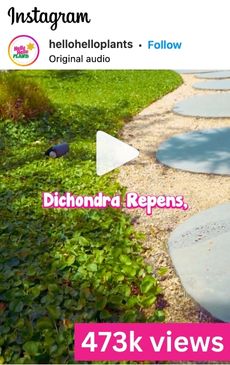
Instagram post showcasing a contemporary garden path lined with stylish Dichondra Repens plants. The post has garnered an impressive 473k views.


Text graphic with "473K VIEWS" in pink text, a contemporary yellow arrow pointing left, and "WATCH NOW" in stylish pink text below, adorned with a subtle hint of plants in the background.


Bright pink text reads "831K VIEWS" above a chic yellow arrow pointing right. Below, stylish pink text says "WATCH NOW.


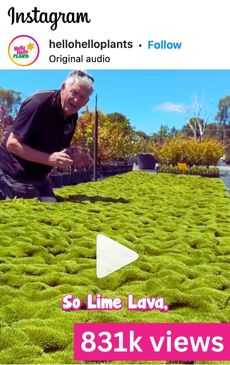
A person stands excitedly behind a stylish, contemporary patch of vibrant green plants. The overlay text reads "So Lime Lava," with "831k views" displayed at the bottom.

Gift boxes with green ribbons and Christmas ornaments on a lush green background. Text: "Boxing Day Sale" with dates, and "Extended to: 6pm, 1 Jan" in bold. "Shop Now" in a red speech bubble, perfect for sprucing up your plant nursery this holiday season.

Boxing Day Sale NOW ON

SALE NOW EXTENDED TO: 6PM, JANUARY 1ST

Shop our INCREDIBLE, once a year Boxing Day Sale!

JUMP STRAIGHT TO the Plant Deals & Categories for our Boxing Day Sale:

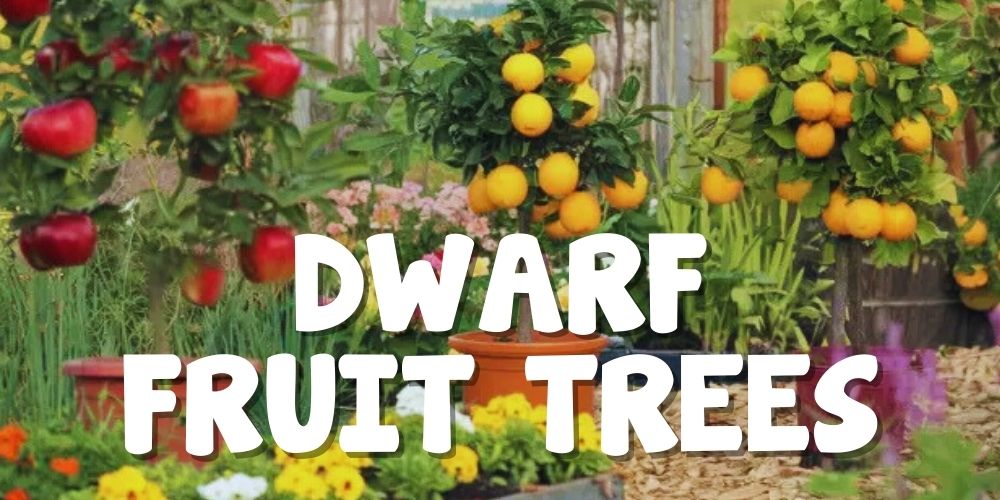
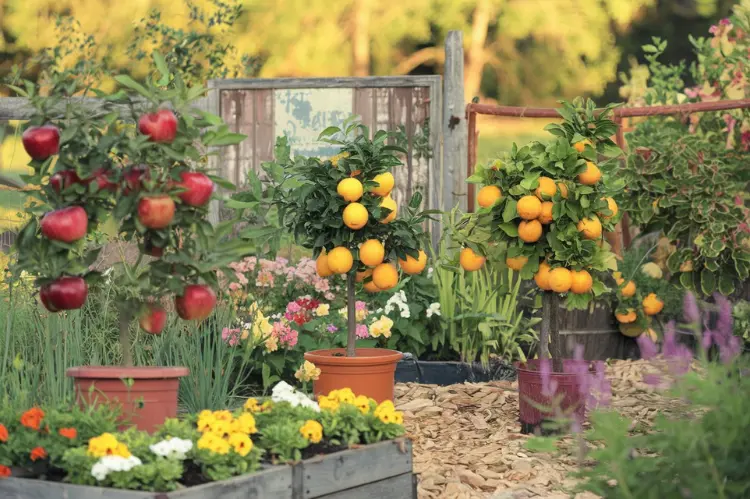
Dwarf Fruit Trees
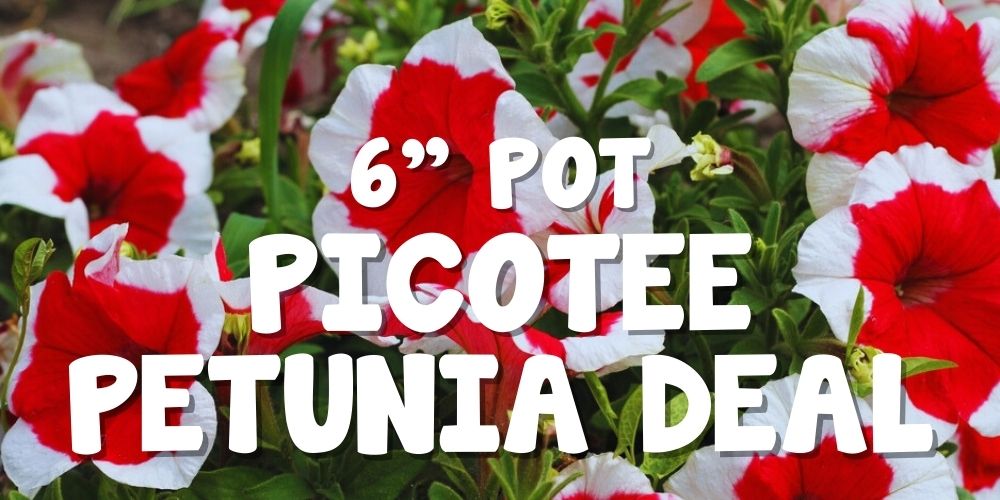
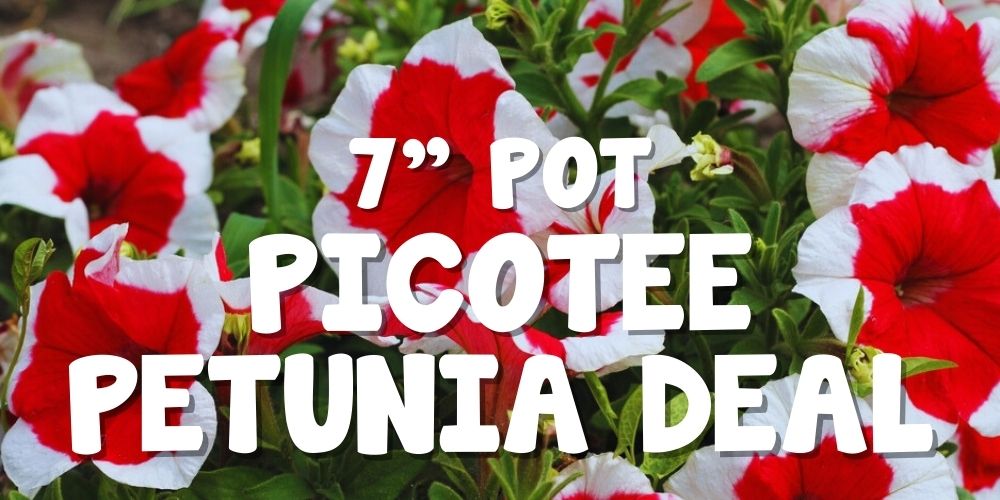
Picotee Petunia Deal
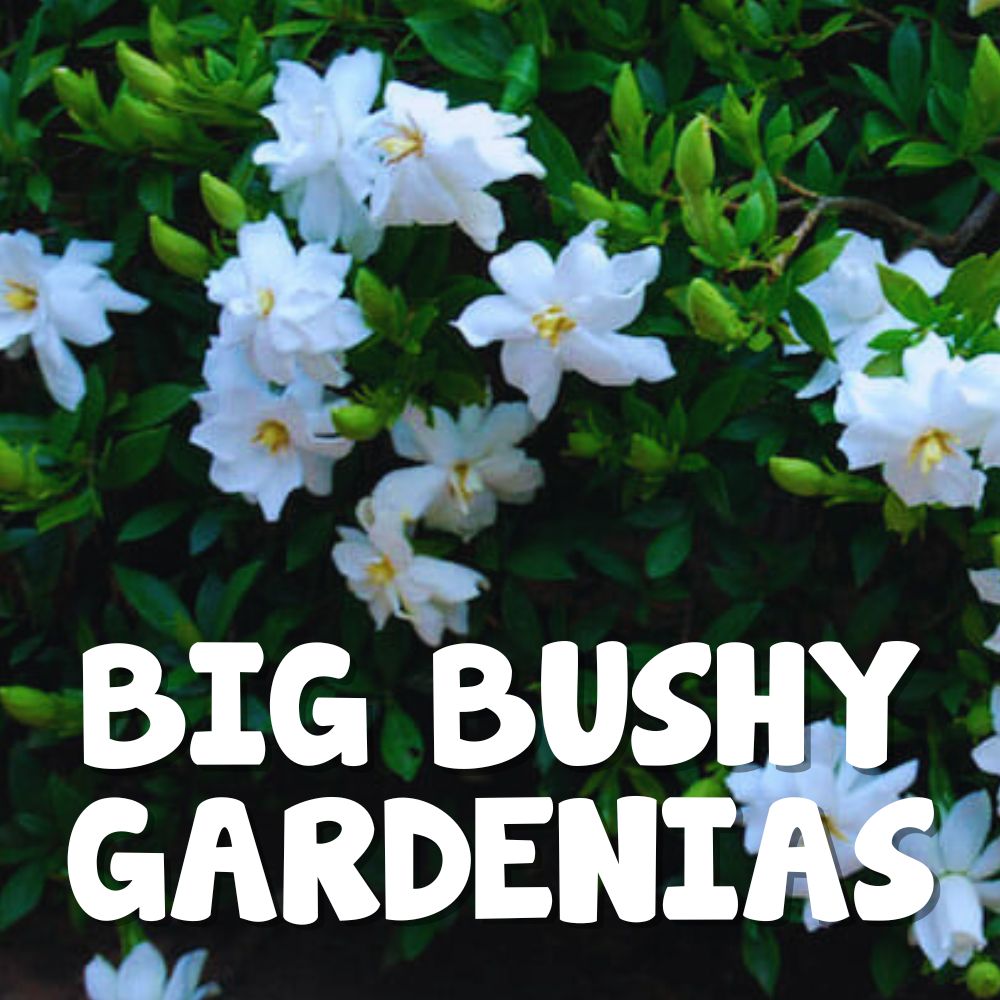
Big Bushy Gardenias
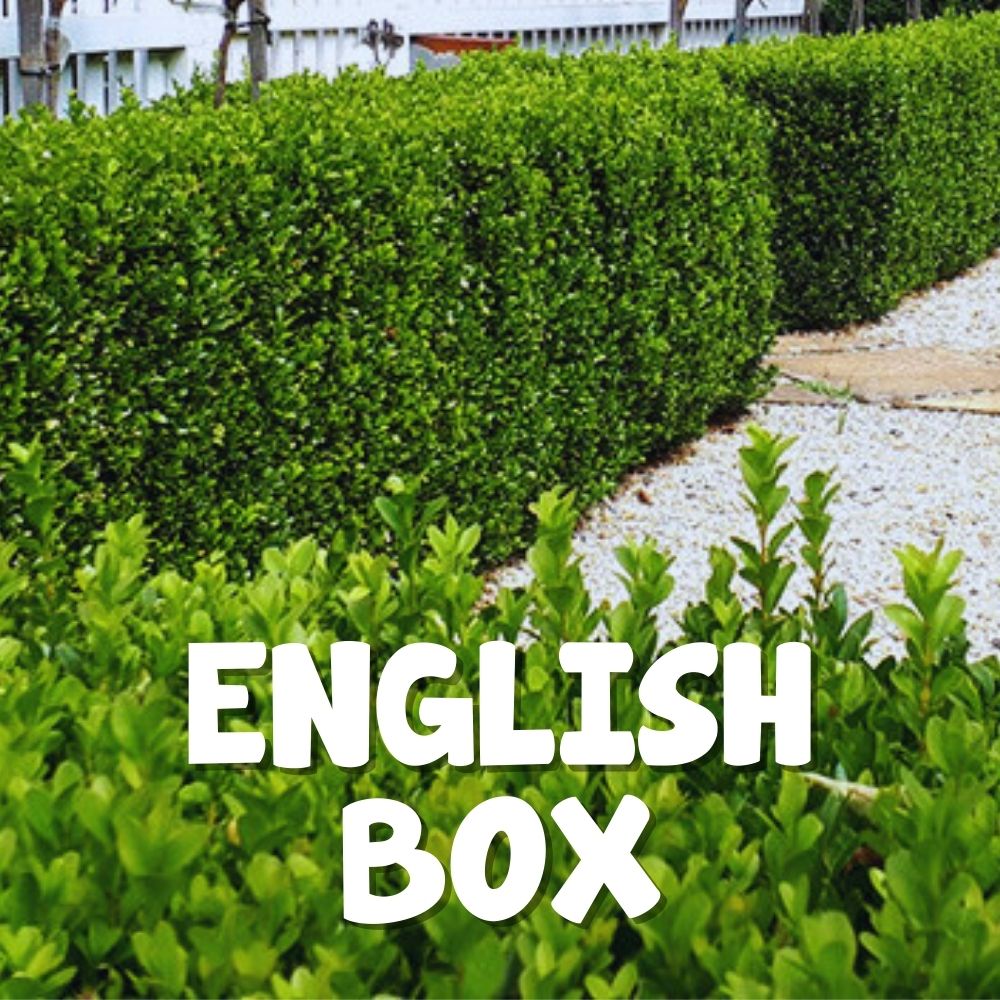
English Box
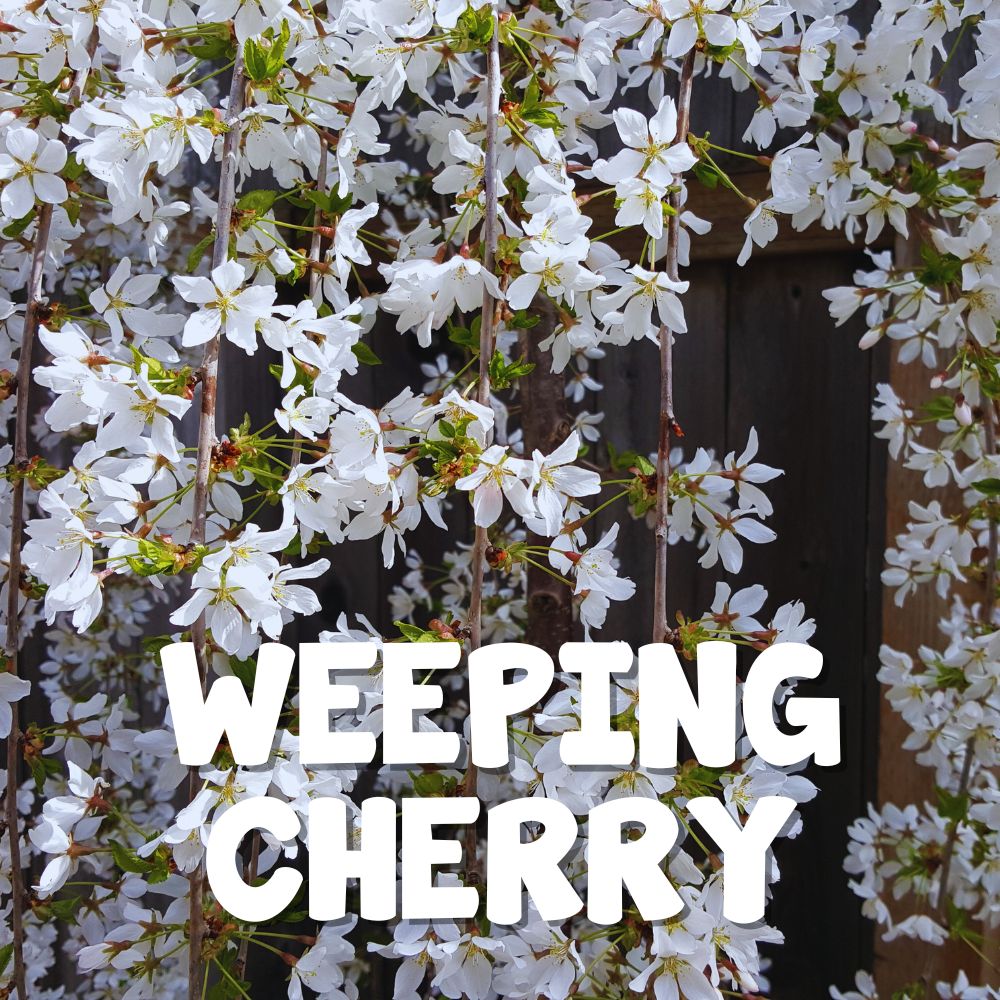
Weeping Cherry Deal
Catergories:
Edibles & Fruiting
Bush Roses
Climbing Roses
Groundcovers & Climbers
Hedging & Screening
Trees
Low Borders
Flowering

Look below to see some of our incredible Boxing Day Sale deals!

These prices are available for just 48hrs, running from:
5pm Christmas Eve (Tue 24 Dec)
Until 5pm Boxing Day (Thur 26 Dec)
NOW EXTENDED TO 6PM, 1 JAN

Don’t miss out on these amazing specials both online and in-store.

Shop online or come on in to our nursery @ 1477 Sydney Rd Campbellfield for our Boxing Day Sale! Call (03) 9359 3331 for more information.


Discover dwarf fruit trees flourishing amidst vibrant flowers and lush greenery, their branches adorned with red and orange fruits. Perfect for any garden, these charming trees are part of our exclusive Boxing Day Clearance. Don't miss the chance to bring home a touch of nature's bounty.

Great deals on:

Prices SLASHED on our  Petunia ‘Red Picotee’ in 6″ and 7″ pots!!!


Red and white petunias with the text "6'' Pot Picotee Petunia Deal" over the image, perfect for a Boxing Day Clearance special.

Were $14.99, NOW ONLY 99c


Red and white petunias with text overlay: "7'' Pot Picotee Petunia Boxing Day Clearance Deal.

Were $19.99, NOW ONLY $1.99

And some more incredible deals like:

Gardenia bush with white flowers and green leaves. Text overlay: "Big Bushy Gardenias - Boxing Day Clearance!.

ONLY $9.99

Magnifica 8″ Pot
Professor Pucci 8″ Pot


A neatly trimmed English box hedge lines the gravel paths on either side, reminiscent of the tidiness found in a Boxing Day Clearance under a clear sky.

6″ Pot, JUST $4.99


White weeping cherry blossoms cascade over branches, with the words "Weeping Cherry" in bold white text, reminiscent of a Boxing Day Clearance—nature's own exclusive offer you won't want to miss.

1/2 Price, $59.99

Edibles & Fruiting

Bush Roses

Climbing Roses

Groundcovers & Climbers

Hedging & Screening

Trees

Low Borders

Flowering

In a garden where the cost of gardening crisis is solved, potted apple and orange trees thrive amidst vibrant flowers, with a sturdy wooden fence framing the scene.

The Best Range of Dwarf Fruit Trees, Fruit Trees and Edibles

It’s the season of growing your own food, and oh, what an exciting season to be in.

You are no longer restricted to buying fruit trees just in the wintertime. Depending on when you were born you may or may not understand the struggles of having to wait for the cold months to buy your fruit tree.

This was because 30 years ago, or even 1000 years, Growers only dug up their fruit trees in winter. Meaning that Nurseries only sold fruit trees in the winter. READ MORE HERE.

JUMP STRAIGHT TO ALL OUR FRUIT TREES AND EDIBLES:

DWARF FRUIT TREES
– Dwarf Apple Trees
– Dwarf Almonds

– Dwarf Apricots
– Dwarf Nectarine Trees
– Dwarf Peach Trees
– Dwarf Plum Trees
TRADITIONAL FRUIT TREES
EDIBLES

DWARF FRUIT TREES at Hello Hello

TRADITIONAL FRUIT TREES at Hello Hello

EDIBLES at Hello Hello

READ MORE HERE:

Back then, people would be out there digging up cold clay to stuff a fruit tree in and hope for the best. The survival rates weren’t great, and the tree would struggle to get away.

But bless modern technology because with a new type of production called Spring Buds, you can now buy fruit trees anytime.

Spring Buds works by grafting the tree in autumn and then planting it in a pot during winter. Come springtime the tree bursts away and grows vigorously.

These plants are really healthy and take root in your garden within a week or so of planting. Fruit trees adore the summer heat, as long as you keep them well watered.

Right now is actually the best time to be planting a fruit tree.

Which is why we’ve put special effort into building up a huge stock of dwarf fruit trees. Not to mention the massive range of edible plants we have!

It’s a very exciting time for those who want to get into growing their own food.

Let’s get right into the specificities so you can decide what edible plants are the best fit for you.

Maybe it’s just a Dwarf Lemon Tree on the balcony or a veggie patch filled with an assortment of things, or just planting some herbs in a pot.

Dwarf Fruit Trees


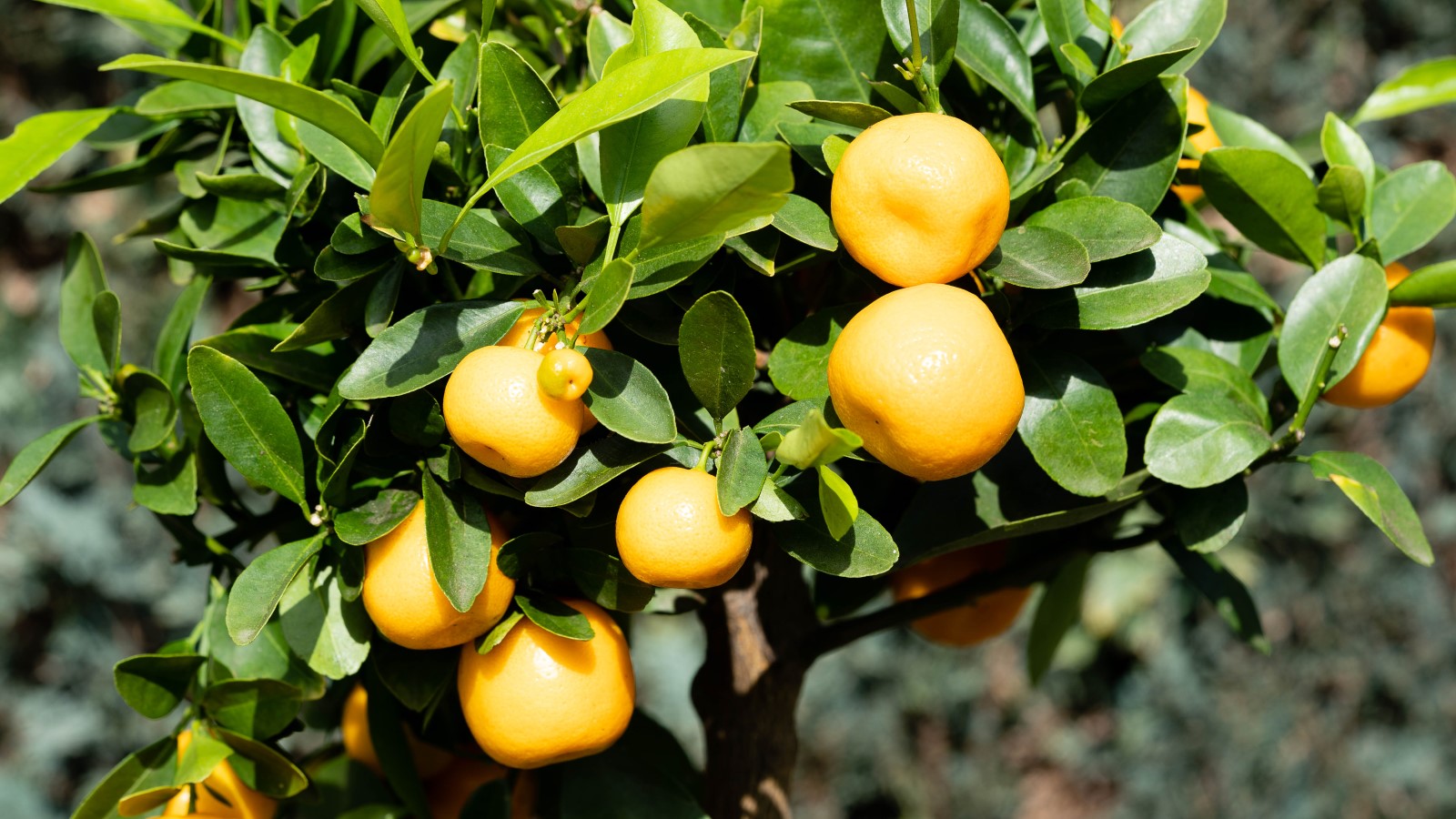
A tree branch, abundant with ripe oranges and lush green leaves, stands as a reminder that solutions to the cost of gardening crisis are within reach.

We adore dwarf fruit trees because they are the perfect way to let everyone enjoy fruit no matter their housing situation. Now of course there are still limits, some plants need to be outside or a certain amount of sun to grow.

But you don’t need a giant backyard to grow these incredible fruit trees. How it works is that a dwarf fruit tree is just like its normal counterpart, but it’s been grafted onto a special rootstock that makes it stay compact. This lets people grow fruit trees in small spaces and grow several varieties as well where they’d normally only be able to grow a single variety.

Whether you plant yours in a pot or out in the garden, enjoy the satisfaction of growing your own food and the delicious fresh fruit that comes with that.

Here’s everything you need to know about the different types for DWARF FRUIT TREES:

Dwarf Apple Trees


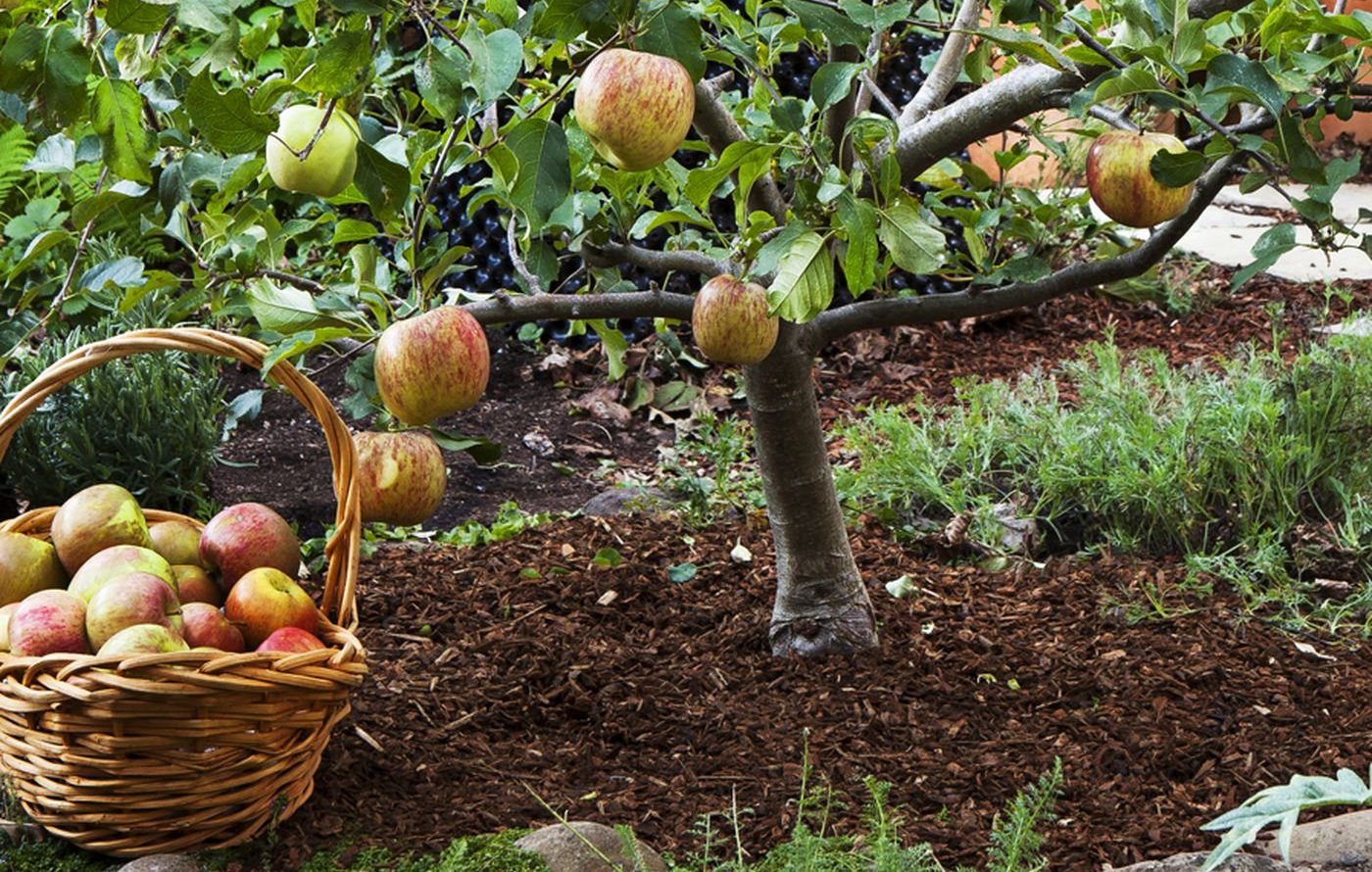
Next to an apple tree laden with ripe fruit stands a basket brimming with apples, nestled amongst lush greenery—a testament that the cost of gardening crisis is solved through bountiful harvests.

Apples are such a versatile fruit to have – from pies to jams to porridge, or just straight from the branch. Of course you should know all about the incredible health benefits of apples – and how exquisite their spring blossoms are.
We have a few different varieties on offer, each with their own unique strengths.
Please note that all Apples need another Apple variety close by for pollination.

‘Pinkabelle’ Dwarf Apple

This is a compact version of the very popular Pink Lady variety. If you’ve ever had one of these from the store then you know just how sweet and delicious they are.

Pinkabelle is great for all sized gardens, growing to a height of about 2 metres and a metre wide. It does equally well in pots or as a specimen tree in the garden.

And of course the fruit is utterly delicious – great for desserts or just eaten fresh.

Pomme de Neige’ Apple

Also know as Snow Apple, the fruit from this tree is juicy, crisp and has an aromatic flavour. It tends to be on the smaller size, so is great for a snack.

The best varieties to pair with Pomme de Neige are Granny Smith, Golden Delicious and Gala.

Dwarf Almond


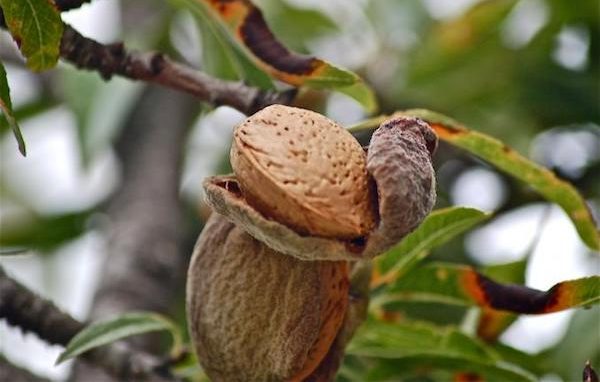
In the midst of the gardening cost crisis, a close-up reveals an almond on a tree, partially split open to reveal the nut inside. The surrounding green leaves with visible brown edges hint at nature's resilience despite challenges.

We all know of the wonderful health benefits of almonds, they’re a great healthy fat and can be used across a wide variety of dishes.
Toss some in with your homemade granola or dice it for the topping on a cake, eat it straight or toast it for a deeper smoky flavour.
What is particularly fantastic about Dwarf Almonds is that some varieties are self-pollinating. Which means you don’t need to be buying two different varieties – perfect for those tight on space.

‘Self-Pollinating’ Dwarf Almond

This is one of those varieties we were talking about – a self-pollinating Almond that is very convenient to have.
It bears heavy crops of soft-shelled almonds that have a sweet flavour. These almonds come in around mid-season.
The tree has an upright form and bears stunning white blossoms in spring.

Dwarf Peach Trees


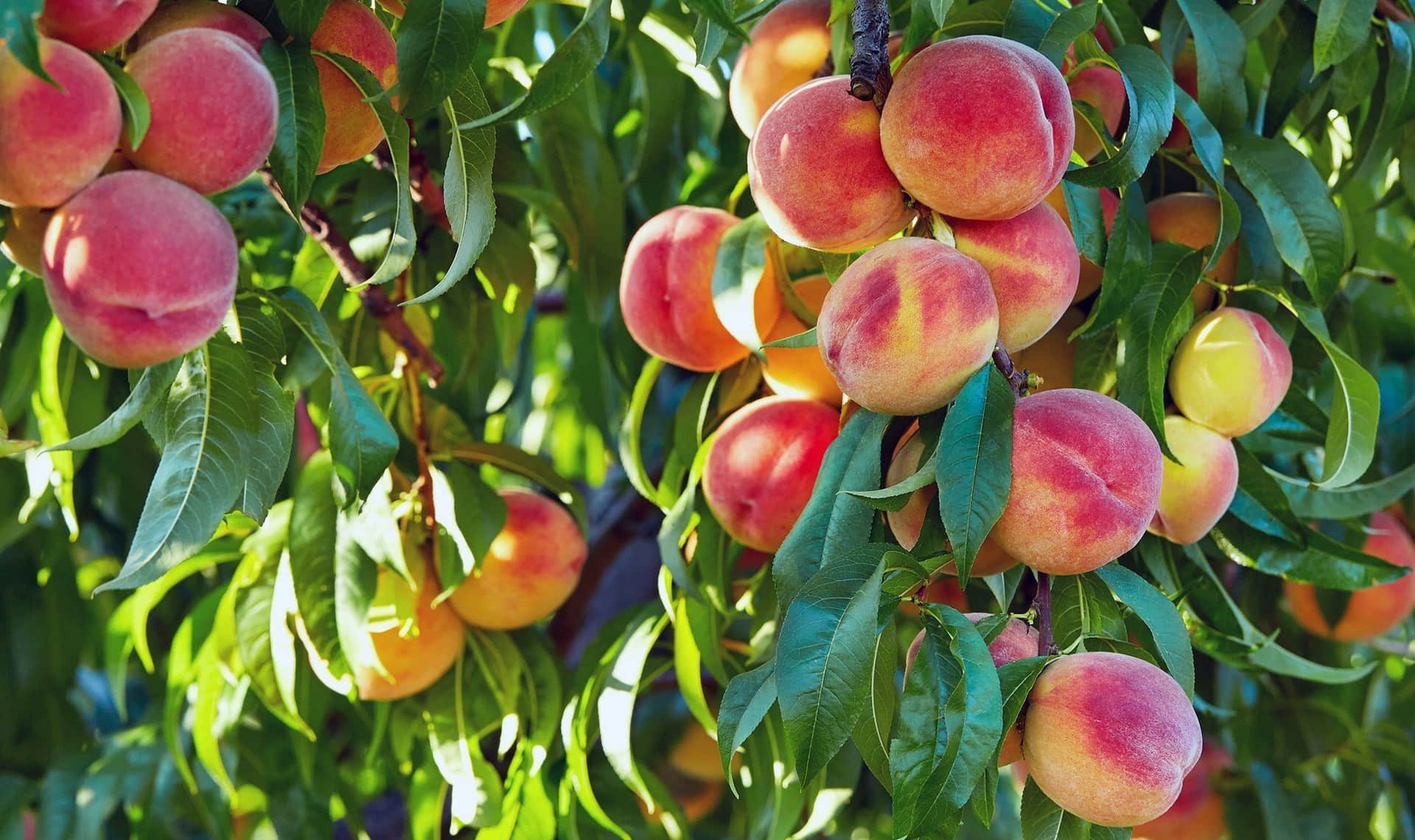
Peach tree branches, ripe with sunlit fruit and vibrant green leaves, subtly whisper the potential solution: a garden abundant despite the cost of gardening crisis.

What we love about Peaches is how easy they are to grow – and they look so beautiful. Not to mention peaches are packed with all sorts of health benefits.
We have a MASSIVE range of Peach trees, with so many delicious varieties to choose from.

‘Crimson Rocket™’ Columnar Peach

Crimson Rocket is an upright growing Peach that is new to the market. If you only have space for one variety, this is the one you pick as it is self-pollinating.
The fruit is medium sized with red skin and golden flesh – very yummy. In spring you get stunning pink flowers.
Plant in well drained, well worked soil in a sunny position. It reaches a mature height of 2×2 metres.

‘Angel™ Peach’

If you like slightly odd shaped fruit, you’re going to love Angel. With deliciously sweet fruit that is donut shaped, it makes for a great feature.
You get lush green foliage, stunning pink blossoms and fruit. Also being self-pollinating means you don’t have to worry about buying another variety.
Make sure to plant it in full sun to part shade, it will grow to about 2×2 metres.

Anzac’ Peach

This is a variety that is over 100 years old! A classic Australian peach that is very popular due to its heavy fruiting nature.
If you want a big crop of fruit, this is the type to choose. The fruit is soft, with white flesh and a freestone.

‘Elberta’ Peach Tree

If you want to do all sorts of things with your peaches – canning, baking, or just snacking on, this is the type to pick. The peaches are large and sweet, ripening to a deep golden colour with a red blush.
Elberta is self-fertile, but they do produce better with a second tree. It’s very important that you water it regularly as they are not drought tolerant.

‘Golden Queen’ Peach

This is a New Zealand variety of peach, and is perfect for stewing (but also great fresh). The fruit is yellow-fleshed and yellow-skinned.
Golden Queen ripens late and has a medium yield. It reaches a height of 2×2 metres.

‘Indian’ Dwarf Peach

If you’re after late cropping fruit, consider an Indian peach. The blossoms come in early spring and once the fruiting is done you get gorgeous autumn foliage.
The fruit is medium sized with dark wine skin over cream coloured flesh.
It is self-fertile and does not require a cross pollinator. It will reach a height of about 2 metres.

‘O’Henry’ Dwarf Peach

This is a peach with some superb flavour. It is a freestone with yellow and red flesh. It is self-fertile and doesn’t need other pollinators.
It will reach a maximum height of 2.5 metres.

Dwarf Nectarine Tree


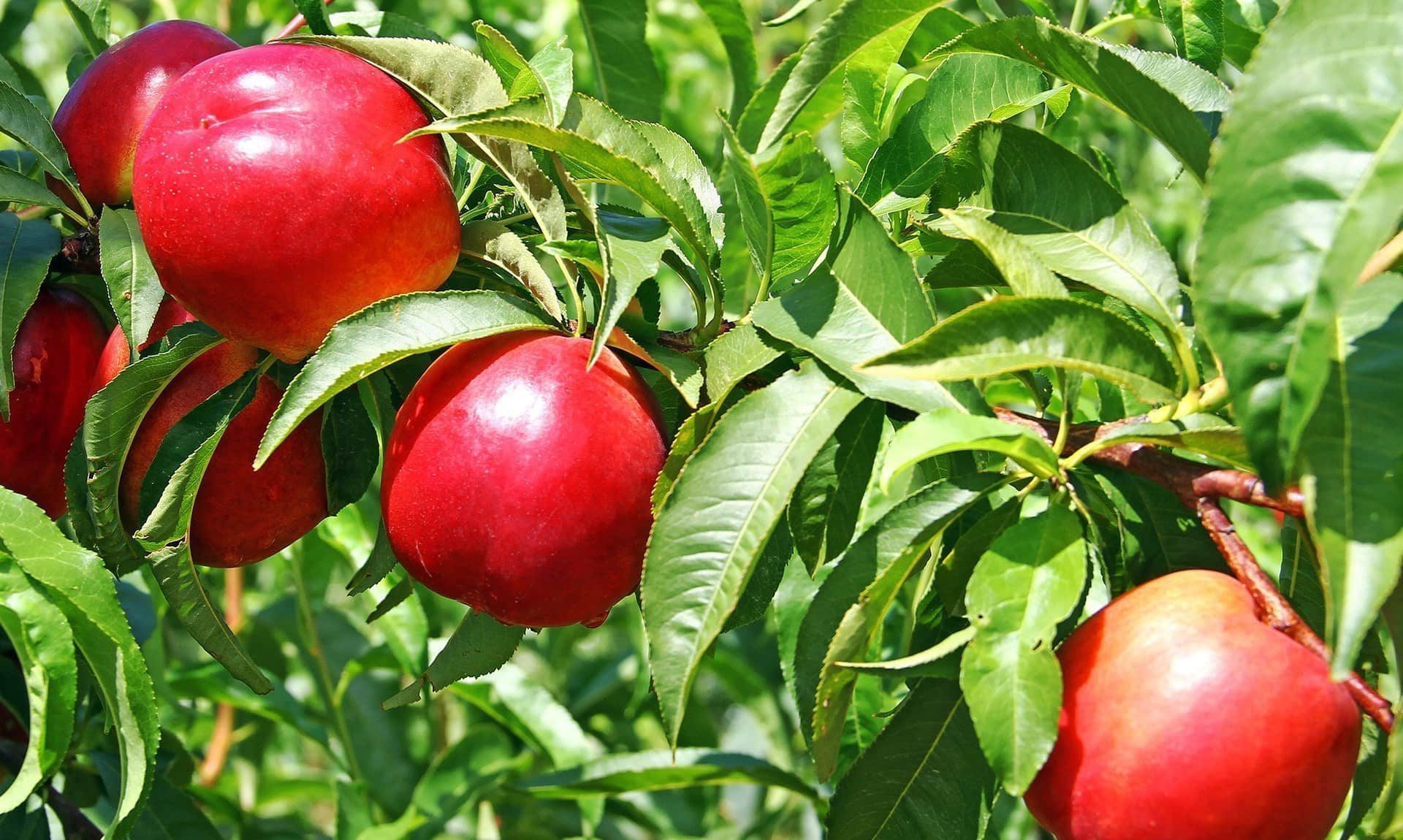
Amid the cost of gardening crisis, a cluster of ripe, red nectarines hangs from a tree, nestled among vibrant green leaves on a sunny day.

We have SO many different varieties of Nectarine to show you, which is very exciting.
You may not eat nectarines as often as you do apples or almonds, but they are still a delicious fruit to have. Nothing says summer like a big bite of a nectarine with juice dripping down your fingers.
We’ve said it before, but these do have great health benefits. The more fruit you eat, the better you’re going to feel.

‘Early Rivers’ Nectarine

If you want to cook with your nectarine then this is the perfect variety, the large fruit is great for cooking and stewing. Of course you can also eat it fresh – the flavour is great.
This is a self-pollinating tree which is very useful – you don’t have to find the space or spend the money on getting two varieties.
Make sure to plant it in a sunny position with well drained and well worked soil. The tree will grow to around 2×2 metres.

‘Fantasia’ Nectarine

This is a very popular variety and is the one you pick if you love eating nectarines fresh, or want to store it for some time. The fruit is firm but sweet with yellow flesh and is freestone.
Be sure to plant them in well-drained soil. They are a high producer so enjoy large crops of delicious fruit.

‘Flavortop’ Nectarine

If you want sweet nectarines and a lot of them, choose Flavortop. It is a vigorous and heavy bearing tree that produces incredibly flavoured fruit.
The nectarine has smooth red skin, yellow flesh and is freestone. These also make for a great feature because of their soft pink flowers that come about in summer.
Flavortop reaches a height of 2.5 metres.

‘Goldmine’ Nectarine

This is the classic, old-fashioned Australian nectarine with our most sought-after nectarines. The fruit has white flesh, is freestone and has a delicious flavour.
Goldmine is the one you pick when you want a nectarine that is easy to grow, with fruit that ripens late.

‘TangO’s®’ Dwarf Nectarine

If you live somewhere a bit colder, this is the variety to choose. One established, TangO’s is frost tolerant.
The fruit is flat, yellow fleshed that is deliciously sweet. It is a stone nectarine.
This is also a very easy to grow nectarine, but should be protected from high winds and planted in full sun to part shade.
As it is deciduous it will lose its leaves, giving way to gorgeous blossoms in spring.
The tree will reach a height of about 2-2.5 metres.

Tuscany®’ Dwarf Nectarine

Similar to TangO’s, this is a variety to pick for the cooler climates. Once established it is also frost tolerant, but make sure to protect it from high winds.
The fruit is a bright red with juicy white sweet flesh. It is deciduous, with wonderful spring blossoms.
The tree will reach a height of about 2-2.5 metres and should be planted in full sun to part shade.

Dwarf Apricot


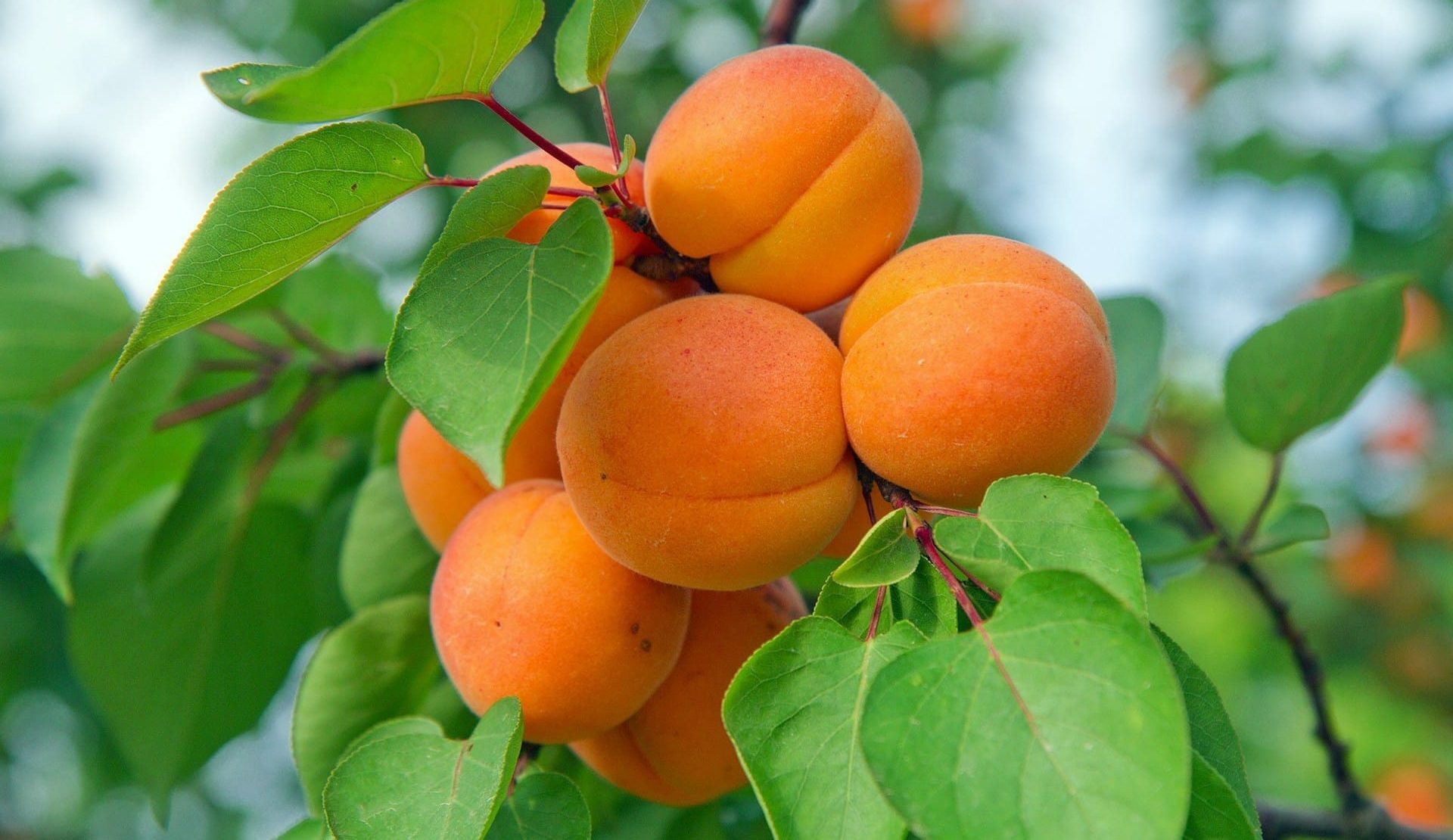
Ripe orange apricots clustered on a branch with green leaves offer a glimpse of nature's bounty, even in the face of the cost of gardening crisis.

Apricots are delicious fruit packed with so many health benefits. The go to use is to make into a jam – something you can bake into muffins or have just on toast.
You can also bake them into delicious cookies, cakes, tarts, you name it.

‘Storey’ Apricot

Blessed with fast growing properties, Storey is actually an early-fruiting version of the ‘Moorpark’ Apricot. Coming in around 3 weeks earlier than ‘Moorpark’, you get large fruit with a delicious flavour.
If you’re a fan of apricot jam, then this is the variety you want to go for.

‘Trevatt’ Apricot

This is a very popular variety that produces large quantities of tasty fruit – if you find the crop is too much, they do respond well to thinning.
This is a mid-season fruiter, with the tree growing about 4 metres in height.

Dwarf Plum Trees


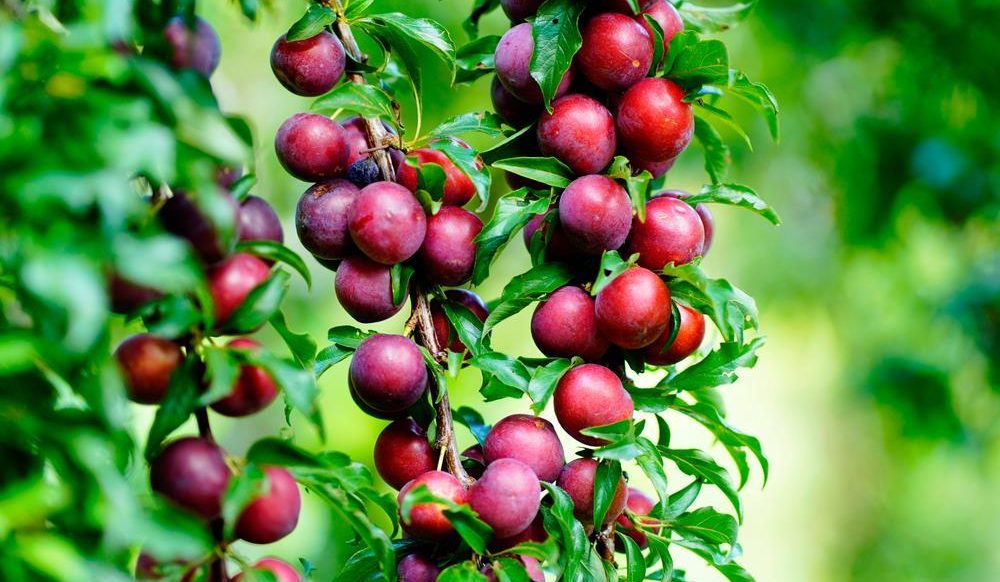
Clusters of ripe red plums hang from green leafy branches in a sunny orchard—a testament to how the cost of gardening crisis has been effectively solved.

Plums are not typically a go to fruit tree to plant, but they truly have so many benefits, both for your health and the environmental health.
Plums are great for skin health, gut health, immunity, bone health and many other things.
Plum blossoms attract bees which is excellent for biodiversity, they also have a great root system which can help with soil erosion.

A-Okay™’ Plum


Want to level up your health? Then you have to buy this plum – it’s the variety with the highest antioxidants and potential health benefits of any plum available.
The fruit is dark fleshed and very juicy and sweet. It is a freestone, but has a very small seed unlike other plums.
You do need to get another variety for cross-pollination, the best types are Mariposa or Narrabeen. The tree is deciduous and will reach a height of 2.5 x 2.5 metres.

‘Mariposa’ Plum

This is a Japanese blood plum with large fruit that has an incredible flavour. The skin is a glossy red and is sweeter than some other varieties.
This is a great choice for those with a small to medium garden wanting to use plums as fresh fruit, jam and juice.
You also need to buy another variety for cross-pollination, we recommend Santa Rosa.

‘Satsuma’ Plum

This is the plum you choose when you can’t fit in another plum to cross-pollinate. Now to get the best possible crop of fruit, it is recommended to get another variety like Santa Rosa.
But as Satsuma is partially self-pollinating, you can still get some fruit without need for another type.
The fruit is juicy and a dark red in colour – great for eating fresh or stewing.

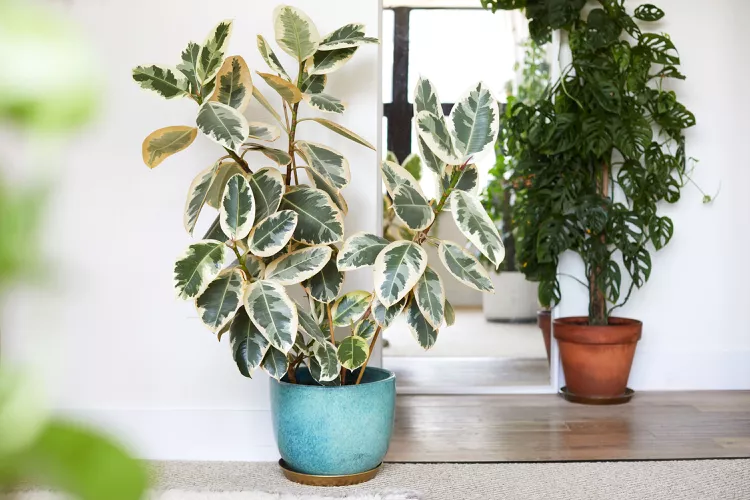
A variegated rubber plant in a blue pot sits indoors on a carpeted floor, exuding a touch of Hamptons garden elegance. In the background, another potted plant stands gracefully near a doorway.

Rediscovering the Beauty of Plants That Went Out of Fashion

It’s strange to think of gardens having trends in the way clothes and interior design does. Plants are so much more forever than a pair of flared jeans.

But it is true that certain plants can come in and out of fashion. It’s funny, plants like Hydrangeas and Rubber plants were SO well loved, that people, well, stopped loving them.

Here’s the plants we’ll be talking about today:

Hydrangeas
Rubber Plant
Flowering Currant
Viburnum Snowball Bush
Mother-in-Law’s Tongue
Silver Birch

Tall green snake plant with yellow-edged leaves in a round wooden pot, reminiscent of a Hamptons garden, against a dark gray background.

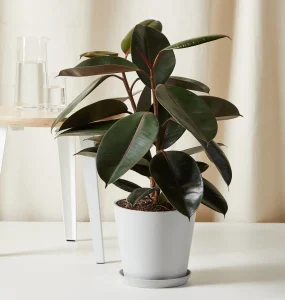
Rubber plant in a white pot on a pristine table, evoking the serene elegance of a Hamptons garden, with a clear glass pitcher and two glasses adding to the tranquil setting.

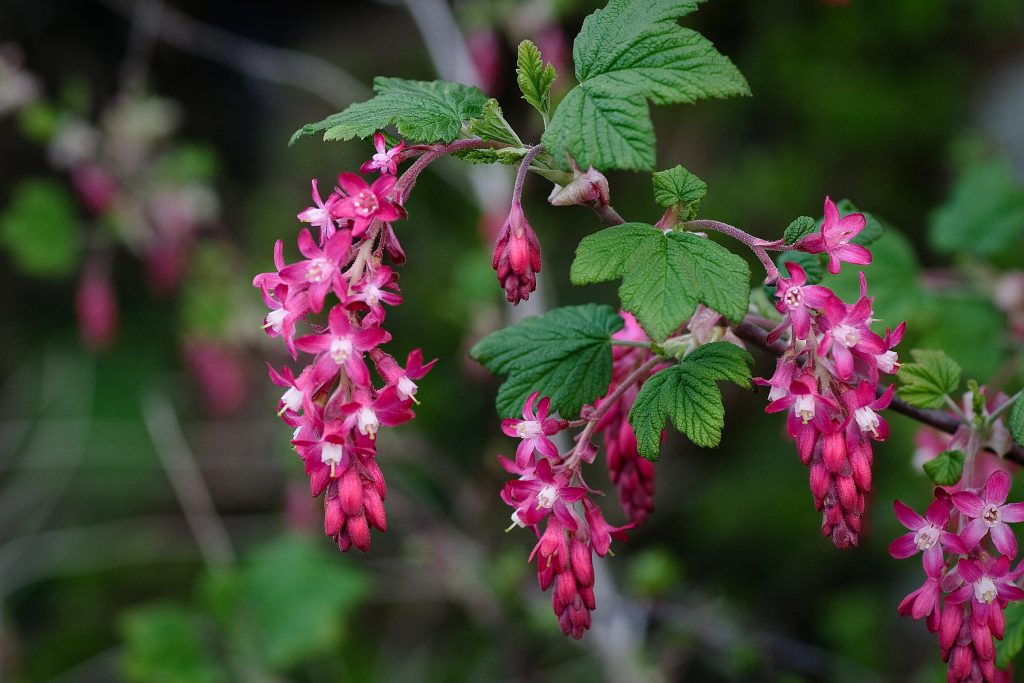
A branch from a Hamptons garden bursts with vibrant pink and red flowers, complemented by lush green leaves against a softly blurred background.

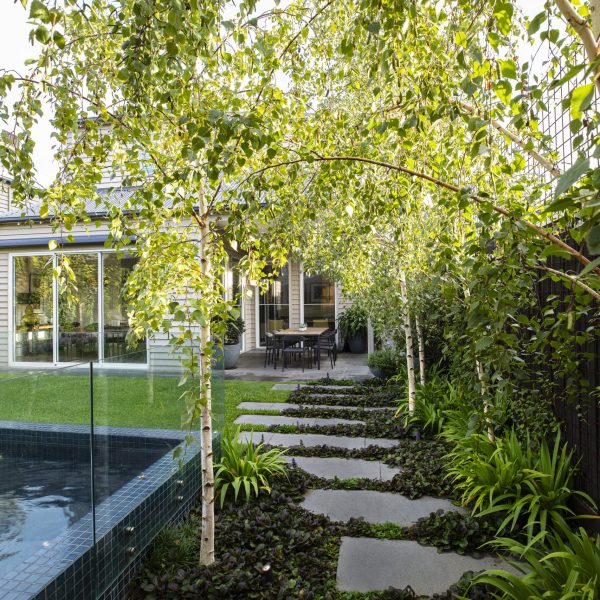
A modern backyard with a thoughtful garden design features a swimming pool, glass fencing, a paved stone pathway surrounded by greenery, and a dining table under a canopy of trees.

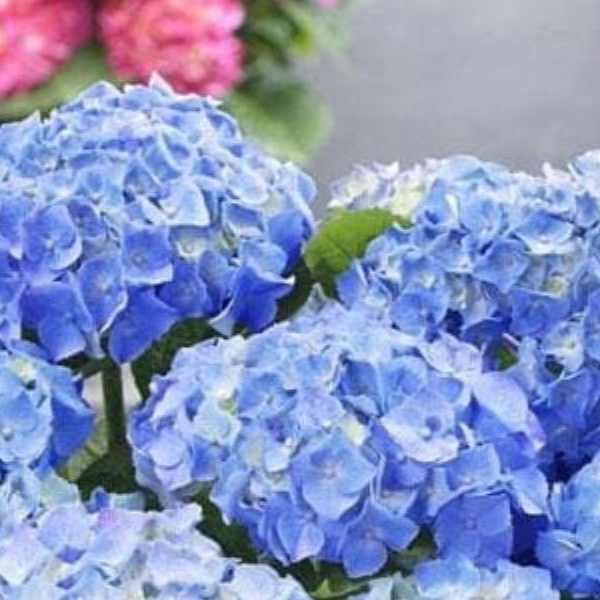
A cluster of vibrant blue hydrangea flowers in the foreground stands out, with pink blossoms and lush greenery creating a soft blur in the background, reminiscent of a picturesque garden during a rose clearance sale.

We get it, when every second house has a bush of Hydrangeas flowers or every apartment has a Rubber Plant in the corner, they start to lose their sparkle a bit.

But what’s interesting is that we’ve seen a resurgence of these once-popular plants, so we thought we’d take the time to go over the basics again. How to take care of them, what varieties to choose and what made them so loved in the first place.

Chris in the NurseryBeing a Nursery means we get firsthand knowledge on what’s selling, and what’s collecting dust on the shelf. We see the way certain plants are flying out the doors, where we can just never seem to keep them stocked up.
But we also see the exact moment this changes, when the sales start to die down and people turn to something else to fill their garden with. Hello Hello Plants has been around for a while, and Chris, the owner, even more so.

Think of it like a trip down memory lane, where we explore the nature of gardening trends.

There are quite a few plants that this is happening with, as listed out earlier. We’re even going to chat about some of the plants that are starting to go out of fashion. Let’s dive right into it.

The Charm of Hydrangeas


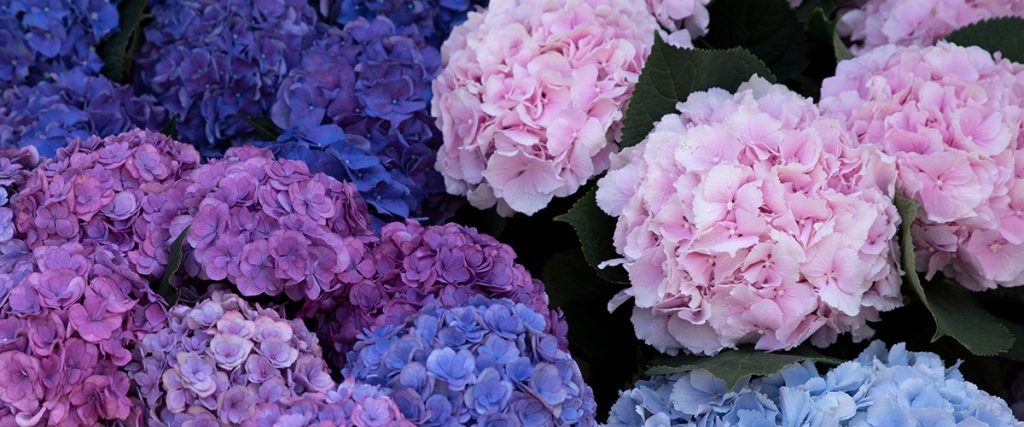
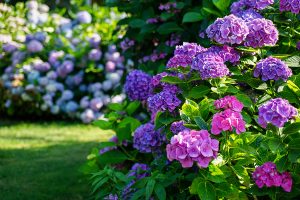
A close up of blue and purple flowers. Hydrangeas

Hydrangeas are one of those plants that everybody knows about, even if you’ve never done gardening a day in your life.

Back in the 60s Hydrangeas were all the rage, almost everybody had them in their garden. But then people seemed to forget about them, and nobody brought Hydrangeas for many years.

Vibrant pink and purple hydrangeas thrive in a sunlit garden, reminiscent of a beautifully curated plant nursery, surrounded by lush green leaves.Which takes us to today, where we are seeing a resurgence of this amazing plant. It’s no surprise, Hydrangeas are very beautiful and offer up so many different colour options.

Now we already have an incredible article that covers EVERYTHING you need to know about Hydrangeas. You can read that here.

It’s quite a lengthy article, so we thought we’d just recap some of the most important parts so that you can get to planting and growing them much quicker.

Hydrangeas ADORE water, they need plenty of water, especially if you’re growing them in the sun. But a lot of people choose to grow them in the shade where the water requirements are lower.

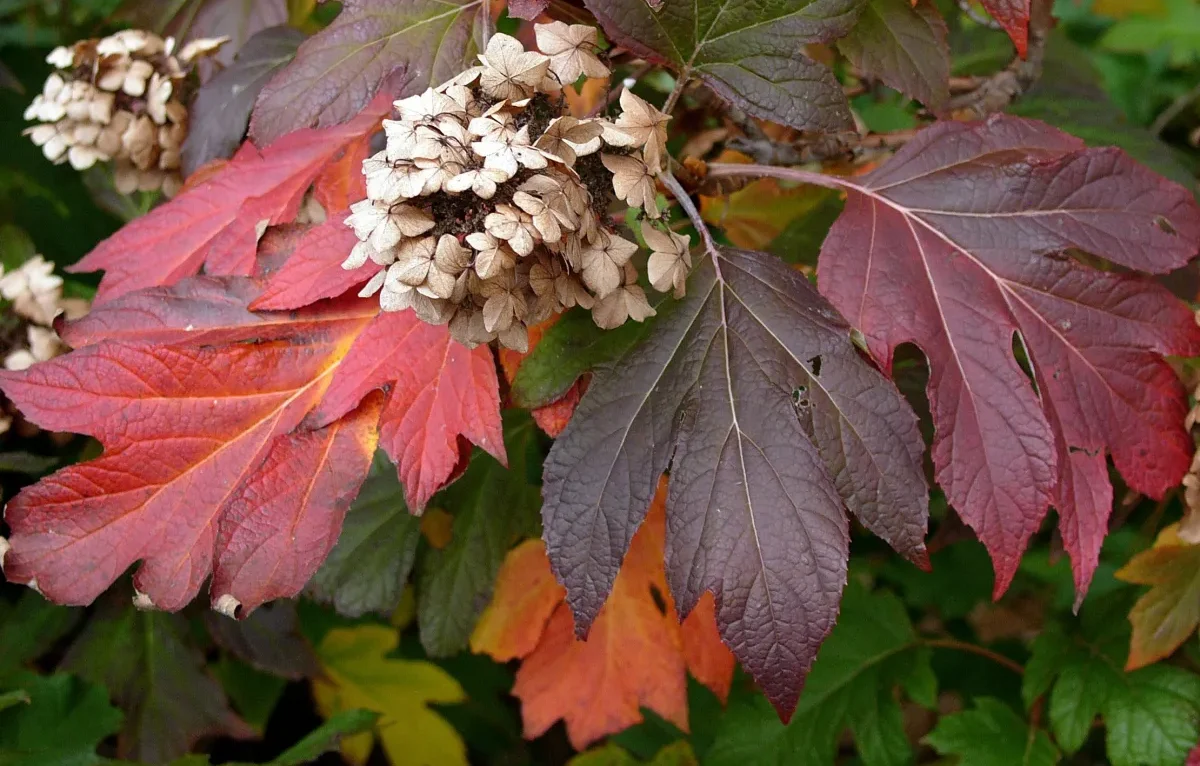
A lush display of oakleaf hydrangeas, one of the top indoor plants, with white blossoms and variegated green and bronze leaves. Hydrangea quercifolia ‘Oakleaf’Most Hydrangeas are deciduous and lose their leaves in winter, with the flowering season being from December through to April.

They can be grown in pots or garden beds, so you have a lot of versatility with where you choose to put them, whether it’s on the balcony or patio, or in spot somewhere in the garden.


CLICK HERE to see our full range of Hydrangeas at Hello Hello

The Indestructible Nature of Rubber Plants

A potted rubber plant with dark green leaves sits elegantly on a white surface beside a glass pitcher, evoking the serene charm of a Hamptons garden.We recently did a video about the indoors plant for Mr or Mrs Kill ‘em Quick and in Chris’ words “they were so common that they went out of fashion.” Check out that video here.

But Rubber Plants are just too damn tough to stay unpopular for very long. If you’re the type of person that kills every indoor plant you come across, this is the plant for you.

Grow them in the sun or shade, have it indoors or out on the gazebo.

They grow so easily and are so low maintenance, you’ll plant one and practically forget about it.


CLICK HERE to see our full range of Rubber Plants at Hello Hello

The Soft Beauty of Flowering Currants


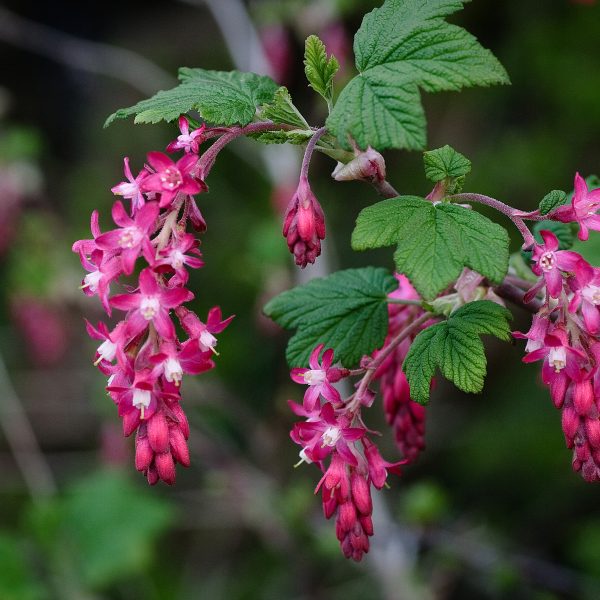
A branch from a Hamptons garden bursts with vibrant pink and red flowers, complemented by lush green leaves against a softly blurred background.

It wasn’t until we accidentally stumbled upon one of these on our content shoot days that we remembered how wonderful this tree is.  You can check out that video here.

We found it in a country town in front of a cottage house, and it really suits that aesthetic perfectly.

In spring it is densely packed with small pink flowers that give off that sweet currant flavour. The Flowering Currant is an ornamental plant that doesn’t produce any actual currants, but it is a cousin of the black currant. It’s a very hardy plant that works well in a number of different situations.

The Delicate Wonder of Viburnum Snowball Bush


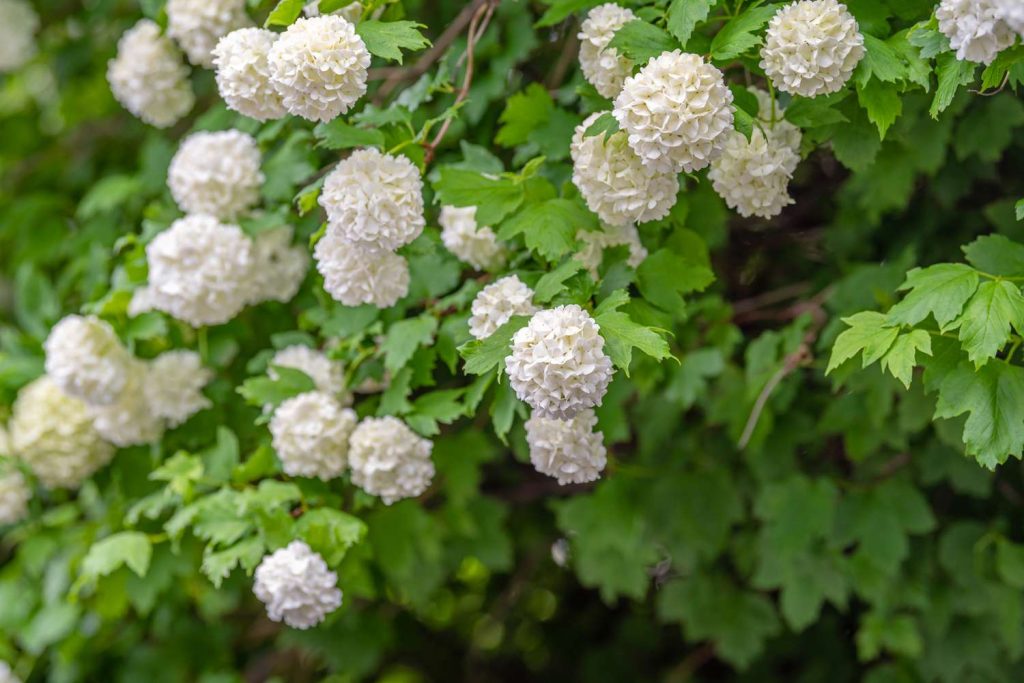
Clusters of white, spherical flowers with green leaves adorn the bush, reminiscent of a charming Hamptons garden.

This is such a gorgeous plant it’s hard to imagine it becoming unpopular, but there was a time where stock of it was just not moving that well. Not anymore.

When in flower, this large shrub puts on quite a spectacle, with big clusters of flowers that start out an apple-green shade and brighten to white, eventually fading into a rosy pink. They are perfect for cut flowers.

The Viburnum Snowball Bush grows in an upright mounding manner, meaning it’s not a lot of effort to keep it looking great. It also doesn’t produce any berries so there’s no messiness produced by the bush.

Not only do you get blossoms but come autumn the maple shaped leaves turn red and orange. So this is a bush that is going to give you interest in the garden year round.

The Indoor Classic Mother-in-Law’s Tongue


Tall green snake plant with yellow-edged leaves in a round wooden pot, reminiscent of a Hamptons garden, against a dark gray background.

Now this was THE present plant for ages, either you were buying it as a gift for a loved one, or you were the loved one receiving it.

It’s likely because they are so great at tolerating heat, coupled with the very interesting foliage. Those upright sword shaped leaves with a mixture of deep green, cream and yellow markings make for quite a striking sight.

Now they’re not completely immune to neglect, as they don’t do well in the cold. So make sure to plant it in full or part sun, and if you are in a cool climate, grow it indoors.

Mother In-Law’s Tongue are perfect for a low water or low maintenance garden, and look fantastic in pots.

The Classic Silver Birch


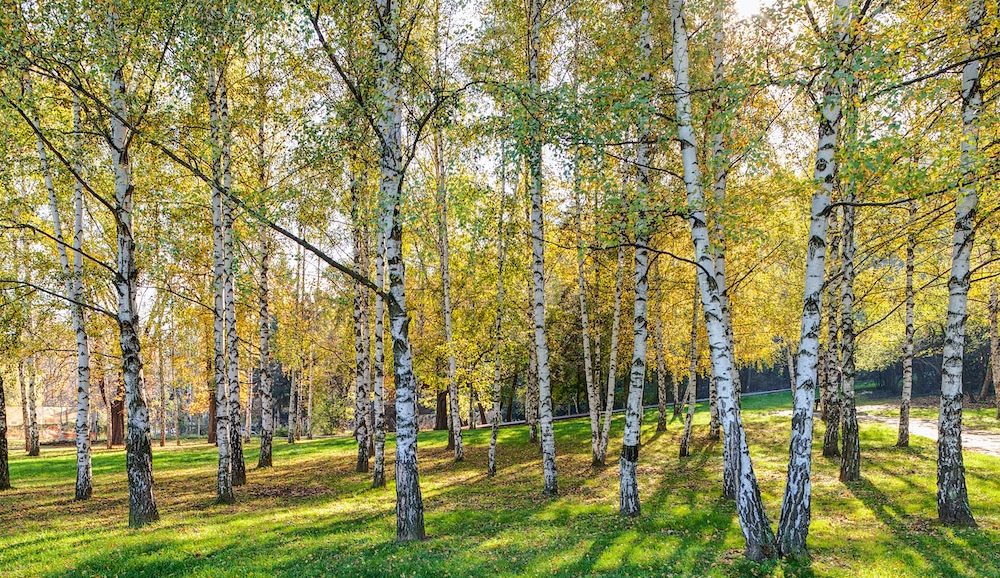
A grove of birch trees with white bark and green-yellow leaves creates a picturesque Hamptons garden in a sunlit forest setting.

Okay so Silver Birch never declined in popularity as much as some of the other plants on this list, but there definitely was a dip where people weren’t planting Silver Birch as much.

But this is such a classic option that it’s no surprise that it’s returned to being the go-to feature tree for so many people.

What makes Silver Birch so incredible is its versatility. It suits almost any garden design, from minimalist to classic to cottage and so on. They are cheap to buy, quick to grow and don’t require a lot of effort.

We love Silver Birches so much we wrote a whole article about it, which you can check out here.


CLICK HERE to see our full range of Silver Birch at Hello Hello

Plants That Are Now Going Out of Fashion

We couldn’t talk about the plants that are coming back, without mentioning the ones that are actually now going out fashion. But who knows, maybe in a couple of years we’ll be writing about how they’re once again rising in popularity.

Ornamental Pears: The Perfect Avenue Tree

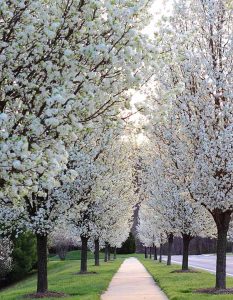
A pathway lined with blooming white-flowered trees on both sides, reminiscent of a serene Hamptons garden, leads into the distance under a clear sky.Perhaps too perfect of an avenue tree, Ornamental Pears are starting to decline in popularity.

It seems that every person and their dog has a row of Ornamental Pears planted outside their house or business.

Both commercial and private owners have ADORED this tree for a number of different reasons.

The main reason is because the consistency in appearance. There’s nothing worse than a row of plants that look nothing alike, even though they’re the same species.

With the Ornamental Pear, in particular Cleveland Pears, their ability to leaf, autumn colour and blossom all at the same time is what makes for such a spectacle as an avenue.

Pyrus Everscreen Ornamental Pear Winter Glow banner

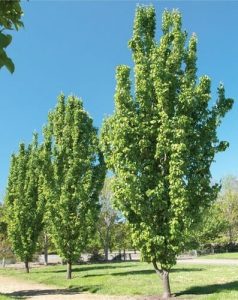
Three tall, green trees with dense foliage stand in a grassy area reminiscent of a Hamptons garden under a clear blue sky.Also just the fact that tree puts on such a gorgeous display year round is very attractive to commercial property owners wanting their property to look good all year. Of course this same principle applies to the homeowner.

But interestingly we’re starting to see a decline in their popularity, there are just so many of them planted everywhere, and it seems people are starting to get bored of it.

Now this is not us telling you you’re not allowed to plant Ornamental Pears anymore – they are clearly incredible trees. But we just wanted to point out how we are seeing a significant decrease in the sale of Ornamental Pears.


CLICK HERE to see our full range of Ornamental Pear Trees at Hello Hello

Are There Any Plants That Are Immune To Trends?

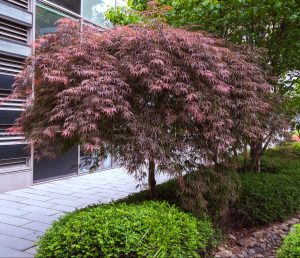
A Japanese maple tree with reddish leaves is growing near a building, surrounded by green shrubbery and a stone path.Or more accurately – are there any plants that will stand the test of time and always be popular.

Now we aren’t psychics (although sometimes we’re pretty sure Chris is with the way he knows everything about plants), but we reckon that trees like Flowering Cherries and Japanese Maples will never go out of fashion.

They are simply too beautiful, and particularly in the case of the Japanese Maple, the different varieties look so different you could never get sick of it.

Get Inspired

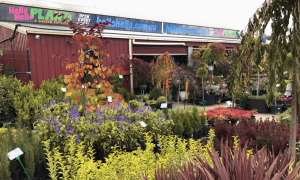
A plant nursery with various colorful plants and shrubs on display. A red building with "Hello Hello Plants & Garden Supplies" signage in the background promotes a Plant Clearance Sale.There you have it, the resurgence of some beautiful plants. It’s funny how trends can be quite cyclical in nature – just think about the return of flared jeans.
Now you never have to buy something just because it’s popular, but there’s definitely merit in checking out plants that a lot of people are buying. They’re obviously selling out for a reason.

If you’re not already following us on our socials, which is insane because we post educational and inspirational content literally every day, then be sure to check us out on Instagram, Tik Tok, Facebook and YouTube.

Feeling inspired to create your own garden, but want some expert advice? Try our one-on-one garden design service with Chris. Together you’ll come up with a selection of plants along with a layout plan that gives you the look you want, as well as being suitable for your local soil and conditions.

get your own tailored modern garden design:


FIND OUT HOW

Articles you may also like

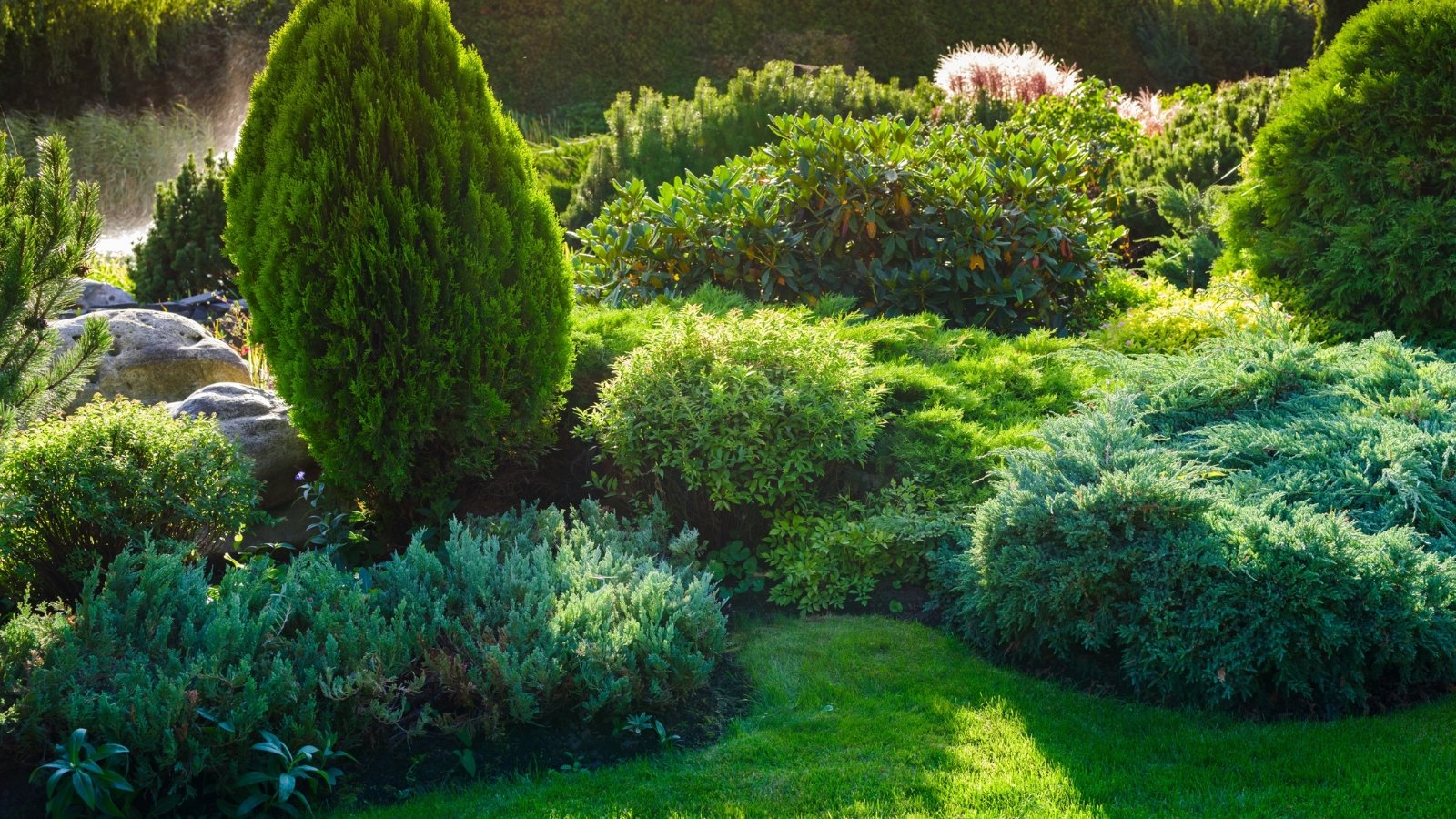
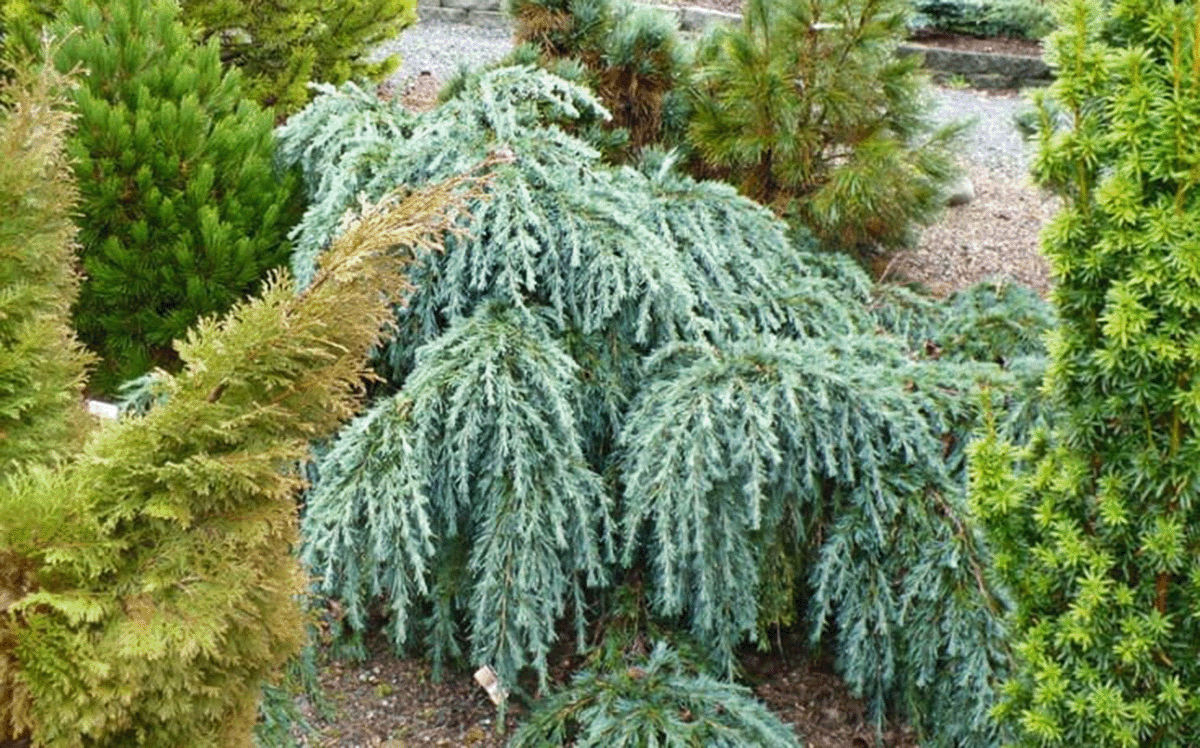
A winter garden featuring various types of coniferous shrubs and trees arranged in rows, with spherical and conical shapes, against a backdrop of lush green foliage.

Don’t Get Conned by Conifers

Now we’re not talking about your uncle Richard emailing you that he urgently needs $500,000, but rather how many people choose the wrong Conifer for their garden. Slight difference.

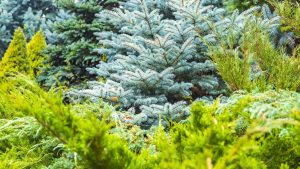
A variety of densely packed evergreen trees and shrubs, including blue spruce and pine, with vibrant green and blue-green foliage.You may think you’re getting a cute little Conifer and next moment it has taken over your yard and kidnapped your kids for ransom. Okay maybe not that last part. But there are so many cases where people have a monstrous Conifer towering over their suburban home, or farmers have puny dying Conifers in the yard. When you don’t have the gardening knowledge, it can be really hard knowing what Conifer is right for you.

A row of tall, dense green evergreen trees, closely planted, with a leafy tree in the background.Especially when there are SO many different types of Conifers that all grow to different sizes and shapes. At Hello Hello we have around 40 different types. Some are really tiny, and you can keep them in nice pots. But some are gigantic and best suited for farm life. It’s all about choosing the right Conifer for the job.

Today we’re going to break down the best Conifers for different types of application, including:

Conifers for Large Gardens

Conifers for Small Featurs

Conifers for Hedging

Conifers for Feature Trees

Conifers for Large Gardens


A well-maintained garden path in the Winter Garden is surrounded by various green and blue-hued conifer trees and bushes on a sunny day. Conifers

Pencil Pines are tall, skinny Conifers that are best for large gardens where you are wanting a focal point. Plant them as an avenue, where you could have them lead up to an even greater feature at the end of the garden. If planted close enough together, they also make an excellent narrow hedge.

These are some of the best types:

Cupressus ‘Swanes Gold’ Conifer

Swanes Gold is a lovely, neat shape with golden-green foliage. It doesn’t grow very quickly and keeps that nice tight shape forever. It grows to about five metres in height in ten years. They love full sunlight or partial shade.

Juniperus ‘Blue Arrow’

Blue Arrow has a very elegant look and is the best option for keeping really narrow and tight as it won’t grow too big. It trims up beautifully and has blue-green foliage. Once established, Blue Arrow is hardy and drought tolerant.

Cupressus ‘Glauca Pencil Pine’

Glauca Pencil Pine is absolutely fabulous – tough, fast-growing and requires minimal maintenance. Yet even though it grows like crazy, it still stays neat and tight.

The dark green towering column grows to about nine metres tall. Glauca is the one we recommend for people that don’t want to be climbing up ladders and using all this special equipment to trim it and keep it looking nice. Especially for people who are a bit older but still want something tall to block out other units.

Where a hedge needs trimming, the Glauca Pencil Pine will shoot up nine metres very quickly and only stay a metre wide. Best of all, you will never have to get up and trim it. Glauca is also a fabulous avenue option on a farm or big space.

Juniperus ‘Spartan’ Conifer

Then there is Spartan, which some people wouldn’t call a Pencil Pine, but we like to say is a fat Pencil Pine. Just like the warriors, Spartan is very tough – it doesn’t need much water or good soil. Yet, it is still such a fast grower, ending up at about six metres tall and 1.2 metres wide.

Spartan is excellent as a windbreak, dust/dirt screen and sound block because of its thick foliage. For example, if you live near a railway line or freeway and want to block off some of that noise, you are not going to want a hedge, but rather something dense like the Spartan. Similarly, if you live on a dirt road, Conifers are great at absorbing the dust and dirt.

Conifers for Small Features


A well-maintained Winter Garden with various green shrubs, bushes, and a small tree on a sunny day. Conifers

Although not tiny by any means, these are some of the smaller Conifers that would look great in a regular garden:

Thuja ‘Smaragd’ Conifer

Smaragd is perfect for the suburban garden, it makes an excellent feature reaching a maximum height of three metres. However, with some trimming you can keep it just over a metre tall. Smaragd is fairly slow growing and has a slightly higher water requirement. It will form a pointed top.

It’s beautiful, thick, and lush, and can be planted in a large pot or as an obelisk style feature. They look excellent in a variety of garden styles, such as cottage, coastal, formal or Mediterranean.

Thuja ‘Golden Biota’ Conifer

A cousin of the Smaragd, Golden Biota grows in a lovely golden-green ball shape, that with a bit of a trim you can keep to one metre tall. Or if you leave it, the end height will be of about two meters tall. The round shape and dense foliage make for a stunning garden feature.

You can plant them as a row along the front fence, or up the driveway. It has more of a rounded top than the Smaragd.

Juniperus pingii ‘Prostrata’

Prostrata is commonly made into a bonsai, by wiring the branches to hang down and arch over. They make for a spectacular small feature and can be kept in pots.

But you can also plant it as a groundcover, and it will fill a large area and grow really low. Prostrata is also extremely hardy for things like the heat and wind.

Conifers for Hedging


A tall, green hedge neatly trimmed into a perfect rectangular shape stands alongside a wooden fence in a grassy Winter Garden. The sky is partly cloudy.

Whether it’s for privacy or looks, Conifers make fantastic big and bushy hedges. These are the best ones suited to the job:

Juniperus ‘Spartan’ Conifer

Back again, Spartan is also an excellent option as a hedge. What’s interesting is that you can actually topiarise Spartan into whatever shape you’d like – we often sell them as a spiral, but you could cut it into the shape of chook if you were so inclined. But let’s chat hedging, plant them up close and cut them into a beautiful square for the most fantastic hedge.

Out of all the Pencil Pines discussed before, Spartan is the best choice because you don’t need to plant them as close together due to the thicker foliage.

Cupressus ‘Leighton Green’ Conifer

Leighton Green is one of the most popular options for hedging because it grows at an enormous speed. You need something quick? Plant a small one of these and you can have it up three metres in two years. Trim it up and it’ll grow thick and bushy.

It’s one of the fastest three metre hedges ever. There was a case where someone got their Leighton Green hedge up seven metres in three years from a small plant. That was with perfect conditions, water and fertiliser, and no grass or weeds around the bottom. Leighton Green is great as a tall screen on a farm.

Cupressus macrocarpa

Many of the most expensive properties around Melbourne have macrocarpa hedges because they look incredible and are such a classic look. A lot of people believe macrocarpa is slow growing, but the reason for that is because they receive so little care and attention. Most farmers stick them out in the paddock and never water or fertilise them.

But what we found is if you properly watered and fertilised it, macrocarpa actually grew quite quickly. If you take care of it in the first couple years, you’ll get fantastic growth, and then after that it doesn’t need very much water. So if you are in quite a dry area, then macrocarpa is the perfect option.

We sell the ‘Monterey Cypress’, a vivid green shade and ‘Lemon Scent’, a striking yellow-green colour with a lovely citrus smell.

Cupressus ‘Castlewellan Gold’ Conifer

This is the gold version of Leighton Green, although it isn’t as fast growing, it is a bit hardier. The foliage is dense and a stunning golden green hue. Castlewellan Gold is best suited for medium to large sized properties. They are easy to maintain and shape.

Conifers for Feature Trees


A winter garden scene with various green and blue-green coniferous plants, including weeping blue atlas cedar surrounded by other conifers on a bed of gravel.

Conifers make the most wonderful feature trees. Some will grow quite large and are best suited to bigger properties, whereas others are great for a suburban backyard. Here are some of our favourite choices:

Pinus ‘Japanese Black Pine’

The lovely dark green foliage is contrasted beautifully by white candle shaped needles. In Japan they trim and train these into beautiful shapes. It will reach a maximum height of 15 metres and has an irregular spreading habit. The Japanese Black Pine is perfect for sunny spots but will tolerate afternoon shade.

Araucaria ‘Norfolk Island Pine’

If you live by the beach, then Norfolk Island Pine is a great option. Being both hardy and beautiful, you’ll find that Gold Coast and South Australia is absolutely filled with them. They are fast growing and make for a stunning specimen tree.

Picea ‘Stone Pine’

The Stone Pine has a fascinating turtle shell like finish on its trunk with a flat head and a widespread body. They are a beautiful tree for big fields and do quite well in hot, dry, difficult sites.

Cedrus ‘Himalayan Cedar’

The most common Cedar is the Himalayan Cedar, also known as the Indian Cedar. It has a natural weeping form that is covered in fine long needles and cones. They are fast and easy to grow. Once established, the Himalayan Cedar can withstand frost and some drought.

Cedrus atlantica ‘Atlas Cedar’

Atlas Cedars are beautiful with short needles, as they get older, they develop a really interesting shape to them. They start off slow, but once they’re more established, they will start growing at about one and a half to two metres a year.

They trim really well, and so even though they can become huge, they are still suitable for the suburban garden. If you don’t trim it, in about thirty years, you’re going to have an absolutely massive tree (may or may not kidnap your children).

Cedrus ‘Feelin’ Blue’ Cedar

This is a very interesting, grafted miniature cedar that will need training. It has lovely blue weeping foliage and is kind of like a collector’s item. Feelin’ Blue loves the sun and doesn’t need much water once it has been established. You can grow it in a pot.

Sequoiadendron ‘Giant Sequoia Tree’

The Giant Sequoia Tree is considered one of the biggest trees in the world, so if you are to plant it in your little suburban backyard, it will kidnap your children. But on a big property they’ll make an excellent feature. Once they get going, they grow surprisingly quick. They have a thick trunk with lovely red bark.

In Conclusion

ConifersSo there’s a taste of some of the incredible types of Conifers, now it isn’t the full range we sell in the nursery, or even what is available in general. But we wanted to keep it to the best types for different applications.
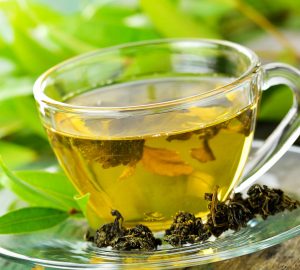
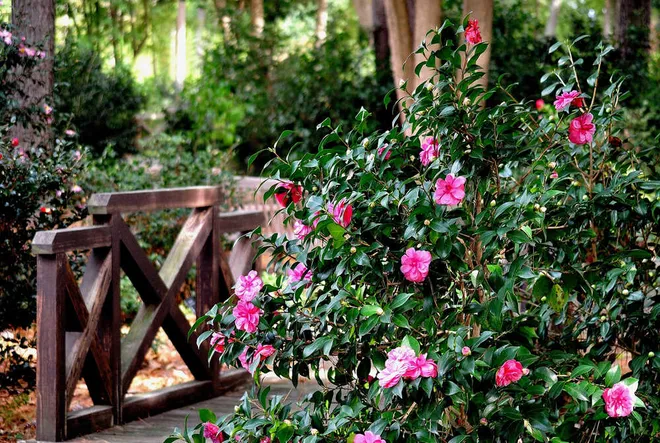
Conifers are incredibly versatile, from a small to a gigantic feature, avenues to ground covers, screens to hedging, your options are endless. They’re fast. They’re tough. They’re beautiful.

Just make sure you choose the right Conifer, so you don’t get conned.

Feeling inspired to create your own garden, but want some expert advice? Try our one-on-one garden design service with Chris. Together you’ll come up with a selection of plants along with a layout plan that gives you the look you want, as well as being suitable for your local soil and conditions.

get your own tailored modern garden design:


FIND OUT HOW

Articles you may also like

Pink camellia flowers in full bloom with green leaves, seen on a lush bush in a winter garden.

Harness the Versatility of Camellias

Are you a fan of tea?

Well, all green and black tea is made from the foliage of Camellias, from a particular variety called Camellia sinensis ‘Tea Plant’. So you can actually grow your own Tea Plant and have an unending supply of tea. Heaven.

A clear glass teacup filled with green tea, surrounded by loose tea leaves and green foliage in the background.Now we know Camellias are an all-time classic – for years they’ve been a beloved plant in many gardens. But most people don’t know just how versatile the Camellia truly is.

Let’s change that.

We’re going to be talking about:

Here are the DIFFERENT TYPES OF CAMELLIAS that we’ve picked out for you, some of our favourites. Jump straight to them from here if you wish:

Camellia sasanqua:
‘Setsugekka’
Pure Silk’
‘Shell Pink’
‘Hiryu’
‘Avalanche’
Camellia sinensis ‘Tea Plant’
Camellia japonica:
‘Volunteer’
‘Pope John XXIII’
‘Black Tie’

The Benefits of Camellias

A wooden bridge in the winter garden with a blooming pink camellia shrub in the foreground.So why should you want to plant a Camellia at all?

First up, they are so easy to grow. For very little effort you are getting this gorgeous, lush, flowering plant.

Next, they are very long living. Unlike perennials, they’re not going to be a sudden flash of beauty that dies quickly thereafter. You will get year after year of wonderful blossoms.

Finally, which is the whole point of this article, is the fact that they are so versatile.

The Different Applications of Camellias

A long hedge of pink camellia flowers in full bloom with fallen petals creating a pink path on the grass alongside it, forming an enchanting Winter Garden. Trees are visible in the background.From the apartment balcony to the deep shade of suburban backyards, Camellias are kind of like that one size fits all leggings – but in this case it’s actually true.

HEDGES & BORDERS

First of all, Camellias are very popular for hedges and borders. We’ve seen hedges that are over a hundred metres long, and a couple of metres tall. Simply spectacular.


A neatly trimmed hedge densely covered with pink flowers borders a paved area, creating a picturesque winter garden scene with a light-colored house and greenery in the background.

POT PLANTS

Two potted trees with pink blossoms sit beside an outdoor wall, creating a charming winter garden ambiance, accompanied by a potted plant with green leaves and purple flowers. Camellia in PotsThe next use is as a pot plant. A lot of us live in apartments nowadays, which can make you feel like you don’t get to share in the joy of having your own garden. But just because you don’t have a backyard, doesn’t mean you can’t have an exciting, lush garden.

Pots let you put your plants wherever you want, free of the constrictions of soil. We actually stock our own range of pots, so you can easily get everything you need in one place. But what’s fantastic about Camellias is how well they grow in a pot.

So get creative with where you put them – whether it is that apartment balcony or just the patio. You can trim and shape them in this pot to however you like. Make sure you fertilize and water them to keep your Camellias lush and green.


A potted bonsai tree with dense green foliage is placed next to a flowering plant with numerous pink blossoms in a black pot, set in a winter garden with lush greenery in the background.

SPECIMEN IN THE GARDEN

White blooming flowers with green leaves in the foreground, set against a backdrop of vibrant fall foliage in shades of orange and red, create a stunning contrast that transforms your outdoor space into a Winter Garden masterpiece. Camellia in GardenNext thing is growing them as a specimen in the garden. Depending on what variety you choose, you can grow them in the shade with other shade lover plants like Helleborus or Azaleas. Or you can put them in the hot sun with other sun loving plants like Daises or Lavender.

If you are lucky enough to have your own backyard, you might come up against a different problem – the absence of sun. This can come from your neighbour’s house, it could be from other big trees in your yard, whatever the case, shade can be a limiting factor to what plants you use. But certain types of Camellias thrive in the shade, giving you colour and lushness where you most need it.


A tree with lush green leaves is covered in vibrant pink flowers, some of which have fallen to the grassy ground below. The tree, a stunning focal point in this charming Winter Garden, is surrounded by a layer of brown mulch. Camellia in Garden

A potted plant with a round canopy of pink flowers is placed on a stone patio, evoking the charm of a Winter Garden. Other potted plants and greenery surround the area, enhancing its serene beauty. Camellia Standard in PotSTANDARD (BALL ON STICK)

Then you can have them as a standard, which is a ball on a stick style plant. You’ll find that most standards don’t flower, but a Camellia standard will give you gorgeous blooms and evergreen foliage. The standard we sell uses a Camellia sasanqua ‘Yuletide’ which has stunning hot pink/red flowers and is a slow grower. You can plant a row of standards in your garden or have it in a pot with some flowers planted underneath.

Three potted plants with white and pink flowers are placed in front of a lattice fence, creating a charming winter garden scene. Fallen petals are scattered on the gravel ground beneath them. Trees and a cloudy sky can be seen in the background. Espaliered CamelliaESPALIER (USING TRELLIS)

The next application is a bit trickier, but so worth the effort. Get some trellis and use Camellia as an espalier. The best type to plant for this is Sasanqua. Espalier Camellia is perfect for a tight situation up against the wall. For the whole year you will have lovely evergreen foliage and then in autumn and winter you get this gorgeous show of flowers.

camellia sculptureSCULPTURE

The last application is even more unusual, but perfect for those who are wanting to do something a bit more different in their gardens. If you are intentional with the trimming, you can shape your Camellia like it was a sculpture, and have it as an exquisite centrepiece in the garden.

One of Chris’ first jobs was to do just this, here is a story from him:

“When I was seven, I went and got myself a gardening job and I used to work every Saturday morning for an elderly lady. Anything that was a bit tricky like climbing the ladder or lifting heavy things, I used to do for her. She planted a sasanqua Camellia that was cut into a perfect cylinder shape with a flat top. I was the one trimming it. It would take me hours, she would direct each snip and I would trim it little by little. But it was a beautiful thing.”

You’re practically spoilt for choice when it comes to deciding how to plant a Camellia in your garden.

The Different Types of Camellias


Close-up of pink camellia flowers blooming amid green foliage on a bush in a serene winter garden.

There are MANY sorts of Camellias, each with their own unique characteristics and strengths.

We bet you’re dying to hear more about that tea producing Camellia, so let’s jump straight into that one first.

Camellia sinensis ‘Tea Plant’


Previous
Next

These are grown all over the world for tea plantation, from Australia, to China, to India. The flowers themselves smell like green tea, but really, it’s the new growth you’re looking at to make that delicious cup of tea. Also yes, you can make green OR black tea, from the same plant. It’s all in the way you harvest the leaves that make the difference.

Close-up of a metal tea strainer filled with dried tea leaves and garnished with two fresh green leaves, placed on a dark surface with scattered tea leaves around. Camellia TeaYou have to wait until summer for the new shoots, pick a few grams and dry it in the microwave or oven. Then chuck on the kettle and make yourself a cuppa. This is going to be like no tea you’ve ever had before, that old stuff at the grocery store can’t measure up to freshly plucked and brewed tea.
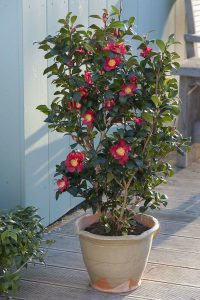
But of course, the Cammellia Sinensis is so much more than just a tea producer, it’s also a very attractive feature in the garden. You can plant them in a pot, have them as a specimen in the garden, or create a hedge out of them. The flowers are gorgeous, delicate white petals with a golden/yellow centre.

Camellia sasanqua


Previous
Next

We get it, not everyone is a tea fanatic, so here is a Camellia that is purely for show. It’s actually our most popular Camellia in the nursery.

Sasanqua Camellias have smaller flowers and finer leaves than most Camellias. But they also have greater versatility in that they can grow in hot full sun, but also deep shade.

A potted camellia plant with dark green leaves and vibrant red flowers placed on a wooden deck near a light blue wooden fence. CamelliaAs we mentioned before, a lot of gardens have those spots where the sun never quite reaches, and it can be tricky to find a plant that will work there. But you’re also not limited to the shade, if you have a big kitchen window or an ugly fence you want to cover and it’s in full sun, this is no problem for the Camellia sasanqua. Just make sure you’re watering it more if it is in a sunny spot.
Beyond this, they are also nifty in a tight area because they don’t need a lot of root space as long as you use really good soil. They’ll grow up and then with a bit of a trim you can keep them nice and narrow.

You can grow them under verandas or pergolas, or they make beautiful pot plants. They flower from autumn to mid-winter.

THERE ARE A LOT OF DIFFERENT COLOUR CHOICES, SO THESE ARE SOME OF OUR FAVOURITES:

‘Setsugekka’

Setsugekka is great for hedging and has beautiful dark green foliage with lots of white flowers. They are the perfect option for a green and white garden style.

‘Pure Silk’

Pure Silk have gorgeous white flowers with hints of pink in the petals and fresh buds. People are drawn to Pure Silk because of the lack of a big yellow centre that most other Camellias have.

‘Shell Pink’

Shell Pink is a very strong and rapid grower with massive pink flowers. They are perfect as a dense hedge or specimen in the garden.

‘Hiryu’

Hiryu has vivid pink-purple flowers and is the strongest grower of all the Camellias. It’s great as a hedge and an excellent option for those who are wanting a brighter pop of colour.

‘Avalanche’

Avalanche is a new type on the market that is very handy for lots of people. It is a dense and bushy column that is quite tall and skinny. You can have it as an individual specimen or plant it as a hedge.

Camellia japonica


Previous
Next

Japonica has a wider leaf and tend to grow bushier and fatter than the Sasanqua. They grow quite tall and will live for many, many years. But keep them out of the hot afternoon sun or you’ll get brown patches in the middle of the leaves.

They flower from late winter into spring, so will have blossoms at different times than the Sasanqua. If you plant both species then you can have flowers for five or six months of the year.

JAPONICA ALSO COMES IN DIFFERENT COLOURS, HERE ARE SOME OF OUR FAVOURITE PICKS:

‘Volunteer’

Volunteer has the most amazing flowers, it is an eruption of red-pink flowers into white tips. It is the only Japonica that flourishes in the hot sun (provided there is adequate watering), as well as the deep shade. Volunteer is a good strong grower, nice and bushy, and what’s interesting is that the flowers become richer in colour the more you progress through the season.

‘Pope John XXIII’

Pope John XXIII is a classic white with semi-formal double flowers and really nice foliage. They are another great selection for that green and white garden style.

‘Black Tie’

Black Tie is a more formal double flower in a brilliant shade of red with large leaves. It’s another strong grower that is going to form a dense rounded shape.

How to Take Care of your Camellias

A green and pink container of Scotts Osmocote Plus Organics, 800g. Intended for feeding roses, gardenias, and azaleas, and improves water retention and soil. Organically enriches the soil for up to six months. fertiliserOkay so you’ve decided what type and where you’re going to use it, now you need to know how to take care of it.
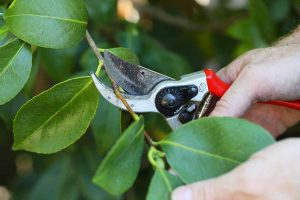
Camellias like loose well-drained soil that is acidic. If you don’t have quite the right soil, then dig a big hole and mix in some fine composted pine bark or acidic potting mix. They love lots and lots of fertiliser.

If you’re Camellia is looking a bit crook, what’s likely happened is that you’ve started taking your old Camellia for granted and not watered it enough. So make sure you give it plenty of water. Another solution is to mulch it with fine pine bark or Osmocote. If it was really crook, try the Osmocote liquid fertiliser for acid loving plants, this will almost bring it back from the dead.

Close-up of hands using a pair of pruning shears to cut a branch of a green leafy plant. Pruning CamelliasIn general, your Camellia needs regular feeding – water it and give it Osmocote, and Camellias will absolutely flourish. The best time to prune is immediately after the flowering is finished. The reason for this is that pruning them halfway through the season inhibits next year’s growths.
Although Camellias flower in winter, you won’t get much foliage growth. But being evergreen means that you will still have gorgeous green leaves all year.

In Conclusion

A cup of black tea sits on a wooden table next to fresh green tea leaves, loose black tea, and a potted tea plant. Camellia Tea PlantCamellias are a stunning plant with so many applications, from a thick hedge to a pot plant, you have so much freedom with where you want to put it in your garden.
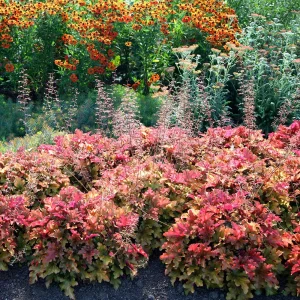
There is a huge range of colour choices so you can go bold or stay subtle.

And if you love tea as much as we do, then chances are you’re gunning for the Camellia sinensis ‘Tea Plant’.

So pour yourself a cuppa and get to thinking about how you want to harness the versatility of Camellias.

Feeling inspired to create your own garden, but want some expert advice? Try our one-on-one garden design service with Chris. Together you’ll come up with a selection of plants along with a layout plan that gives you the look you want, as well as being suitable for your local soil and conditions.

get your own tailored modern garden design:


FIND OUT HOW

Articles you may also like

A cluster of purple flowers with green leaves grows in a garden bed, reminiscent of one of the top indoor plants. The background includes a concrete wall and scattered dry leaves.

Inject Colour into your Winter Garden

Take a peek out the window or have a think about your garden. Is it looking a bit grey and bare? Have all the leaves fallen off those once gorgeous autumn-coloured trees? Is there even a single blossom left?

You may be suffering from winter-itis. A very real and not made-up disease where one believes that winter is the ugliest time of the year for the garden. If you drive through Melbourne right now, at the end of May, you’ll see there is a bit of an epidemic of this.

Now a lacklustre garden in winter is not inevitable, but rather a lack of forethought and knowledge on what plants will keep your garden looking lush and colourful, including this list of plants that flower in winter:

Nandina ‘Moon Bay
Heuchera
Loropetalum
Cordylines
Coprosmas
Ajuga
Camellia Sasanqua
Erica ‘Ruby Shepherd’ Winter Heath
Hydrangea quercifolia ‘Oakleaf

A winter garden featuring a bed with red and green foliage plants in the foreground and orange flowers blooming in the background.In this article we will cover:

Now the first part of winter is the most difficult. Many plants have stopped flowering such as summer Perennials, Roses and Magnolias. Deciduous trees have lost their leaves, and their bare branches can be quite a stark sight.

Late winter you’ll see things start to pick up again, plants like your Quince, Plum, Magnolia or Peaches will start flowering. The further you move along, the more exciting gardens get.

But we’re here to talk about how to get your garden looking incredible ALL winter.

Your Current Garden Check Up

A frost-covered winter garden with bushes, bare trees, a birdhouse on a post, and three bird-shaped ornaments in the foreground. A hedge borders the back of the garden.

First things first, let’s run some diagnostics on your current garden.

Can you find any spots of colour or lushness? Is anything still flowering? Are your trees deciduous or evergreen?

Now don’t freak out if you step outside and see a barren landscape. Even Chris, our master horticulturist, didn’t always have a perfect garden as he explains here:

A small tree with dark purple leaves stands in front of a house with shingle siding, accompanied by various green shrubs. loropetalum topiary

“I remember when I built my first home, and I carefully chose all my plants. This would be my first ever garden I was designing myself. I was nowhere near as experienced as I am now, but I still had a good sense of gardening.

“I loved deciduous trees, especially maples. So I planted pretty much just deciduous trees, and all kinds of different perennials. It was late spring, and I had the most beautiful garden all through spring and summer.”

Then winter came. The perennials shrivelled up and lost their flowers. The maples all dropped their leaves. Suddenly I had the saddest, most barren looking garden you’ve ever seen. But I learned a lesson from that, and that lesson was balance.

But how do you create balance in your garden?

Having an Holistic Approach to Gardening


A collection of mixed foliage plants with vibrant colors, including green, purple, and variegated leaves, and a few purple flowers, set in a well-maintained winter garden.

What everybody wants is a garden that is going to look great all year. Not just in the spring. Not just in the winter.
All year.

But that means being clever with your selection of plants, and for most of us with no horticulture background, it can be incredibly difficult. But this is why we are writing this article today and why we offer services like the free Garden Design with Chris and here’s what he says about them:

“I’m very careful in my garden designs. When someone comes in with a list of plants they want and they’re all deciduous, I make them aware of the problems they could have in wintertime.

I would never tell someone what they can and cannot plant. But I suggest bringing in some more evergreens. For example, they could have all their favourite deciduous trees, but plant some larger evergreen shrubs.”


Previous
Next

Let’s take this lesson and apply it your own garden:

PLANT A HEALTHY MIX OF EVERGREENS AND DECIDUOUS
Having evergreens in your garden will help eliminate that bleakness. Consider Magnolias, Camellias, Pittosporums, Olive Trees, the list goes on. Browse our entire category of evergreen trees here. Also don’t forget about other evergreens like Shrubs or Grasses.

USE INTERESTING DECIDUOUS TREES
Close-up of a plant with bright red stems and vibrant green, deeply lobed leaves, set against the serene backdrop of a winter garden's green grass. senkaki japanese mapleNot all deciduous trees look terrible as soon as they drop their leaves. For some, their beauty actually increases. Consider the popular Senkaki Japanese Maple. The trunk and branches are a bright, bold red. It practically looks more sculpture than tree. But this isn’t the only tree with interesting bark. There’s the classic Silver Birches with their lovely white and speckled black trunk. If you want to be adventurous, look at trees such as Acer ‘Winter Gold’ Japanese Maple and Betula ‘Wades Golden’ Birch, that have yellow/gold coloured bark.

BE TACTICAL WITH TYPES OF SPECIES
We’re going to use the example of Lavenders to explain this, but you can apply this to a lot of flowering plants. By being clever with what type of Lavender you plant, you can have your Lavenders flowering 365 days of the year. A good plan of attack would look like this:

Deep Purple for the winter. Avonview for spring into early summer. Hidcote for the full summer. French Lavender for autumn. Then back to the start with Deep Purple.

Plants that are Colourful in the Winter


Close-up of a plant with dark purple leaves and small, bright pink flowers, covered in water droplets against a blurred green background, evoking the serene beauty of a winter garden. Loropetalum

There’s two ways a plant can give you colour – foliage or flowers. Both have their advantages. Plants with colourful foliage give you colour all year round. Flowering plants give you extra interest and excitement. We’re going to first talk about foliage.

Nandina ‘Moon Bay’


Previous
Next

With fiery red foliage and an economical price, Moon Bay is an excellent way to keep those winter blues away. We’re not going to get into them too much here, as we have an article coming out soon about Adding Warmth to Your Winter Garden Using Nandinas. But they’re a very versatile plant that is incredibly low maintenance – so many commercial gardens chuck them in and never think about them again.

Heuchera


Previous
Next

Aren’t these just the cutest looking plant? You’re spoiled for choice when it comes to colour, from the amber hues of Marmalade to the vibrant fuchsia of Wild Rose.

Because they’re so petite, they are perfect for a tiny garden bed. Or pop them in some pots on a deck and have fun with the different colour combinations.

For a dark dramatic look, take Obsidian and pair it with our Urban Style Olive Pot Matt Black. Or keep it light and sweet with Peach Flambe and our Limecrete Egg Pot Antique Rust.

Be gentle with Heuchera and place them in a sheltered spot, with dappled shade.

Loropetalum


Previous
Next

Rising in popularity is the Loropetalum. We love them so much we wrote an entire article about how to Add Excitement to Your Garden with Loropetalum. They have great versatility – trim them into any shape or let them sprawl artfully.

Cut on top and have them as a tall groundcover/low spreading bush. Trim them into a hedge to create privacy from your neighbours. There is a huge selection to choose from, with each type having its own strengths and suitability. So it’s important to read up about them so you know which type will work the best for you.

Cordylines


Previous
Next

If you bought Cordylines a while back, you may have found that some of them discoloured badly in the winter. But with the genius of our plant breeders, this has actually been bred out of them. Nowadays, you have a huge variety of different shades, from pink to purple to brown.

They are very tough growing, tolerating almost any soil type, and love an open sunny spot. One we love in particular is Pocahontas – a rich burgundy intermixed with vibrant purple-pink hues.

It grows up like a palm tree and adds a tropical look to your garden, making you feel like you’re on island getaway and not, well ah, stuck in miserable Melbourne. There are also clumping Cordylines that don’t grow trunks and have a bushier look, such as Electric Flash.

Coprosmas


Previous
Next

Okay we harp on a lot about Coprosmas but it’s because they’re just such damn good plants. They’re tougher than cactuses and have fabulous colours. The colder it gets, the more intense the colours become.

For those living in apartments and have either a rooftop or balcony garden, these are an excellent choice. Wind, heat, salt spray, frost, sun – Coprosma can take anything. They are a great pot plant. Flex your creativity and experiment with different pairings. Use Ignite with our Seafoam Bronte Planter Copper. Pair Pacific Sunrise with our GardenLite Trough Black. Try different shapes, colours and sizes.

Or plant them in the garden, shape them into a round ball, cut them into a square box hedge. Stick with one colour or alternate between different colour combinations. The world is your oyster.

Ajuga


Previous
Next

These are great placed next to plants that look bleak in the wintertime, such as most Hydrangeas or the Arthropodium ‘NZ Rock Lily’. We don’t want to discourage you from buying the plants you love because they don’t look so great in the winter.

Rather, we want to encourage you to include other plants that are a supporting act to your fabulous summer plants. Then in the summer you can enjoy all those Perennials and Hydrangeas and come winter your garden still looks great.
In particular we love the Burgundy Glow with its medley of pink, green, purple and burgundy hues. They’re great as a border in the garden or can be planted in a hanging basket on the patio.

Okay so there’s plenty of colourful foliage options, but let’s chat about some of the plants that flower during winter.

Camellia Sasanqua


Previous
Next

This is one of your best sources of flowers in the winter. What’s really interesting is that in the summertime, the white Camellias sell like crazy, but come winter, no one wants to buy the white. This is because the white shade is quite cold and doesn’t do much to uplift the rest of the garden during winter.

We’re finding that a lot of people right now are buying the soft pink shade because it just looks warmer and friendlier. You can even take it a step further and plant hot pink Camellias. So a little hint: when looking at flowering plants, don’t just look at your whites. Camellias are also just a great, reliable plant that are super easy to grow.

Erica ‘Ruby Shepherd’ Winter Heath


Close-up of pink and purple heather flowers with green stems and leaves. The blooms are densely clustered, forming a vibrant and delicate display perfect for a winter garden.

Originating from Africa, these are incredibly tough and very popular. The flowers are an exquisite purple/pink shade and stick around all throughout autumn and winter.

They’re unbothered by the cold wet weather, whereas other flowers can struggle in a particularly miserable spell. They’re going to grow about a metre tall and are great for mass plantings.

Hydrangea quercifolia ‘Oakleaf’


Close-up of a plant with red, purple, and green leaves in a Winter Garden. The plant has clustered, dried flowers in the center.

If you are really wanting Hydrangeas, but the horror-quality they take on in the wintertime scares you, then Oakleaf is perfect.

Instead of shedding its leaves, they turn a gorgeous purple shade for all of winter. Then in springtime, new bright green leaves push through, for a time giving you a mix of purple and green leaves.

Curing Winter-itis

If any of your friends or loved ones are suffering from winter-itis, please be sure to share this article with them. We want to help as many people as we can bring colour and lushness into their lives. If you’re hungry for more options, go check out our YouTube playlist How to Have a Colourful Garden During Winter.

Let’s bring beauty into all Australian gardens during winter.

Feeling inspired to create your own garden, but want some expert advice? Try our one-on-one garden design service with Chris. Together you’ll come up with a selection of plants along with a layout plan that gives you the look you want, as well as being suitable for your local soil and conditions.

get your own tailored modern garden design:


FIND OUT HOW

Articles you may also like

Select the fields to be shown. Others will be hidden. Drag and drop to rearrange the order.
  • Image
  • SKU
  • Rating
  • Price
  • Stock
  • Availability
  • Add to cart
  • Description
  • Content
  • Weight
  • Dimensions
  • Additional information
Click outside to hide the comparison bar
Compare