| Description | Juniperus procumbens nana
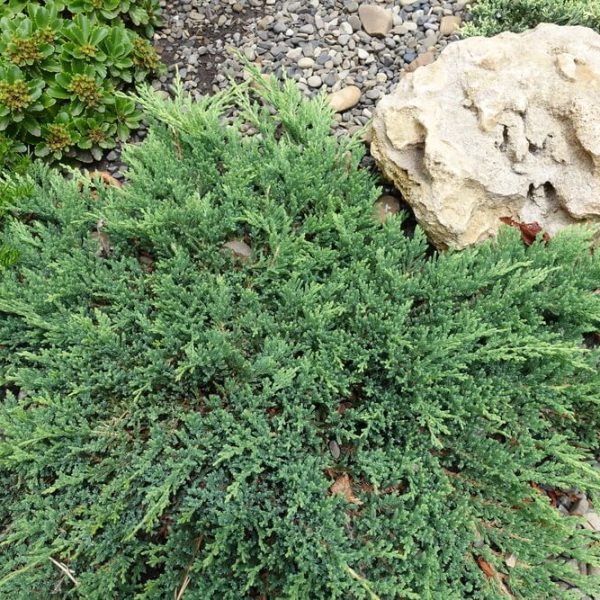
A hardy, low-growing evergreen shrub, Juniperus procumbens nana is prized for its dense, spreading habit and fine blue-green foliage. Perfect for rockeries, borders, and groundcover, this easy-care conifer adds texture and year-round colour to gardens of all styles.
- Low, spreading form ideal for groundcover or cascading over walls
- Attractive blue-green foliage with a soft, textured look
- Excellent for rock gardens, Japanese-style landscapes, and sloped areas
8" / 20 cm pot | Centella asiatica
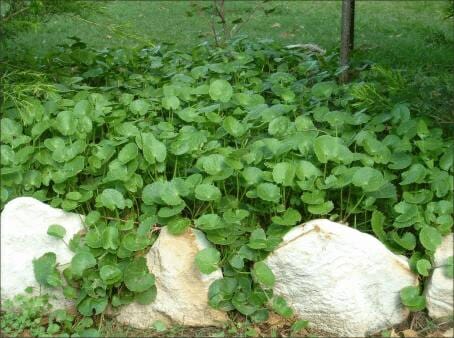
When we think about herbs we think of things like parsley, sage and thyme, which all originate from Southern Europe. We don't hear much about those from Asia, let alone native Australian herbs. "Gotu kola" is more commonly known here as the arthritis plant. This herb has been cultivated in India, China, tropical Asia and Africa for centuries. It comes from the same family of plants as parsley and it has close relatives in Australia. Some of the traditional claims made about the medicinal properties of this plant include ; the extension of life, control of tuberculosis and leprosy, relief of high blood pressure and the pain and swelling associated with arthritis as well as a treatment for cancer and irritating skin ailments. It has also been referred to as Indian Ginseng because of its stimulating effects on many parts of the body. The arthritis herb has been used as a medicine for thousands of years in countries where it grew naturally. It is claimed to have beneficial effect on a number of other ailments including psoriasis, ulcers, rheumatism, acute infections and inflammation, upper respiratory tract infections, diarrhoea, fevers and diseases of the female reproductive organs. Modern clinical tests on humans and animals have confirmed a positive effect in the treatment of skin ailments such as ulcers, burns and wounds. The recommended daily dose is two leaves of 40mm diameter per adult, or the equivalent in smaller leaves. The leaves have a bitter taste particularly if grown in full sun. You may be able to eat the leaves straight from the plant or alternatively they can be chopped up and used like a parsley garnish on salads or mashed potato. It is commonly used to flavour rice dishes in Southeast Asia. A weak tea can be made which you might like to sweeten with honey. The naturally occurring organic chemicals in the leaves include strong alkaloids and a carcinogen called asiaticoside. It is recommended therefore, that you do not exceed this dose as symptoms of headache, dizziness and insomnia have been reported. This plant also goes by the common name of swamp pennywort and this is a clue to its preferred environment, which is shady and swampy. In such a location this plant can grow very quickly. The arthritis plant can be easily grown in the home garden. It thrives under shade in pots, hanging baskets and particularly in bog gardens or by a pond. A good idea is to keep this plant in a confined position such as a tub to prevent it from escaping. And a good potting mix will see this plant take off quickly.
4" pot size. | Agapanthus praecox minimus
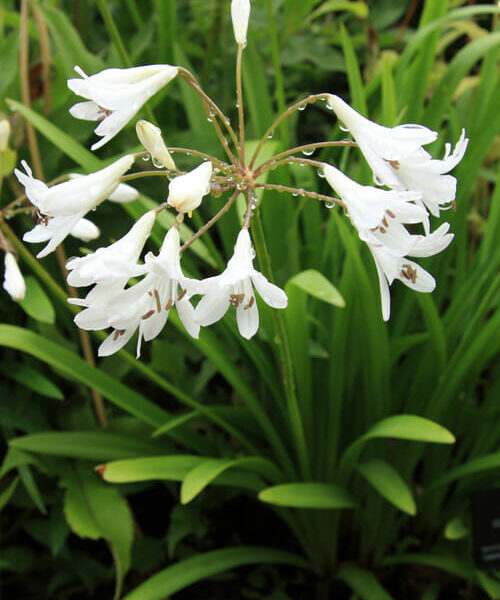
Dwarf Agapanthus are smaller and more compact, great for narrow borders and gardens with less space.
• Fine, strap-like lime green foliage
• White umbel flowers appear on tall stems above the foliage
• Extremely hardy, tolerating poor soils and drought
6"/14cm pot size. | Bacopa monnieri
The Brahmi plant, commonly called Water Hyssop, is highly regarded as an herb that enhances memory. It can be consumed fresh or used in a tea when dried. A sprig of Brahmi placed in a murky fish tank can clear the water by the next day. This plant is indigenous to India and thrives in warm, moist soils with some shade. It is sensitive to drought and frost. As a perennial ground cover, it typically grows to dimensions of 0.15m by 0.60m.
sidered to be an important herb in the ancient Indian medicine, and is reported to have similar properties to another herb called the gotu kola otherwise known as the arthritis plant here in Australia and the remedies made from both plants are used in similar ways to treat symptoms. In India it has been used in Ayurvedic medicine for thousands of years for mental health including memory, learning, as well as anxiety and mental fatigue. It is also used as a general tonic. The leaves and stems of Brahmi are taken to improve memory, concentration, anxiety, insomnia, fatigue, mental exhaustion and stress. For the older person it can be useful to ward off Alzheimer | Ulmus procera
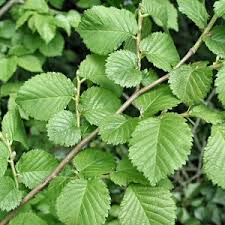
English Elm is an iconic tree that has adapted well into South Eastern Australia. It is usually used as a park, specimen, street or shade tree. Its beautiful yellow Autumn foliage is its notable feature. This tree is best used as a feature tree in a large space. It can also be used as a screen or avenue tree. |
| Additional information |
|
| botanical name |
Centella asiatica, or Hydrocotle asiatica.
|
|
| botanical name |
Agapanthus "Dwarf White"
|
| height x width |
45-50cm x 45-50cm
|
| planting distance |
For border: 30cm
|
| conditions |
Very hardy, like?s full sun to part shade in well-drained soil,
|
| landscape use |
Borders, general garden planting, pots, foliage contrast, cut flower
|
|
| botanical name |
Bacopa Monniera, or Indian Pennyworth, or Water Hyssop
|
|
| botanical name |
Ulmus procera
|
| height x width |
20m x 10m
|
| features |
Dark green roughly textured leaves with serrated edges, changes to yellow in autumn
|
| conditions |
Very hardy, prefers full sun in well-drained soil, tolerant to dry conditions and wind tolerant
|
| landscape use |
Street planting, avenues, specimen, group planting, avenues, large properties, parks
|
|