| Description | Wisteria floribunda (syn. W. longissima)
Wisteria 'Longissima' or Japanese Blue Wisteria is arguably the most impressive variety due to it's stunning, extra long pale purple flowers, which can reach lengths of 1m! These sweetly scented flowers are produced in late spring to early summer along with the leaves, and are quite spectacular. Also happy to grow in pots, they are quite hardy but will require solid support.
See our Wisteria Factsheet here for more about the different Wisteria varieties!
For care instructions, features and more, check out Additional Information below | Betula pendula 'Dalecarlica'
The Cut-Leaf Birch is a very graceful tree with distinctive feathery foliage and fine white bark. It is slender and graceful enough to be a part of a small garden without appearing too dominant, and is also effective in larger areas planted alone or in groups. A moderate growing and medium sized tree, ideal for either a small garden setup or even a larger forest-like vista, this tree will grow well in most soils in a sunny to part shade position. A beautiful specimen tree not to be looked over!
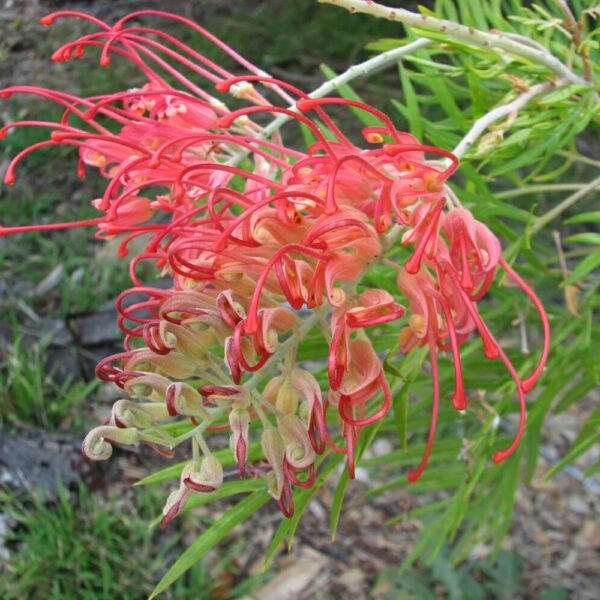
10"/25cm pot size | Grevillea bipinnetifida x
cidanksii
Ned Kelly Grevillea is a bird attracting evergreen shrub with large masses of orange red flowers over most of the year.
It is frost hardy and requires little water once established, growing in full sun to part shade position. Ideal for a small hedge or screen. |
| Additional information |
| Botanical Name |
Wisteria flroibunda (syn. Wisteria longissima)
|
| Other Common Names |
Blue Wisteria, Japanese Blue Wisteria, Japanese Purple Wisteria, Japanese Wisteria, Purple Wisteria
|
| Origin |
Japan
|
| Plant Type |
Vine
|
| Leaf Drop |
Deciduous
|
| Sunshine |
Full Sun, Part Shade
|
| Tolerances |
Pollution Tolerant, Poor Soil Tolerant, Frost Tolerant, Heat Tolerant, Drought Tolerant
|
| Soil Type |
Clay, Loam, Loamy – Clay, Sandy, Sandy – Loam, Well drained
|
| pH |
Acidic, Alkaline, Neutral
|
| Water Requirement |
Low
|
| Fertilise Me |
December, November, October, September
|
| Fertilizer Frequency |
Monthly, Until established
|
| Best time to plant |
All Year
|
| Planting Distance |
2m apart
|
| Max Height |
3m, 9m
|
| Max Width |
3m, 6m
|
| Growth Speed |
Fast
|
| Prune Me |
Annually, Hard prune in winter
|
| Size Maintained at |
1m
|
| Flowering |
Yes
|
| Flowering Time |
December, November, October
|
| Flower Colour |
Blue, Purple
|
| Fragrance |
Moderate
|
| Foliage Colour |
Green
|
| Autumn Colour |
Yellow
|
| Fruit / Seed |
Yes – Non-edible
|
| Fruiting Time |
February, January, March
|
| Attracts |
Bees, Birds, Butterflies, Other Insects
|
| Toxic To |
Cats, Children, Dogs
|
| Uses |
Arbour, Archway, Balcony, Feature, Fragrance, Pergola, Verandah
|
|
| botanical name |
Betula pendula ?Dalecarlica?
|
| height x width |
7m x 3m
|
| features |
Slender tall tree with elegant hanging branches and fine light green deeply cut leaves which turn golden in autumn
|
| conditions |
Full sun to part shade in well drained soil
|
| landscape use |
Specimen, group planting, avenues, great for small gardens
|
| |