| Description | Angelica plants are biennials belonging to the Parsley family. It originated in Northern and Central Europe. In ancient times this plant was considered a powerful protective herb against evil spirits, witchcraft and disease, and in the 17th century it was considered a major medicinal plant. Roots and leaves are used as a digestive stimulant, and the roots and rhizomes are approved by the German Commission E for digestive disturbances including flatulence and mild gastro spasms! The roots, stalks, leaves and flowers are all edible. The stalks are candied for cake decoration, leaves are added to cooked fruit dishes, soups, stews, fish or poultry. The essential oil of the roots and seeds are used as a vanilla like flavouring. This plant can grow up to 1m tall, and prefers a sheltered, semi shaded spot. To survive, this plant requires regular watering in warmer months. And to stop the leaves drying out give them a little spray of water also!! 4" pot size | Plectranthus plepalila
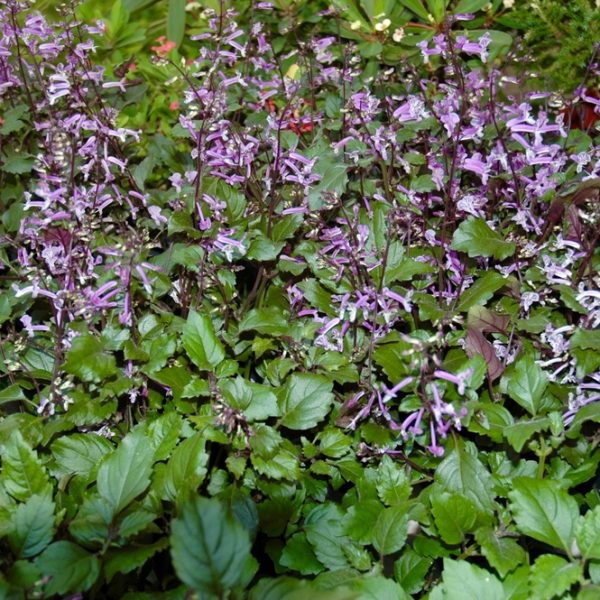
Mona Amethyst (Spur flower) is a particularly attractive variety that does not spread like other members of the family, but rather forms a neat low shrub with an upright, erect habit. Numerous spikes of rich purple-pink coloured flowers begin to appear from late Summer through Autumn complementing the ornamental foliage of deep green leaves with dark wine purple coloured undersides. This fast growing plant is best placed in a full sun to part shade location.
8"/20cm pot | Salvia officinalis purpurascens
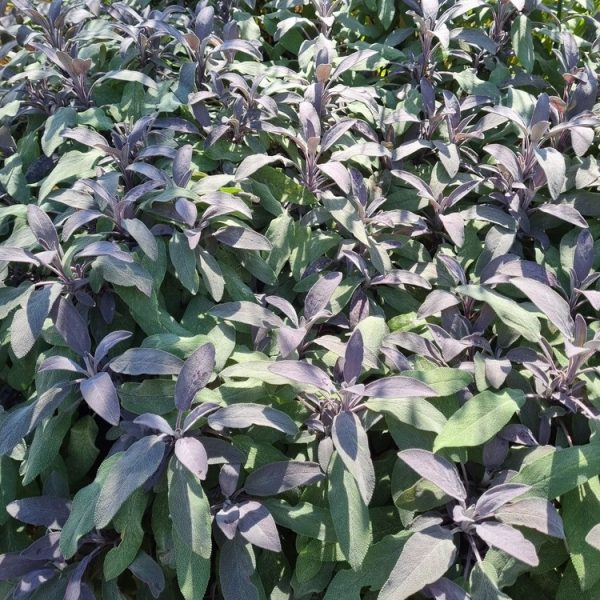
Purple Sage is one of the most flavoursome sages, and can be used as an alternative to regular garden sage in the kitchen. It's beautiful purple foliage gives this plant a decorative use in the garden as well as being a great addition for cooking. Sage is most commonly used in stuffings, sausages, soups, stews, and is a favourite with chicken.
This plant is an evergreen perennial shrub that can grow to about 60cm tall. A frost tender plant, It prefers full sun, with well drained soil. Purple sage is the most effective medicinal variety of sage. Often made into tea to aid digestion, it has also been used as an anti inflammatory agent for insect bites, and to treat depression and insomnia.
4" pot size. | Ulmus parvifolia
The bark of the Chinese Elm is a real stand out feature, as the tree sheds it in patches, creating the effect of a tapestry of varying browns and greys. Foliage is lush, shiny and green, and the tree is semi deciduous, turning golden in autumn, and keeping its leaves in warmer areas. It has also been noted by many Aussie gardeners in recent years that native birds enjoy the fruit of the Chinese Elm. |
| Content | | | | Video: Chinese Elms as a beautiful, medium size feature tree for a tough spot
|
| Additional information |
| botanical name |
Angelica sinensis
|
|
|
| botanical name |
Salvia Officinalis "Purpurascens"
|
|
| botanical name |
Ulmus parvifolia
|
| height x width |
8m x 8m
|
| features |
Small glossy dark-green leaves with silvery serrated edges, they are semi evergreen with the leaves turning yellow and staying on the tree until late winter, the bark is very attractive and mottled grey, green, orange and brown
|
| conditions |
Very hardy, prefers full sun in well-drained soil, good for planting in poor soil
|
| landscape use |
Street planting, avenues, urban planting, specimen, group planting, avenues
|
|