| Description | Agonis flexuosa 'Burgundy'
Agonis Burgundy is a small attractive tree with a beautiful weeping habit which bears white clusters of long lasting flowers.
Its foliage is probably the most spectacular feature as it has dark burgundy coloured leaves. The leaves are aromatic when crushed. | Syzygium australe
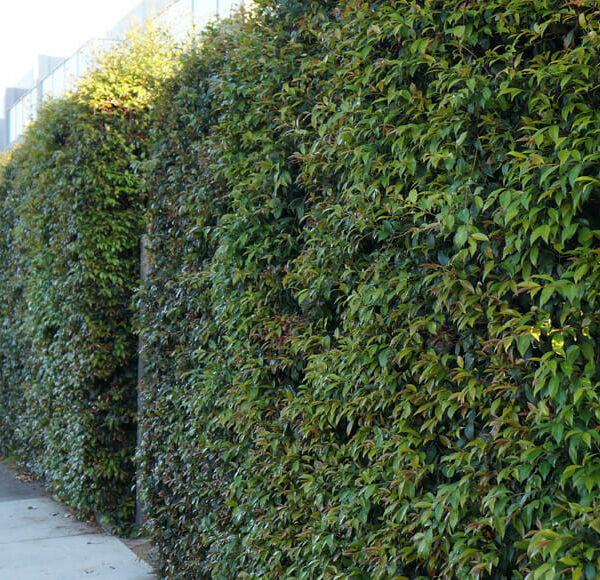
Grow a thick, bushy hedge in no time. What you do behind it is your business!
• Thick, glossy green hedging with red tinged new growth
• Australian native
• Easy to maintain and fast growing | Thuja orientalis aurea nana
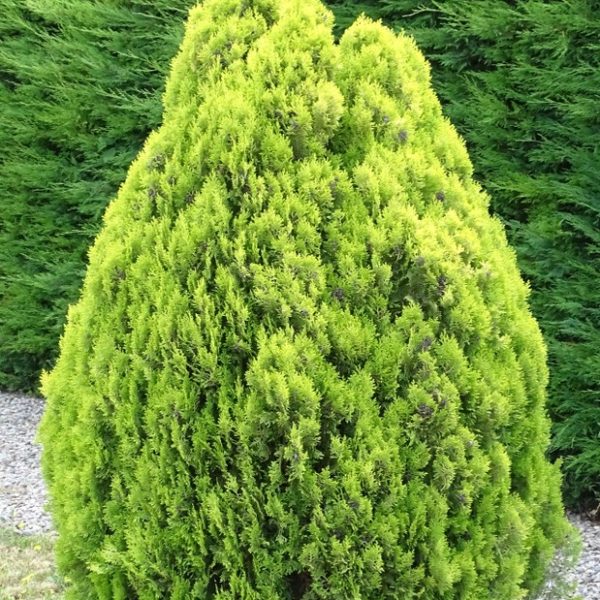
Short, stout self shaping conifer
• Soft foliage
• Low maintenance and drought resistant once established
• Ideal for hedging, along walkways and pots | Petunia amore ‘King of Spades’
A happy circus of color, you’ll fall in love with this darker bicolor petunia that displays five red hearts on each blossom. Yellow adds a striking contrast to complete the look. Its semi-trailing habit and long performance make it perfect for containers and baskets.
6'' pot size |
| Content | | Neighbours-Be-Gone Trees can grow two or more metres per year once established. Neighbours-Be-Gone Trees have deep green, dense, fine foliage and copper red new growth and can grow two or more metres per year once established, and love to be clipped and shaped. They grow in full sun through to light shade and withstand mild frost, wind, heat and drought. They thrive in almost any soil including heavy wet and occasionally waterlogged soils.
Neighbours-Be-Gone Trees can be used to create tall screens, large hedges and large topiary. They can be planted in pots or confined areas. Although they have the potential to grow into large trees, their size can be contained by regular clipping. The trunk and roots only grow to serve the needs of the crown of the tree, so the trunk and root system will remain small, while the tree is being kept small by regular trimming. Neighbours-Be-Gone Trees are a long living tree that don’t become woody or sick from long-term regular pruning. A well maintained Neighbours-Be-Gone Tree hedge or topiary can last for many decades.
Neighbours-Be-Gone Trees are a select form of Acmena smithii and are exclusive to Hello Hello Plants. They were developed by Chris 20 years ago, and Neighbours Be Gone is actually a trademark that belongs to the Hello Hello group of companies.
Back in 2003 Chris was holidaying in Los Angeles and noticed that the most popular hedge was an Australian Native Lilly Pilly. At that time, the main hedge being grown in Melbourne was the Silver Sheen Pittosporum, and Lilly Pilly's were a product that was shipped down from Queensland. They were expensive, and many of the Queensland varieties did poorly in Victoria.
Chris decided to make a Lilly Pilly hedge that was tailor made for Melbourne. He chose a variety of Lilly Pilly that had been cultivated and had done well in Melbourne for the last 100 years. It grows all year round, is tough, drought tolerant and hedges beautifully. Now the "Neighbours Be Gone" is one of Melbourne's most popular hedges!
For more information on this great hedging and screening plant, see it's Growing Guide. | Golden Biota Conifer is a dense dwarf shrub that has a dense form, with smooth edges. It is ideal for pots, walkways, hedging or borders.
A very hardy plant, the Golden Biota conifer does well in well drained soils. In summer the conifer turns to a marvelous shade of bright gold and turns green in the winter.
Being highly resilient to adverse weather conditions like frost, the Golden Biota conifer grows easily in various weather and soil conditions. All you need a semi-clay to well drained soil, adequate water in the warmer months and a yearly dose of all purpose fertiliser to grow a lush, healthy specimen. | Petunia amore ‘King of Spades’
There are five cherry pink hearts on each golden bloom. Each bloom is around 6cm across and they open in abundance. A semi trailing plant with good vigour and plenty of flowers.
Perennial Petunias are quick to grow and establish and will be covered in flowers for many months. They have the advantage of lasting a few years in the garden as opposed to their annual counterparts. They have excellent cold tolerance, and are renowned for being tough with weatherproof blooms. The flowers can bloom from spring to autumn, longer in warmer climates.
Plant into a moderately fertile to humus rich, well drained soil. Add a diluted liquid fertiliser fortnightly, or some slow release pellets every couple of months to keep them blooming at their best. A light prune will also help prolong flowering. In pots and hanging baskets use a good quality potting mix. |