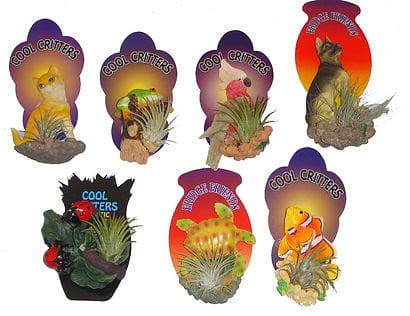
| Description | Tilliandsias
These plants are especially favoured for their minimal care requirements. They thrive in bright, indirect light and need only occasional misting or soaking to stay healthy. Their adaptability makes them perfect for creative displays—whether mounted on driftwood, nestled in cork bark, or arranged in decorative containers, air plants add a unique, low-maintenance touch to any space.
A selection of varieties handpicked by our staff. | Hydrangea petiolaris
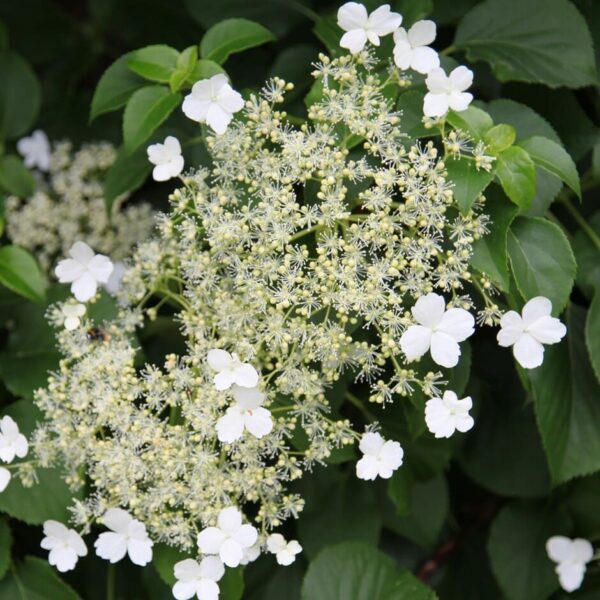
Climbing Hydrangea is a deciduous climber that produces masses of creamy white blooms that give that wow factor. The lush, deep green foliage turn a glorious gold in Autumn, leaving the cinnamon coloured bark revealed. It climbs on its own tendrils and won't mark masonry. Hydrangeas grow best planted in a sheltered position of the garden where the roots are cool and moist. Hydrangea flowers are good for picking. Grows to approximately 12m in height with a spread of approximately 3m.
8"/20cm pot size. | Ulmus procera
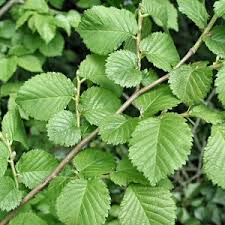
English Elm is an iconic tree that has adapted well into South Eastern Australia. It is usually used as a park, specimen, street or shade tree. Its beautiful yellow Autumn foliage is its notable feature. This tree is best used as a feature tree in a large space. It can also be used as a screen or avenue tree. | Convolvulus cneorum
Contrasting foliage makes Convolvulus Silver Bush a striking feature in the garden.
• Slender silver foliage with bright, white cupped flowers
• Low growing, only 40cm high and round
• A beautiful addition to a cottage, low maintenance or potted garden | Rosemary officinalis 'Blue Lagoon'
Rosemary Blue Lagoon is a low growing, spreading shrub that grows about 1m tall and 2m across. It is very impressive when flowering as it's just a mass of blue.
Goes great on banks or in rockeries. Used for hedging as it loves a trim. With no maintenance necessary after roots are established its perfect for any garden! |
| Content | Tillandsias, commonly known as air plants, are intriguing epiphytic bromeliads native to Central and South America. Unlike most plants, they do not require soil to grow. Instead, they absorb water and nutrients directly through specialised cells on their leaves called trichomes, allowing them to thrive while attached to trees, rocks, or other surfaces.
Air plants are celebrated for their striking diversity in shape, texture, and colour. Some varieties boast spiky leaves, others have soft, fuzzy surfaces, and some display dramatic, tentacle-like forms.
| | | | |
| Additional information |
| |
| botanical name |
Ulmus procera
|
| height x width |
20m x 10m
|
| features |
Dark green roughly textured leaves with serrated edges, changes to yellow in autumn
|
| conditions |
Very hardy, prefers full sun in well-drained soil, tolerant to dry conditions and wind tolerant
|
| landscape use |
Street planting, avenues, specimen, group planting, avenues, large properties, parks
|
|
| botanical-name |
Convolvulus cneorum
|
| height-x-width |
50cm x 50cm
|
| planting-distance |
For border: 50cm
|
| features |
Rounded shrub with silver-grey leaves, large white flowers emerge from pink buds in spring and summer
|
| conditions |
Full sun to part shade in well-drained soil, will tolerate drought once established
|
| landscape-use |
Rockeries, pots, borders, general garden use
|
| |