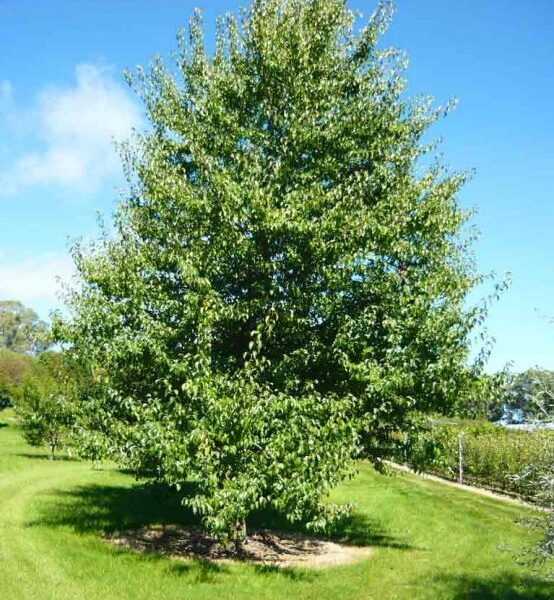
| Description | Pyrus calleryana 'Winter Glow'
The only evergreen ornamental pear currently on the market, making it a highly sought after specimen tree.
• Spring blossoms on semi bare branches
• Ideal for screening or as a shade tree
• Green glossy leaves with a silvered backing
Everscreen Pears will only retain leaves in warmer climates. Cool climate areas such as rural Victoria are likely to see leaf drop in the winter but usually for only a period of up to 5 weeks. In cool climates it the Everscreen will get an autumnal colouring prior to leaf drop.
For more information on Ornamental Pears see our Pyrus - Ornamental Pear Factsheet
For care instructions, features and more, check out Additional Information below | Correa alba
A popular choice amongst council and parks landscapers due to its set-and-forget nature, the Correa is a attractive, hardy and versatile perennial shrub.
• White star-shaped flowers with rounded, velvety leaves
• Will grow in both full sun or part shade, tolerating harsh Australian soil and weather
• Responds well to pruning, making neat hedges or even native topiary | Cycas revoluta
Sago Palms are wonderfully tough little palms, growing strong in the tough climate and soils of Victoria.
• Very slow growing.
• Thin, fern-like foliage, sprouting from the centre
• Can be grown in pots, suitable for modern or tropical gardens |
| Additional information |
| Other Common Names |
Callery Pear, Ever Screen Pear, Evergreen Pear, Flowering Pear, Ornamental Pear, Winter Glow
|
| Origin |
China, Vietnam
|
| Plant Type |
Tree
|
| Leaf Drop |
Semi-Deciduous
|
| Sunshine |
Afternoon Sun, Full Sun, Midday Sun, Part Shade
|
| Tolerances |
Pollution Tolerant, Poor Soil Tolerant, Salt Sensitive, Wind Tolerant, Heat Tolerant, Drought Tolerant
|
| Soil Type |
Clay, Loam, Loamy – Clay, Sandy – Loam, Well drained
|
| pH |
Acidic, Alkaline, Neutral
|
| Water Requirement |
Moderate
|
| Fertilise Me |
April, March, November, October, September
|
| Fertilizer Frequency |
Bi-annually
|
| Best time to plant |
All Year
|
| Planting Distance |
2-3m apart
|
| Max Height |
10m
|
| Max Width |
5m
|
| Growth Speed |
Fast
|
| Prune Me |
Annually, Only if required, In the cooler months
|
| Size Maintained at |
5m
|
| Flowering |
Yes
|
| Flower Colour |
White
|
| Flowering Time |
November, October, September
|
| Fragrance |
Strong
|
| Foliage Colour |
Green
|
| Autumn Colour |
Orange, Purple, Red
|
| Fruit / Seed |
Yes – Non-edible
|
| Fruiting Time |
December, January
|
| Attracts |
Bees, Birds, Butterflies
|
| Toxic To |
Children
|
| Uses |
Fenceline, Shade Tree, Feature Tree
|
| |
| botanical name |
Cycas revoluta
|
| height x width |
Up to 2m, but slow growing
|
| features |
Short single or multiple trunks develop with a compact crown of palm-like stiff fine pinnate dark green leaves, very unusual and attractive
|
| conditions |
Sun to shade in moist well-drained soil, protect from heavy frosts
|
| landscape use |
Pots, courtyards, plaza?s, specimens, general landscaping
|
| Toxicity |
All parts of a sago palm, especially the seeds, are extremely poisonous when ingested by humans or animals.
|
|