| Description | Austromyrtus dulcis
Midyim berries are the blueberries of bush tucker.
- White, purple-speckled berries
- Fruit from summer to autumn
- Slight ginger flavour
6''/14cm pot size | Nandina domestica 'Nana'
Dwarf 'Sacred Bamboo', commonly known as Dwarf Nandina, is a small self shaping, non-flowering shrub with colourful foliage.
• Green foliage in summer that changes to vibrant red in winter
• Very low maintenance and incredibly hardy
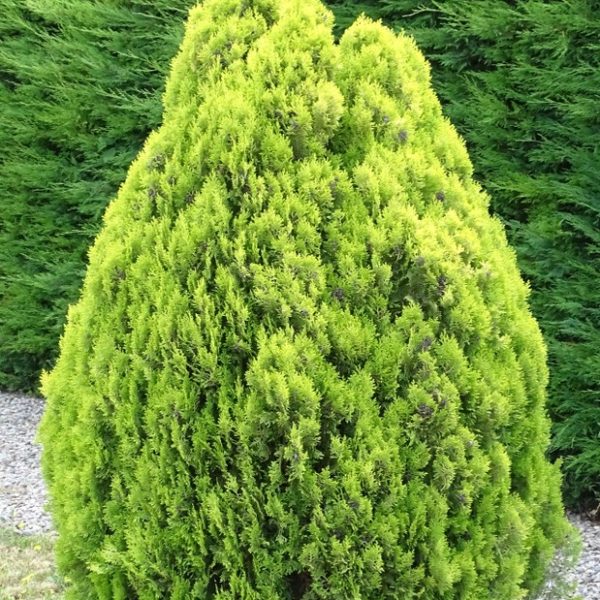
• Perfect for borders, edging, pots & containers | Thuja orientalis aurea nana
Short, stout self shaping conifer
• Soft foliage
• Low maintenance and drought resistant once established
• Ideal for hedging, along walkways and pots |
| Content | Midyim Berries, also known as Midgen berry plants and sand berries, are delicious small white, purple-speckled bush tucker plants. They are similar in both taste and appearance to the blueberry, with a slight ginger flavour.
In early summer small white star-shaped flowers appear on the Midyim Berry plant, gradually turning into the sweet and tasty berries throughout summer and autumn.
Although they are seen growing in sandy soils in the wild, keep the soil moist and well-fed to ensure a good harvest of Midyim berries in the following months.
These little shrubs can double as a Midyim Berry hedge around a garden bed or along a path, though not so much grown as a Midyim Berry tree as they are usually too small to grow so tall.
Midyim Berry Austromyrtus dulcis can be cultivated in different climatic conditions and prefers a warm climate to thrive.
Do you need a low-spreading shrub for your outdoor space? Choose the Midyim berry hedge. The plant can be used for decoration purposes and you can also use it to prepare salads and desserts. | Reasons to buy Dwarf Nandina
Loved for its attractive colourful foliage, Dwarf Nandina is one of the most popular varieties of the Nandina (Sacred Bamboo) family. Extremely versatile, and wherever you choose to plant it, its gorgeous colours will create a bright spot in any garden. Dwarf Nandina does not flower, and is loved mostly for its exotic coloured foliage. You will delight as its green/yellow foliage transforms through blush pinks in summer, before bursting in vibrant reds during winter.
Nandina grows quite low, remaining roughly as wide as it is tall which in the Dwarf (Nandina domestica nana) varieties is not much more than about 50cm tall. (It does also come in larger varieties, which we call Tall Nandina.)
Dwarf Nandina is quite a hardy plant that is suitable for most climate types. After establishing itself, it enjoys both lots of sun or partial shade, with a high tolerance for different temperatures. It even copes well with drought, but prefers soils with a little acidity that are well-drained and topped with a light sprinkling of compost. A light prune as new spring growth emerges is recommended to keep it neat, but it can do quite well with no trimming at all.
If you plant to buy Dwarf Nandina for planting in pots or containers, beware of overheating in summer. A deep soak every now and then helps. Apart from that it needs minimal maintenance.
It is equally at home in Coastal or Tropical Gardens, Mediterranean Gardens, Poolside, Courtyard and more. | Golden Biota Conifer is a dense dwarf shrub that has a dense form, with smooth edges. It is ideal for pots, walkways, hedging or borders.
A very hardy plant, the Golden Biota conifer does well in well drained soils. In summer the conifer turns to a marvelous shade of bright gold and turns green in the winter.
Being highly resilient to adverse weather conditions like frost, the Golden Biota conifer grows easily in various weather and soil conditions. All you need a semi-clay to well drained soil, adequate water in the warmer months and a yearly dose of all purpose fertiliser to grow a lush, healthy specimen. |