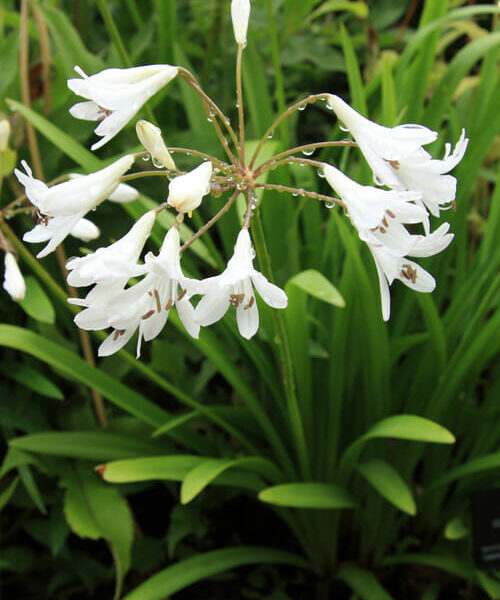
| Description | Agapanthus praecox minimus
Dwarf Agapanthus are smaller and more compact, great for narrow borders and gardens with less space.
• Fine, strap-like lime green foliage
• White umbel flowers appear on tall stems above the foliage
• Extremely hardy, tolerating poor soils and drought
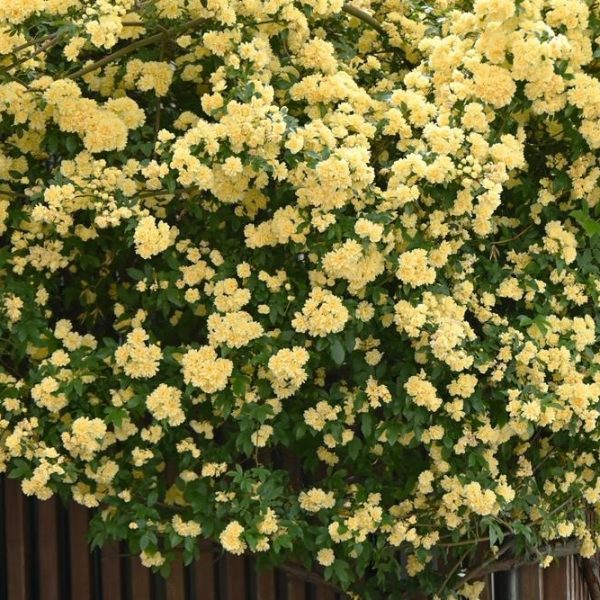
6"/14cm pot size. | Rosa banksiae
The Banksia Rose is a tough evergreen climbing rose with soft ruffled yellow flowers which appear in Spring. Like Iceberg Roses, it's prized as a disease resistant and hardy rose. It works well as a groundcover rose or a climber when given a support such as a trellis.
The Banksia rose is an incredibly useful and versatile climber or groundcover as it is low maintenance, thornless and tolerates full sun and part shade.
6"/14cm pot size. | Cycas revoluta
Sago Palms are wonderfully tough little palms, growing strong in the tough climate and soils of Victoria.
• Very slow growing.
• Thin, fern-like foliage, sprouting from the centre
• Can be grown in pots, suitable for modern or tropical gardens |
| Additional information |
| botanical name |
Agapanthus "Dwarf White"
|
| height x width |
45-50cm x 45-50cm
|
| planting distance |
For border: 30cm
|
| conditions |
Very hardy, like?s full sun to part shade in well-drained soil,
|
| landscape use |
Borders, general garden planting, pots, foliage contrast, cut flower
|
|
| height x width |
Climber to 3-4m
|
| planting distance |
For hedge or screen: 70cm
|
| conditions |
Very hardy, likes full sun and well-drained soil
|
| landscape use |
fences, screens, cover unattractive sheds, pergolas, arbors, rotundas, trellis
|
|
| botanical name |
Cycas revoluta
|
| height x width |
Up to 2m, but slow growing
|
| features |
Short single or multiple trunks develop with a compact crown of palm-like stiff fine pinnate dark green leaves, very unusual and attractive
|
| conditions |
Sun to shade in moist well-drained soil, protect from heavy frosts
|
| landscape use |
Pots, courtyards, plaza?s, specimens, general landscaping
|
| Toxicity |
All parts of a sago palm, especially the seeds, are extremely poisonous when ingested by humans or animals.
|
|