| Description | Ulmus parvifolia
The bark of the Chinese Elm is a real stand out feature, as the tree sheds it in patches, creating the effect of a tapestry of varying browns and greys. Foliage is lush, shiny and green, and the tree is semi deciduous, turning golden in autumn, and keeping its leaves in warmer areas. It has also been noted by many Aussie gardeners in recent years that native birds enjoy the fruit of the Chinese Elm. | Buxus microphylla japonica
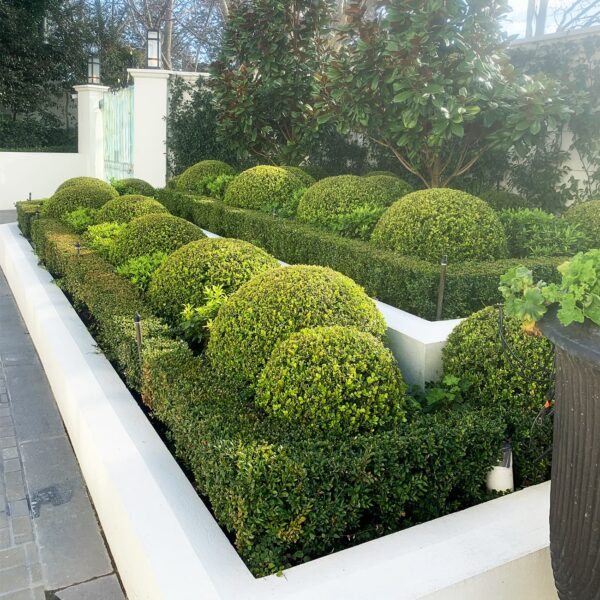
Japanese Box is a hardy evergreen compact shrub with dark green oval foliage. Japanese Box is the best box hedge for warmer regions as it tolerates heat better than other Buxus plants. It is suitable for a full sun to part shade position and requires little water once established.
Japanese Box are a traditional favourite, as they are perfect for formal evergreen hedges. Small glossy green foliage on a compact dense shrub, make them perfect for clipping or topiary. This plant has a moderate growth rate growing to approximately 1m in height, and requires regular trimming to maintain topiary ball shape. Plant 1.2-1.5cm apart (from centre of plant) for box balls hedge look.
12"/13'' pot - shaped into a sphere/dome | |
| Content | Video: Chinese Elms as a beautiful, medium size feature tree for a tough spot
| | |
| Additional information |
| botanical name |
Ulmus parvifolia
|
| height x width |
8m x 8m
|
| features |
Small glossy dark-green leaves with silvery serrated edges, they are semi evergreen with the leaves turning yellow and staying on the tree until late winter, the bark is very attractive and mottled grey, green, orange and brown
|
| conditions |
Very hardy, prefers full sun in well-drained soil, good for planting in poor soil
|
| landscape use |
Street planting, avenues, urban planting, specimen, group planting, avenues
|
| | |