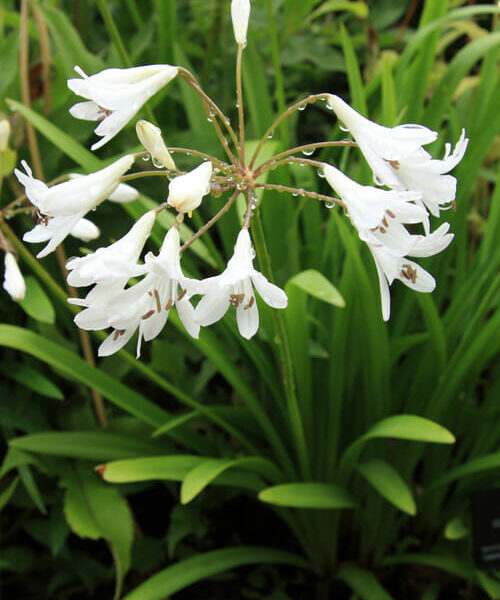
| Description | Agapanthus praecox minimus
Dwarf Agapanthus are smaller and more compact, great for narrow borders and gardens with less space.
• Fine, strap-like lime green foliage
• White umbel flowers appear on tall stems above the foliage
• Extremely hardy, tolerating poor soils and drought
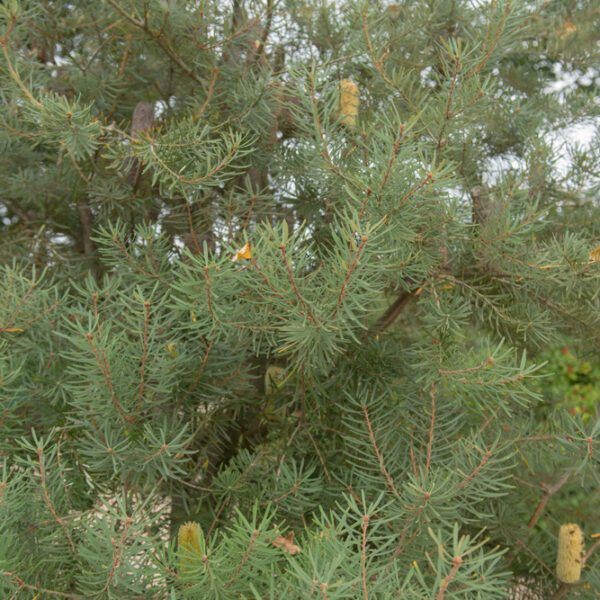
6"/14cm pot size. | Banksia marginata 'Silver Banksia'
A classic woody native Australian shrub, Banksias are great for a low maintenance garden and create interest with their recognizable flower cones. Silver Banksias will grow to the size of a large shrub and and good for screening. They're also great for coastal areas, as they're naturally found by the sea and tolerate sand and salt.
10" pot size. | Pyrus calleryana
Bradford Ornamental Pear, a fast growing – thick and glossy, dark green, heart shaped leaves. Autumn colours are reds, oranges, purples and yellows. Clusters of small white flowers in early spring. Suitable as a feature tree.
Pyramid in shape – becomes broad with age.
Growth in Melbourne, Victoria – Height: 6 Meters Width: 6 Meters
100 litre bag - approx 2.5m tall (Please call to confirm height, as heights change often throughout the seasons.) | Magnolia grandiflora 'Little Gem'
An evergreen beauty with elegance and class, the 'Little Gem' Magnolia is a very popular garden specimen. Hand-sized white and heavily fragrant flowers against a backdrop of robust, dark green foliage make this plant a favourite for hedging and feature planting.
Tolerating poor soils, heat and frost, they are an ideal plant for the Melbourne and rural Victorian garden.
See our Magnolia & Michelia - Evergreen Factsheet here for more about the different Magnolia & Michelia varieties!
For care instructions, features and more, check out Additional Information below |
| Content | | | Ornamental pear trees are fast growing, tolerant of most soil types, including heavy and poor soils, and best of all they come in a range of shapes and sizes to suit your landscaping requirements.
Check out our Ornamental Pear Tree Factsheet for more info. | |
| Additional information |
| botanical name |
Agapanthus "Dwarf White"
|
| height x width |
45-50cm x 45-50cm
|
| planting distance |
For border: 30cm
|
| conditions |
Very hardy, like?s full sun to part shade in well-drained soil,
|
| landscape use |
Borders, general garden planting, pots, foliage contrast, cut flower
|
|
| botanical name |
Banksia marginata
|
| height x width |
2m x 2m
|
| planting distance |
For hedge or screen: 1m
|
| features |
Leaves are slightly serrated with the top being green and underneath silver, pale yellow flower spikes occur in winter
|
| conditions |
Full sun or dappled shade in well drained soil
|
| landscape use |
Great screen or windbreak, mixed garden beds, specimen, cut flower or dried flower arrangements
|
|
| botanical name |
Pyrus calleryana "Bradford"
|
| height x width |
9m x 5m
|
| features |
Attractive shiny foliage that turns spectacular colors of orange-red, reddish-purple and yellow red and says on the tree well into the end of autumn, masses of white flowers are borne in spring
|
| conditions |
Very hardy, prefers full sun in well drained soil
|
| landscape use |
Specimen, avenue, street tree, small and medium gardens, can be trimmed or espaliered
|
|
| Origin |
Southeastern USA
|
| Plant Type |
Tree
|
| Leaf Drop |
Evergreen
|
| Sunshine |
Full Sun, Part Shade
|
| Tolerances |
Drought Sensitive, Poor Soil Tolerant, Soggy Soil Sensitive, Frost Tolerant, Heat Tolerant
|
| Soil Type |
Clay, Loam, Loamy – Clay, Sandy – Loam, Well drained
|
| pH |
Acidic, Neutral
|
| Water Requirement |
Moderate
|
| Fertilise Me |
April, December, February, January, March, November, October, September
|
| Fertilizer Frequency |
Monthly, When needed
|
| Planting Distance |
1 per 1.5 metres, 2m apart
|
| Max Height |
6m
|
| Max Width |
3m
|
| Growth Speed |
Moderate
|
| Prune Me |
after flowering, Only if required
|
| Size Maintained at |
3m
|
| Flowering |
Yes
|
| Flower Colour |
White
|
| Flowering Time |
December, February, January, March, November, October
|
| Fragrance |
Strong
|
| Foliage Colour |
Green
|
| Fruit / Seed |
Yes – Non-edible
|
| Fruiting Time |
April, March, May
|
| Attracts |
Bees, Birds
|
| Toxic To |
Non-toxic
|
| Uses |
Fenceline, Fragrance, Bird attracting, Feature Tree, Hedging & Screening
|
|