| Description | Correa alba
A popular choice amongst council and parks landscapers due to its set-and-forget nature, the Correa is a attractive, hardy and versatile perennial shrub.
• White star-shaped flowers with rounded, velvety leaves
• Will grow in both full sun or part shade, tolerating harsh Australian soil and weather
• Responds well to pruning, making neat hedges or even native topiary | Agave attenuata
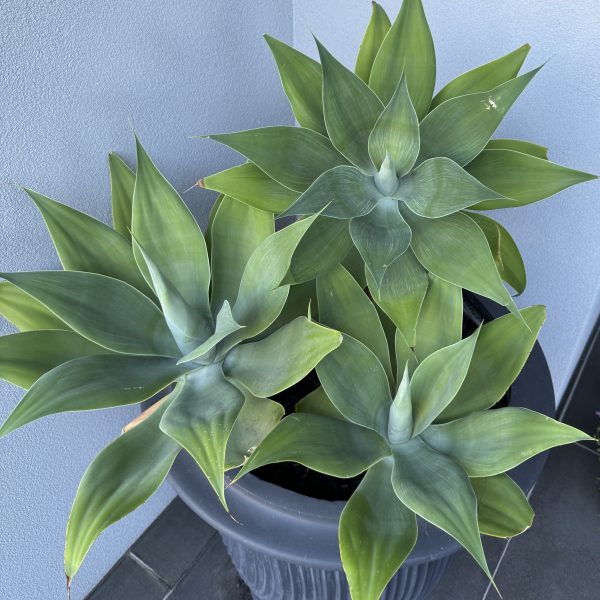
Agave are one of the easiest plants to establish and maintain. They grow in full sun to shade in most soil types. Agave are best grown in reasonably well drained soils and love to be watered regularly, once a week to once a fortnight, but will thrive in periods of dryness. | Thuja orientalis aurea nana
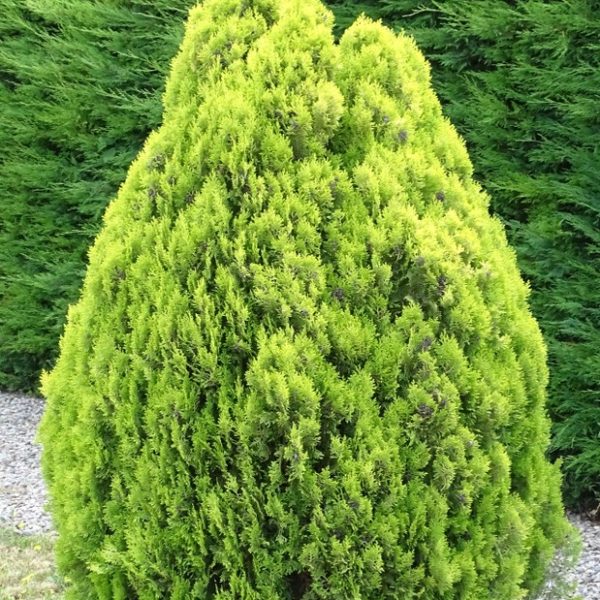
Short, stout self shaping conifer
• Soft foliage
• Low maintenance and drought resistant once established
• Ideal for hedging, along walkways and pots | Cornus kousa var Chinensis, Kousa Dogwood, Chinese Dogwood
This is arguably the world's most beautiful dogwood, with a fabulous show of white flowers in spring, and magnificent autumn colour. A beautiful small (up to 4m) deciduous feature tree and is extremely beautiful when in bloom. Flowering season is late spring, weeks after the tree puts on foliage again.
8" pot size | Nandina domestica 'Nana'
Dwarf 'Sacred Bamboo', commonly known as Dwarf Nandina, is a small self shaping, non-flowering shrub with colourful foliage.
• Green foliage in summer that changes to vibrant red in winter
• Very low maintenance and incredibly hardy
• Perfect for borders, edging, pots & containers |
| Content | | | Golden Biota Conifer is a dense dwarf shrub that has a dense form, with smooth edges. It is ideal for pots, walkways, hedging or borders.
A very hardy plant, the Golden Biota conifer does well in well drained soils. In summer the conifer turns to a marvelous shade of bright gold and turns green in the winter.
Being highly resilient to adverse weather conditions like frost, the Golden Biota conifer grows easily in various weather and soil conditions. All you need a semi-clay to well drained soil, adequate water in the warmer months and a yearly dose of all purpose fertiliser to grow a lush, healthy specimen. | | Reasons to buy Dwarf Nandina
Loved for its attractive colourful foliage, Dwarf Nandina is one of the most popular varieties of the Nandina (Sacred Bamboo) family. Extremely versatile, and wherever you choose to plant it, its gorgeous colours will create a bright spot in any garden. Dwarf Nandina does not flower, and is loved mostly for its exotic coloured foliage. You will delight as its green/yellow foliage transforms through blush pinks in summer, before bursting in vibrant reds during winter.
Nandina grows quite low, remaining roughly as wide as it is tall which in the Dwarf (Nandina domestica nana) varieties is not much more than about 50cm tall. (It does also come in larger varieties, which we call Tall Nandina.)
Dwarf Nandina is quite a hardy plant that is suitable for most climate types. After establishing itself, it enjoys both lots of sun or partial shade, with a high tolerance for different temperatures. It even copes well with drought, but prefers soils with a little acidity that are well-drained and topped with a light sprinkling of compost. A light prune as new spring growth emerges is recommended to keep it neat, but it can do quite well with no trimming at all.
If you plant to buy Dwarf Nandina for planting in pots or containers, beware of overheating in summer. A deep soak every now and then helps. Apart from that it needs minimal maintenance.
It is equally at home in Coastal or Tropical Gardens, Mediterranean Gardens, Poolside, Courtyard and more. |
| Additional information | |
| height x width |
Up to 1.5m x 1.5m
|
| features |
A stem develops and is crowned by compact rosettes of soft textured, succulent-like leaves, the arched flower spike appears sporadically every few years and can reach up to 3m long with densely packed greenish-yellow flowers,
|
| conditions |
Full sun to part shade in well-drained soil, will tolerate drought
|
| landscape use |
Pots, courtyards, plaza?s, specimens, general landscaping, feature
|
| |
| botanical name |
Cornus kousa
|
| height x width |
4m x 3m
|
| features |
Dense green foliage and tiered branches, the flower heads with large pure-white bracts appear, each bract ending in an acute point followed by red fruit
|
| conditions |
Sun to part shade in rich well-drained soil
|
| landscape use |
Specimen, group planting, general garden planting
|
| |