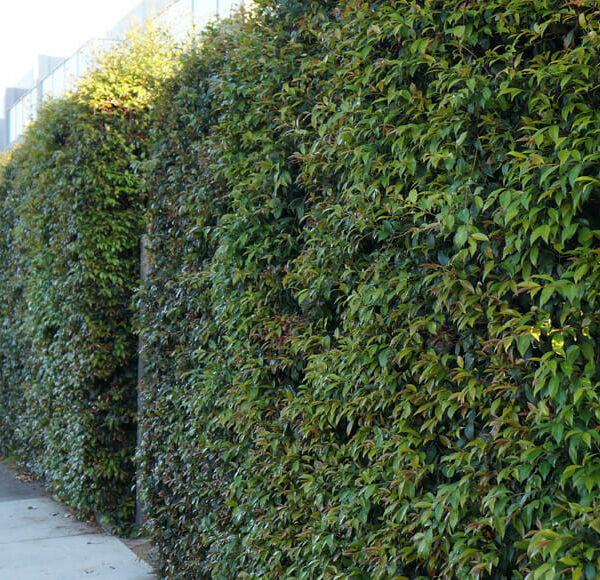
| Description | Syzygium australe
Grow a thick, bushy hedge in no time. What you do behind it is your business!
• Thick, glossy green hedging with red tinged new growth
• Australian native
• Easy to maintain and fast growing | Acacia melanoxylon
Acacia 'Blackwood' is an iconic Australian tree famous for its timber, which has been extensively used for quality specialist furniture since European settlement.
Growing into a large shade tree, the Blackwood's dense foliage makes it an ideal choice for a screen or windbreak with its pale yellow cream flowers blooming in winter and spring. It is cold and frost tolerant with low flammability and high tolerance to poor soils and drought. Plant with Acacia Lightwood, which flowers in summer, for year-round interest.
See our Acacia - Wattles Factsheet here for more about the different Acacia varieties!
For care instructions, features and more, check out Additional Information below
| |
| Content | Neighbours-Be-Gone Trees can grow two or more metres per year once established. Neighbours-Be-Gone Trees have deep green, dense, fine foliage and copper red new growth and can grow two or more metres per year once established, and love to be clipped and shaped. They grow in full sun through to light shade and withstand mild frost, wind, heat and drought. They thrive in almost any soil including heavy wet and occasionally waterlogged soils.
Neighbours-Be-Gone Trees can be used to create tall screens, large hedges and large topiary. They can be planted in pots or confined areas. Although they have the potential to grow into large trees, their size can be contained by regular clipping. The trunk and roots only grow to serve the needs of the crown of the tree, so the trunk and root system will remain small, while the tree is being kept small by regular trimming. Neighbours-Be-Gone Trees are a long living tree that don’t become woody or sick from long-term regular pruning. A well maintained Neighbours-Be-Gone Tree hedge or topiary can last for many decades.
Neighbours-Be-Gone Trees are a select form of Acmena smithii and are exclusive to Hello Hello Plants. They were developed by Chris 20 years ago, and Neighbours Be Gone is actually a trademark that belongs to the Hello Hello group of companies.
Back in 2003 Chris was holidaying in Los Angeles and noticed that the most popular hedge was an Australian Native Lilly Pilly. At that time, the main hedge being grown in Melbourne was the Silver Sheen Pittosporum, and Lilly Pilly's were a product that was shipped down from Queensland. They were expensive, and many of the Queensland varieties did poorly in Victoria.
Chris decided to make a Lilly Pilly hedge that was tailor made for Melbourne. He chose a variety of Lilly Pilly that had been cultivated and had done well in Melbourne for the last 100 years. It grows all year round, is tough, drought tolerant and hedges beautifully. Now the "Neighbours Be Gone" is one of Melbourne's most popular hedges!
For more information on this great hedging and screening plant, see it's Growing Guide. | | |
| Additional information |
|
| Botanical Name |
Acacia melanoxylon
|
| Other Common Names |
Australian Blackwood, Black Wattle, Blackwood, Hickory, Mudgerabah, Sally Wattle, Wattle
|
| Origin |
Australia
|
| Plant Type |
Tree
|
| Leaf Drop |
Evergreen
|
| Sunshine |
Full Sun, Part Shade
|
| Tolerances |
Pollution Tolerant, Poor Soil Tolerant, Wind Tolerant, Frost Tolerant, Salt Tolerant, Heat Tolerant, Drought Tolerant
|
| Soil Type |
Clay, Loam, Loamy – Clay, Sandy, Sandy – Loam
|
| pH |
Acidic, Neutral
|
| Water Requirement |
Low
|
| Fertilise Me |
December, January, November, October, September
|
| Fertilizer Frequency |
In the first year after planting, Monthly
|
| Best time to plant |
All Year
|
| Planting Distance |
2-3m apart
|
| Max Height |
12m
|
| Max Width |
5m
|
| Growth Speed |
Fast
|
| Prune Me |
Only if required
|
| Size Maintained at |
3m, 4m
|
| Flowering |
Yes
|
| Flowering Time |
August, November, October, September
|
| Flower Colour |
Cream, Yellow
|
| Foliage Colour |
Green
|
| Fragrance |
Moderate
|
| Fruit / Seed |
Yes – Edible
|
| Fruiting Time |
December, February, January
|
| Attracts |
Bees, Birds, Native Birds
|
| Toxic To |
Non-toxic
|
| Uses |
Shade Tree, Street Tree, Hedging & Screening
|
| |