| Description | Eutaxia myrtifolia
The cheerful Eutaxia myrtifolia, also known as the Bacon and Egg Plant, is the standard-sized form of this popular Australian native shrub. From late winter through spring, it bursts into masses of golden-yellow pea-shaped blooms splashed with warm red markings, creating a vibrant contrast against its fine, deep green foliage. With its rounded shape and moderate growth rate, it’s ideal for adding seasonal colour and structure to native gardens, borders, and large pots.
- Size & Growth: Height: 1–2 m, Width: 1–1.5 m. Growth Rate: Moderate
- Standard-size: form of the Bacon and Egg Plant – larger than dwarf varieties
- Color: Brilliant yellow and red flowers in abundance during spring
6''/14cm pot | Lavandula angustifolia
Traditionally English Lavender was grown for its heavenly fragrance, used in oils and potpourri.
• Small, slender blue-ish purple flowers on tall stems above the foliage
• Grown in pots, as a hedge or in the cottage garden to attract bees and butterflies
• Tolerates drought and dry conditions, preferring well drained soils
6"/14cm pot | Azalea kurume
Requires a sheltered position of full shade to part sun or morning sun with well draining soil.
- Evergreen foliage
- Perfect for shady areas
- Great for Japanese gardens
6"/14cm pot |
| Content | | | Azalea kurume
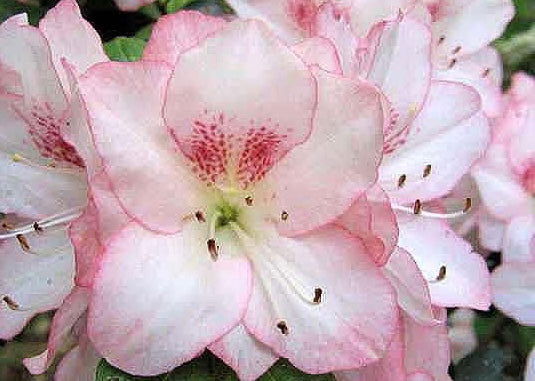
Amy Azalea produces pretty pale pink and white flowers from late autumn through winter. It is ideal for hedging, screening, features and shady areas. |
| Additional information |
|
| height x width |
1m x 1m
|
| planting distance |
For border: 50cm
|
| features |
Narrow aromatic grey-green leaves and slender spikes of tiny fragrant purple flower spikes during summer
|
| conditions |
Sunny open position in well-drained soil, lavender will not tolerate wet feet, please read Wet Feet Kills, prune after flowering
|
| landscape use |
Borders, hedges, single specimens, containers, cut flowers, pot pourri, oil, lavender sachets
|
|
|