| Description | Anthriscus cerefolium
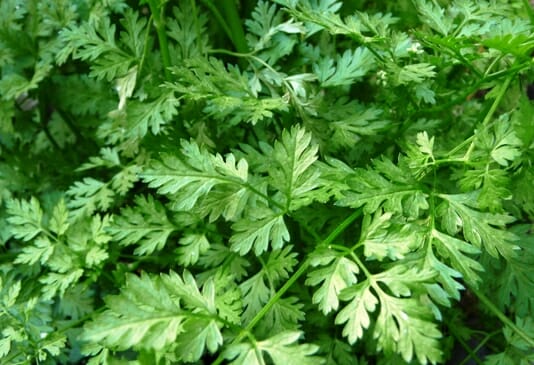
Chervil, sometimes called garden chervil or French parsley, is a delicate annual herb related to parsley. This plant is a native to the Caucasus, which is a mountainous region between Turkey and Russia. Chervil was spread through Europe by the Romans, and is now naturalised. The plants can grow up to 70cm tall and 30cm wide, and produces small white flowers. This herb is referred to as gourmet's parsley, and is used particularly in France to season poultry, seafood, spring veg, soups and sauces. It has a faint taste of liquorice and aniseed. Chervil is one of the four French "fines herbes" which are essential to French cooking. The other three are tarragon, chives and parsley. Unlike stronger herbs like thyme and rosemary which can withstand long cooking times, these "fines herbes" are added at the last minute. Traditionally, chervil has had many medicinal uses. It has claimed to be used as a digestive aid, for lowering blood pressure, and used infused with vinegar for curing hiccups! It has also been used as a mild stimulant. It prefers a cool and moist location, and regular harvesting of leaves helps to prevent it rapidly going to seed, which will bring the plant to the end of its production. | Laurus nobilis 'Miles Choice' Bay Tree
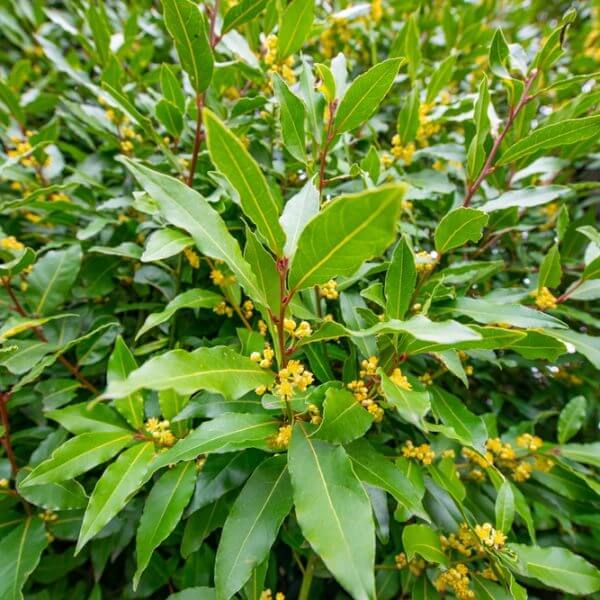
This Bay tree offers a more compact form and grows slightly smaller than the traditional Bay Tree to around 7m tall. It produces glossy dark green foliage. Leaves are fragrant and can be used in cooking. It's a large hardy, drought and salt tolerant tree. 'Miles Choice' is a more compact variety of the Bay Laurel. Produces yellow flowers which occur between September to October.
8''/20cm pot size | |
| Content | | Laurus nobilis 'Miles Choice' Bay Tree
An effective hedging/screening plant that can be kept clipped from 1-4 metres, or left to grow into a medium sized tree. Its dark green leaves provide an ideal backdrop for other plants. An excellent plant for topiary and is well suited to formal gardens. Its dried leaves are used in cooking and so it is an essential plant in any kitchen garden.
Prefers a moist well drained soil in a sunny to partly shaded position. For best results fertilise with a long term slow release fertilizer in early Spring, and prune to shape when required. | |