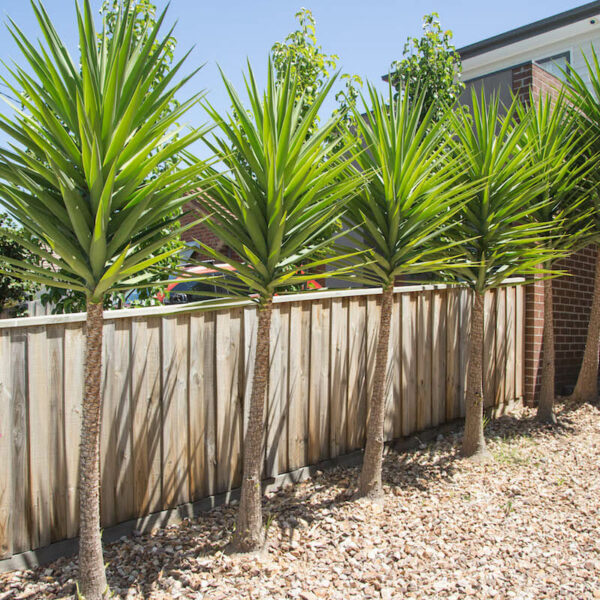
| Description | Yucca elephantipes 'Spineless Yucca/Stick Yucca'
Yuccas would have to be one of the most versatile plants available. They will successfully grow in full sun, part shade, full shade or indoors. Grown for their bold and handsome shape, they feature tall woody stems ending in a crown of long sword shaped leaves. | Lavandula angustifolia "Hidcote"
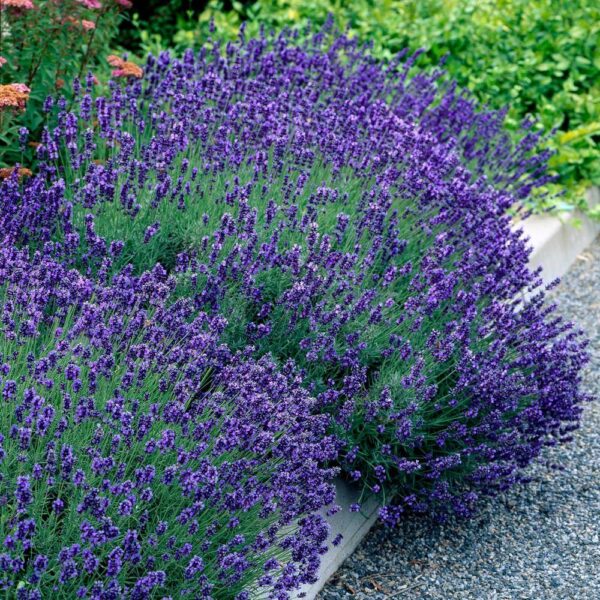
Hidcote Lavender is a dwarf bush with aromatic silver-green leaves bearing slender spikes of dark purple-blue flowers during spring and summer. The flowers are darker in colour than Munstead lavendar, and Hidcote does not grow as tall.
6" pot size, approximately 8-20cm in height. | Acacia melanoxylon
Acacia 'Blackwood' is an iconic Australian tree famous for its timber, which has been extensively used for quality specialist furniture since European settlement.
Growing into a large shade tree, the Blackwood's dense foliage makes it an ideal choice for a screen or windbreak with its pale yellow cream flowers blooming in winter and spring. It is cold and frost tolerant with low flammability and high tolerance to poor soils and drought. Plant with Acacia Lightwood, which flowers in summer, for year-round interest.
See our Acacia - Wattles Factsheet here for more about the different Acacia varieties!
For care instructions, features and more, check out Additional Information below
|
| Content | Yuccas prefer dryer conditions with good drainage, but will still grow in most places; they will tolerate very hot periods without water or near freezing conditions. If grown in the full sun, the foliage becomes stiffer and bolder looking, giving it the trendy and fashionable Mediterranean look. If grown in shade or indoors they will develop a softer and longer leaf.
Yuccas can be planted in pots or in the garden, be grown indoors or outdoors and be planted in sun or shade. They look exotic and tropical and have a modern style. Yuccas perform a range of landscape functions. Plant as a centerpiece in a courtyard, as a feature plant in a pot or as a low maintenance stylish screen. Use as a hardy indoor feature either fully indoors, under plastic roofing or in undercover outdoors areas.
If you're doing up a garden or decorating a patio or deck with pot plants, get a Yucca Sculpture for an instant established look.
Check out our Yucca factsheet for more information. | | |
| Additional information |
| botanical-name |
Yucca elephantipes
|
| height-x-width |
Up to 2m, but slow growing
|
| features |
Rosettes of shiny green leaves are very bold and attractive, a trunk forms with age below the rosettes of foliage
|
| conditions |
Full sun to part shade in well-drained soil, will tolerate drought
|
| landscape-use |
Pots, courtyards, plaza?s, specimens, general landscaping, feature
|
|
| botanical name |
Lavandula angustifolia "Hidcote"
|
| height x width |
30cm x 30cm
|
| planting distance |
For border: 25cm
|
| conditions |
Sunny open position in well-drained soil, lavender will not tolerate wet feet, please read Wet Feet Kills, prune after flowering
|
| landscape use |
Borders, low hedges, single specimens, containers, cut flowers, pot pourri, lavender sachets
|
|
| Botanical Name |
Acacia melanoxylon
|
| Other Common Names |
Australian Blackwood, Black Wattle, Blackwood, Hickory, Mudgerabah, Sally Wattle, Wattle
|
| Origin |
Australia
|
| Plant Type |
Tree
|
| Leaf Drop |
Evergreen
|
| Sunshine |
Full Sun, Part Shade
|
| Tolerances |
Pollution Tolerant, Poor Soil Tolerant, Wind Tolerant, Frost Tolerant, Salt Tolerant, Heat Tolerant, Drought Tolerant
|
| Soil Type |
Clay, Loam, Loamy – Clay, Sandy, Sandy – Loam
|
| pH |
Acidic, Neutral
|
| Water Requirement |
Low
|
| Fertilise Me |
December, January, November, October, September
|
| Fertilizer Frequency |
In the first year after planting, Monthly
|
| Best time to plant |
All Year
|
| Planting Distance |
2-3m apart
|
| Max Height |
12m
|
| Max Width |
5m
|
| Growth Speed |
Fast
|
| Prune Me |
Only if required
|
| Size Maintained at |
3m, 4m
|
| Flowering |
Yes
|
| Flowering Time |
August, November, October, September
|
| Flower Colour |
Cream, Yellow
|
| Foliage Colour |
Green
|
| Fragrance |
Moderate
|
| Fruit / Seed |
Yes – Edible
|
| Fruiting Time |
December, February, January
|
| Attracts |
Bees, Birds, Native Birds
|
| Toxic To |
Non-toxic
|
| Uses |
Shade Tree, Street Tree, Hedging & Screening
|
|