| Description | Aeonium arboreum var. atropurpureum ‘Schwarzkopf’
Aeonium arboreum atropurpureum ‘Schwarzkopf’, is a striking succulent prized for its dramatic rosettes of deep burgundy to almost black foliage. In full sun, the colour intensifies to a rich, glossy black, creating a bold contrast against its pale green stems. During late spring to summer, mature plants may produce tall clusters of golden yellow, star-shaped flowers that add even more appeal.
- Stunning dark burgundy to black rosettes.
- Striking contrast plant for pots, borders, and succulent gardens.
- Grows approx. 60–90 cm tall and 60 cm wide.
6'' / 14 cm pot | Pittosporum Tobira "Japanese Mock Orange"
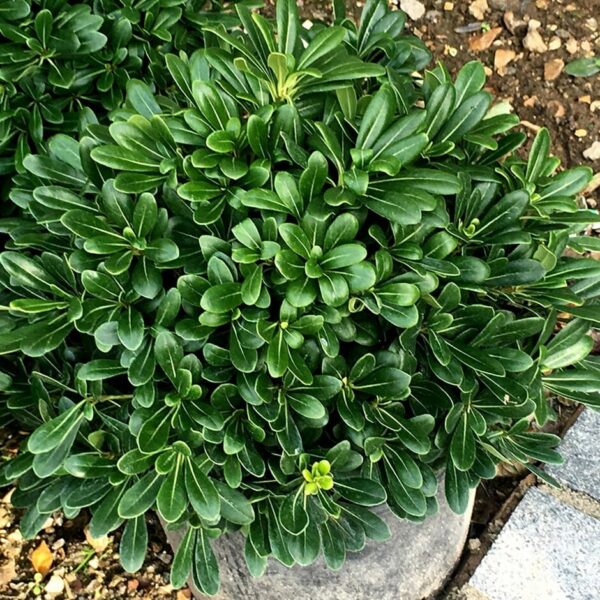
Japanese Mock Orange is a shrub that gets its name from its clusters of small white flowers which have a sweet fragrance similar to orange blossoms. Mock orange is a plant for all seasons. The evergreen foliage has a smooth, leathery texture and forms in whorls around the stems. Perfect for plating near patios or porches where the gorgeous foliage, fragrant flowers and frequent butterfly visitors can be experienced up close.
Japanese Mock Orange is an excellent specimen, foundation, or border plant. Looks beautiful when grouped or massed in a shrub border. Grows to approximately 3m in height. Loves a full sunlight position. | Acacia melanoxylon
Acacia 'Blackwood' is an iconic Australian tree famous for its timber, which has been extensively used for quality specialist furniture since European settlement.
Growing into a large shade tree, the Blackwood's dense foliage makes it an ideal choice for a screen or windbreak with its pale yellow cream flowers blooming in winter and spring. It is cold and frost tolerant with low flammability and high tolerance to poor soils and drought. Plant with Acacia Lightwood, which flowers in summer, for year-round interest.
See our Acacia - Wattles Factsheet here for more about the different Acacia varieties!
For care instructions, features and more, check out Additional Information below
|
| Additional information |
|
| Sunshine |
Full Sun, Part Shade
|
| Fertilise Me |
November, October, September
|
| Fertilizer Frequency |
Annually
|
| Flowering |
Yes
|
| Fragrance |
Moderate
|
| Fruit / Seed |
No
|
| Growth Speed |
Fast
|
| Leaf Drop |
Evergreen
|
| Origin |
China, Japan, Korea, New Zealand, Taiwan
|
| Other Common Names |
Australian Laurel, Cheesewood, Japanese Cheesewood, Japanese Pittosporum, Kohuhu, Mock Orange, Tawhiwhi
|
| pH |
Acidic, Alkaline, Neutral
|
| Plant Type |
Shrub
|
| Soil Type |
Loam, Loamy – Clay, Sandy – Loam, Well drained
|
| Tolerances |
Pollution Tolerant, Poor Soil Tolerant, Frost Tolerant, Salt Tolerant, Heat Tolerant, Drought Tolerant
|
| Water Requirement |
Low
|
| Max Height |
2m
|
| Max Width |
1.5m
|
| Toxic To |
Non-toxic
|
| Prune Me |
2-3 times a year
|
| Planting Distance |
1 per metre
|
| Size Maintained at |
1.5m
|
| Uses |
Hedging & Screening, Low Hedge
|
| Foliage Colour |
Green
|
| Flowering Time |
December, November, October
|
| Flower Colour |
White
|
| Botanical Name |
Pittosporum tobira
|
|
| Botanical Name |
Acacia melanoxylon
|
| Other Common Names |
Australian Blackwood, Black Wattle, Blackwood, Hickory, Mudgerabah, Sally Wattle, Wattle
|
| Origin |
Australia
|
| Plant Type |
Tree
|
| Leaf Drop |
Evergreen
|
| Sunshine |
Full Sun, Part Shade
|
| Tolerances |
Pollution Tolerant, Poor Soil Tolerant, Wind Tolerant, Frost Tolerant, Salt Tolerant, Heat Tolerant, Drought Tolerant
|
| Soil Type |
Clay, Loam, Loamy – Clay, Sandy, Sandy – Loam
|
| pH |
Acidic, Neutral
|
| Water Requirement |
Low
|
| Fertilise Me |
December, January, November, October, September
|
| Fertilizer Frequency |
In the first year after planting, Monthly
|
| Best time to plant |
All Year
|
| Planting Distance |
2-3m apart
|
| Max Height |
12m
|
| Max Width |
5m
|
| Growth Speed |
Fast
|
| Prune Me |
Only if required
|
| Size Maintained at |
3m, 4m
|
| Flowering |
Yes
|
| Flowering Time |
August, November, October, September
|
| Flower Colour |
Cream, Yellow
|
| Foliage Colour |
Green
|
| Fragrance |
Moderate
|
| Fruit / Seed |
Yes – Edible
|
| Fruiting Time |
December, February, January
|
| Attracts |
Bees, Birds, Native Birds
|
| Toxic To |
Non-toxic
|
| Uses |
Shade Tree, Street Tree, Hedging & Screening
|
|