| Description | Cercis chinensis
Cercis chinensis ‘Chinese Redbud’ originating from China, is a medium sized deciduous tree that makes a wonderful feature, shade tree or mass planted along driveways and Avenue’s. In late spring before the foliage re-appears, the branches are covered with bright pink flowers. The leaves are large, glossy and heart shaped. The Chinese Redbud is frost hardy, and can grow in sandy and clay soils, providing they are well drained.
See our Cercis Factsheet here for more about the different Cercis varieties!
For care instructions, features and more, check out Additional Information below | Sisyrinchium
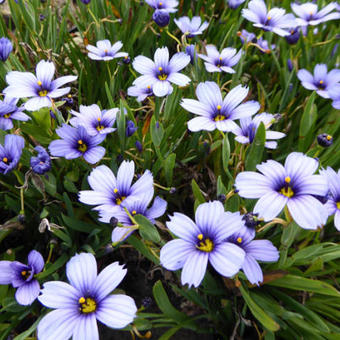
Devon Skies is a special ground cover that creates a magical carpet of little blue flowers in Spring-Summer.
While its foliage has a grass-like look, and it is often known as Blue-eye Grass, it is actually a bulb closely related to the Iris. Devon Skies grows well in pots, and is also is perfect for rockeries.
This plant enjoys being in full sun to part shade, and once established is both drought and frost hardy.
Grows approximately H: 15cm W: 30cm | Anthriscus cerefolium
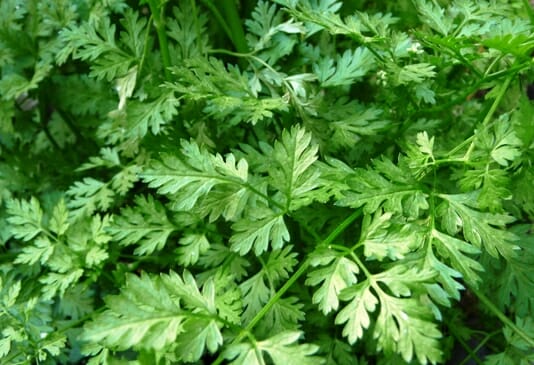
Chervil, sometimes called garden chervil or French parsley, is a delicate annual herb related to parsley. This plant is a native to the Caucasus, which is a mountainous region between Turkey and Russia. Chervil was spread through Europe by the Romans, and is now naturalised. The plants can grow up to 70cm tall and 30cm wide, and produces small white flowers. This herb is referred to as gourmet's parsley, and is used particularly in France to season poultry, seafood, spring veg, soups and sauces. It has a faint taste of liquorice and aniseed. Chervil is one of the four French "fines herbes" which are essential to French cooking. The other three are tarragon, chives and parsley. Unlike stronger herbs like thyme and rosemary which can withstand long cooking times, these "fines herbes" are added at the last minute. Traditionally, chervil has had many medicinal uses. It has claimed to be used as a digestive aid, for lowering blood pressure, and used infused with vinegar for curing hiccups! It has also been used as a mild stimulant. It prefers a cool and moist location, and regular harvesting of leaves helps to prevent it rapidly going to seed, which will bring the plant to the end of its production. |
| Additional information |
| Other Common Names |
Chinese Redbud, Eastern Redbud, Redbud
|
| Origin |
Eastern Asia
|
| Plant Type |
Tree
|
| Leaf Drop |
Deciduous
|
| Sunshine |
Full Sun, Part Shade
|
| Tolerances |
Soggy Soil Sensitive, Frost Tolerant
|
| Soil Type |
Loam, Loamy – Clay, Sandy – Loam, Well drained
|
| pH |
Acidic, Alkaline, Neutral
|
| Water Requirement |
Moderate
|
| Fertilise Me |
April, March, November, October, September
|
| Fertilizer Frequency |
Bi-annually
|
| Planting Distance |
2-3m apart
|
| Max Height |
5m
|
| Max Width |
5m
|
| Growth Speed |
Moderate
|
| Prune Me |
Only if required, Only in winter
|
| Size Maintained at |
3m
|
| Flowering |
Yes
|
| Flowering Time |
October, September
|
| Flower Colour |
Purple
|
| Fragrance |
None
|
| Foliage Colour |
Green
|
| Autumn Colour |
Yellow
|
| Fruit / Seed |
Rarely, Yes – Non-edible
|
| Attracts |
Bees, Birds, Butterflies
|
| Toxic To |
Non-toxic
|
| Uses |
Shade Tree, Feature Tree
|
|
| Botanical Name |
Sisyrinchium "Devon Skies"
|
|
| botanical name |
Anthriscus Cerefolium
|
|